The Aldercroft Viaduct Arch House Left Empty After Rail Closure
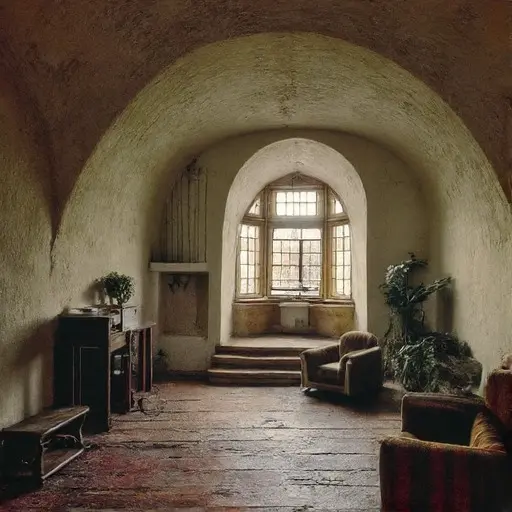
The Aldercroft Viaduct Arch House was established in 1883 beneath a newly constructed rural railway line that crossed a shallow valley outside the small settlement of Aldercroft The viaduct itself was built from weathered pale sandstone blocks, forming a series of massive arches designed to carry freight and passenger trains across the uneven terrain Rather than leave the interior of one arch unused, the Bennett family obtained permission from railway authorities to convert a single span into a residential dwelling, marking one of the earliest known examples of domestic adaptation within railway infrastructure in the region
The main residence occupied the full interior of one arch, with a two-story arrangement carefully fitted to the curvature of the stone structure A secondary living extension was inserted into an adjacent partial arch, connected through narrow passageways carved into the existing masonry The roofline of the house followed the arc of the viaduct, resulting in a gently curved interior silhouette that differed significantly from conventional Victorian housing geometry Despite these unusual constraints, the structure remained fully functional and stable, relying entirely on the strength of the viaduct for support
The Bennett family lived in the viaduct house for several decades, maintaining a modest rural existence shaped by the constant presence of passing trains overhead The rhythmic vibration of the structure became part of daily life, while the stone arch provided exceptional thermal stability and protection from harsh weather The house developed gradually over time, with interior modifications including reinforced wooden beams, fitted plaster surfaces along curved walls, and a recessed bay window positioned within the arch opening to maximize limited exterior light
Gradual Decline After Railway Modernization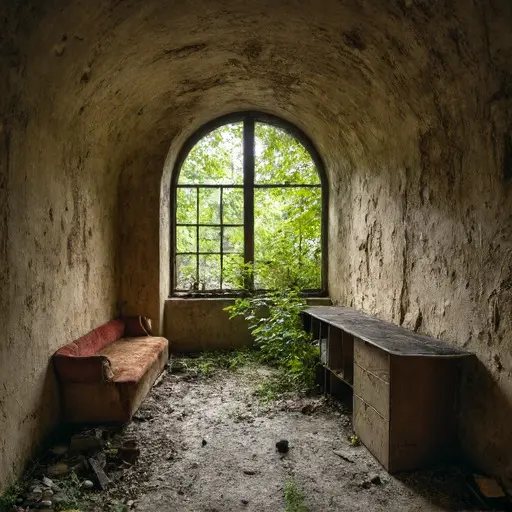
By the early 1930s, railway operations across the Aldercroft line began to decline as new routes and transport systems reduced the importance of the original viaduct Freight traffic became less frequent, and passenger services were gradually rerouted to more modern infrastructure The reduced activity above the house altered the rhythm of daily life, removing the constant vibration that had once defined the structure’s lived experience
As railway maintenance budgets were reduced, portions of the viaduct entered a passive state of upkeep rather than active reinforcement The stone arches remained structurally sound, but minor water ingress began to appear in shaded joints, leading to mineral staining and moss growth within crevices The wooden interior elements of the house experienced slow deformation due to humidity and lack of maintenance, while plaster surfaces began to separate in thin layers from underlying masonry
By the late 1930s, the Bennett family had relocated to a nearby town as railway employment declined and rural infrastructure roles diminished The house remained intermittently occupied for a short period before becoming fully vacant as access and maintenance became increasingly impractical
Final Abandonment Within the Arch
<img src=”https://beyondvisit.
com/wp-content/imagecontent/uploads/abandoned victorian house 44838972.webp” alt=”” />
By 1945 the Aldercroft Viaduct House had been fully vacated following the final departure of the Bennett descendants No further residential use was recorded, and no formal effort was made to repurpose the structure despite its unusual integration into railway infrastructure The viaduct itself remained structurally stable, continuing to support occasional light rail activity before full cessation of service in later years
In the decades that followed, the structure aged slowly under uniform overcast conditions Moisture collected in stone joints, producing subtle streaks of mineral staining along the arches Interior plaster continued to peel in thin layers, and wooden elements warped slightly but remained in place No collapse occurred, and no restoration was initiated
By 1950 the Aldercroft Viaduct Arch House remained standing within the silent railway structure, fully abandoned and unresolved The arch still held the empty domestic space within its stone curvature, preserving the imprint of a family life that had ended quietly beneath the weight of changing infrastructure