The Millfield Water-Tower House Left Empty After Rural Services Closed
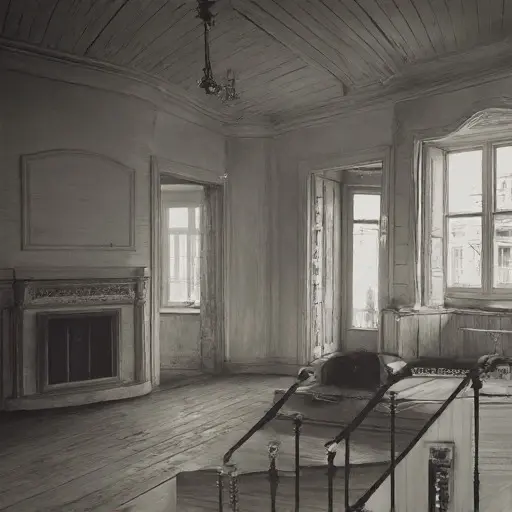
The Millfield Water-Tower House was constructed in 1889 on the outskirts of a small agricultural settlement, originally as a functional rural water distribution point supporting surrounding farms and livestock operations The cylindrical steel tank structure was initially built to regulate and store water for seasonal irrigation, standing alone as a utilitarian installation within open fields Over time, as rural infrastructure changed and centralized water systems expanded, the tower gradually lost its primary function and became obsolete
Rather than demolish the structure, the Hargrove family acquired the site in 1907 and began adapting the abandoned industrial tower into a domestic residence The adjoining two-story house was constructed against the base of the cylindrical tank, forming a hybrid architectural system where domestic and industrial spaces were structurally fused The interior of the water tower was partially repurposed into living and storage areas, with internal platforms and stair systems allowing vertical access through the circular volume The result was a highly unusual but structurally coherent dwelling that combined masonry, wood framing, and riveted steel engineering into a single continuous form
Throughout the early decades of the twentieth century, the Hargrove family maintained a quiet rural life centered on farming support work and small-scale trade The water tower, though no longer operational, remained structurally sound and became a defining spatial feature of the home The attached house developed gradually, with additions such as a bay window extension, an off-center attic dormer, and interior reconfigurations that responded to the tower’s cylindrical geometry rather than conventional rectangular planning
Gradual Loss of Function and Rural Decline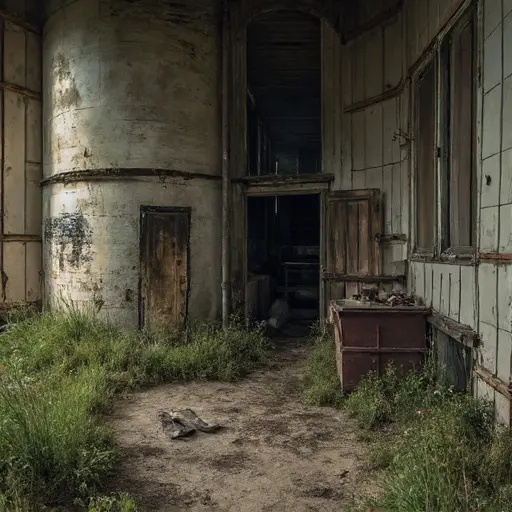
By the early 1930s, the water distribution system that once justified the tower’s existence had been fully replaced by modern infrastructure, leaving the structure functionally obsolete The Hargrove family continued to occupy the property for several years, but its economic purpose had effectively disappeared Maintenance shifted entirely toward domestic needs while industrial components were gradually neglected
The steel tank, though structurally stable, began to show signs of long-term corrosion The iron support bands around the tower developed light rust, and rainwater staining became visible along the exterior surface The wooden annex experienced minor deformation at joints where it connected to the cylindrical structure, reflecting the different settling behaviors of timber and steel Despite these changes, no structural failure occurred, and the building remained safe for habitation
By the late 1930s, the younger generation of the Hargrove family had relocated to towns where agricultural support work was no longer necessary The house became intermittently occupied, then largely vacant, as rural depopulation increased across the region
Final Abandonment of the Hybrid Structure
<img src=”https://beyondvisit.
com/wp-content/imagecontent/uploads/abandoned victorian house 51326120.webp” alt=”” />
By 1945 the Millfield Water-Tower House had been fully vacated following the final departure of the remaining Hargrove descendants No new occupants were recorded, and no municipal effort was made to dismantle or repurpose the structure despite its unusual hybrid form The building remained standing due to its robust steel and masonry construction, even as domestic interiors began to degrade slowly under exposure and neglect
In the following years, the structure experienced only passive environmental weathering Rainwater left corrosion trails along the tower exterior Wooden sections aged quietly, with paint peeling in thin layers and minor warping appearing in less-supported joints The rural landscape around it became increasingly overgrown, with tall grass and wildflowers obscuring the original access paths
By 1950 the Millfield Water-Tower House remained intact but entirely abandoned No restoration was attempted, no demolition approved, and no return by former occupants occurred The structure persisted in silence across the empty fields, its cylindrical tower still standing beside the quiet house, marking the absence of the rural system it once served