The Harrowmere Suburban Edge House Left Quiet After Studio Work Stopped
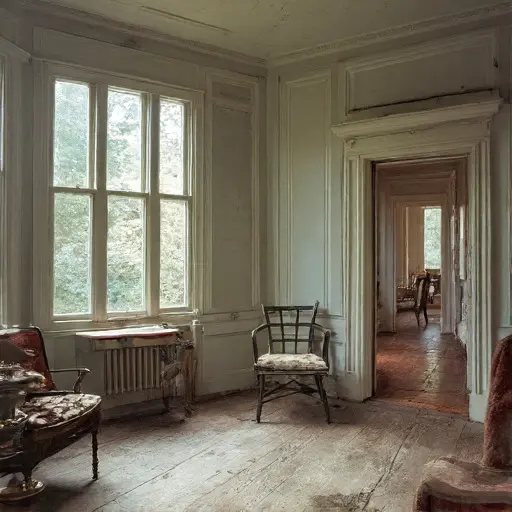
The Harrowmere House was constructed in 1882 at the transitional boundary between a growing suburban district and an encroaching forest line, designed as a compact Victorian family residence that could adapt to both domestic living and light workshop use The original structure consisted of a two-story house with modest proportions, later expanded through a rear extension that introduced subtle changes in brickwork and timber alignment rather than a unified architectural plan A detached carriage house was added shortly afterward, later converted into a studio workshop as transportation needs declined and domestic craft activities became more central to the household’s daily rhythm The result was a small but layered residential complex that reflected gradual adaptation rather than formal design cohesion
For several decades the Dunleigh family maintained the property as both a home and a light creative workspace, using the carriage studio for carpentry, repair work, and occasional artistic projects while the main house served as the center of family life The structure remained stable despite minor irregularities in roofline alignment and asymmetry in the façade caused by long-term settling The surrounding environment was quiet and transitional, with suburban development stopping just short of the property boundary while dense trees gradually defined the opposite edge The garden remained modest and functional, with gravel paths and low shrubs framing the connection between house and studio
Early Decline of Workshop Use and Suburban Transition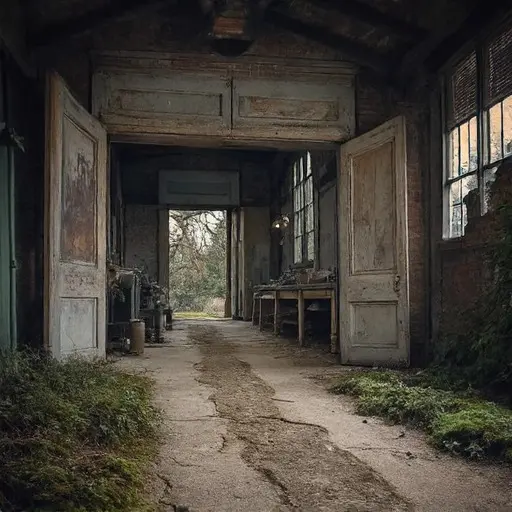
By the early 1930s, the Dunleigh family began to reduce active use of the carriage studio as mechanized transport and changing domestic needs made its function increasingly obsolete The workshop transitioned from regular use to occasional storage, while the main house remained occupied but shifted into a quieter, less active domestic role Maintenance of the detached structure declined gradually, resulting in slow warping of wooden doors and increasing fogging of window glass from unchecked humidity
As suburban development moved closer to the area, the house found itself increasingly isolated within a transitional zone between maintained neighborhood and encroaching woodland Despite this, no structural damage occurred, and both the main residence and carriage studio remained stable The gravel driveway softened under neglect, and vegetation slowly reclaimed the edges of the property without overtaking it entirely
Final Stillness Between Suburb and Forest
<img src=”https://beyondvisit.
com/wp-content/imagecontent/uploads/abandoned victorian house 86020771.webp” alt=”” />
By 1940 the Dunleigh descendants had fully vacated the Harrowmere House as suburban expansion and shifting economic priorities made continued maintenance impractical The carriage studio ceased all activity, and no new occupants took over the property despite its structural stability The transition zone between forest and suburb continued to evolve around it, but the house itself remained untouched and unclaimed
In the following decades the structure aged slowly under uniform overcast conditions The main house retained its form with only gentle weathering, while the detached studio showed slightly more pronounced wood aging and surface wear No collapse occurred, and no restoration was initiated
By 1950 the Harrowmere Suburban Edge House remained standing in quiet isolation, fully abandoned but structurally sound No return was recorded, no demolition occurred, and no new use was established The house and its carriage studio remained connected across a silent gravel path, preserved between forest and suburb in calm, neutral stillness