The Alderwick Millhouse Left Quiet After Waterwheel Stopped Turning
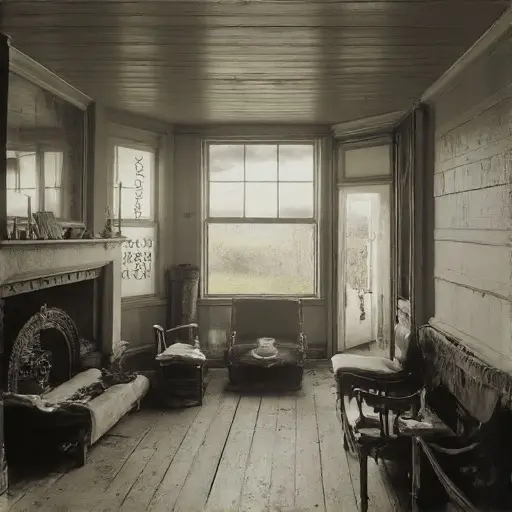
The Alderwick Millhouse was constructed in 1872 along a slow-moving rural river as a combined family residence and working watermill designed to support both domestic life and small-scale grain production for the surrounding countryside The original structure consisted of a compact two-story Victorian house directly attached to a mill wheel chamber, where a partially preserved waterwheel operated through a wooden sluice gate system embedded into the riverbank Over time, the house evolved organically around the industrial component, with the residential façade shifting slightly off-center relative to the mill structure due to repeated extensions and repairs rather than formal architectural planning The result was a blended domestic-industrial building where living space and mechanical function were inseparable but not fully symmetrical
For decades the Hartwell family operated the mill while living within the same structure, maintaining both the waterwheel system and the domestic quarters as part of a single continuous household economy The mill remained modest in scale, processing grain from nearby farms while the river provided consistent but gentle hydraulic power The brick foundation absorbed constant moisture from the river, developing deep red-brown staining over time, while iron components of the waterwheel frame slowly developed a light rust patina that did not impede function Seasonal flooding cycles required regular maintenance of sluice gates and lower timber supports, but the structure remained stable and reliable throughout its active use period
Early Decline of Milling Activity and Reduced Operation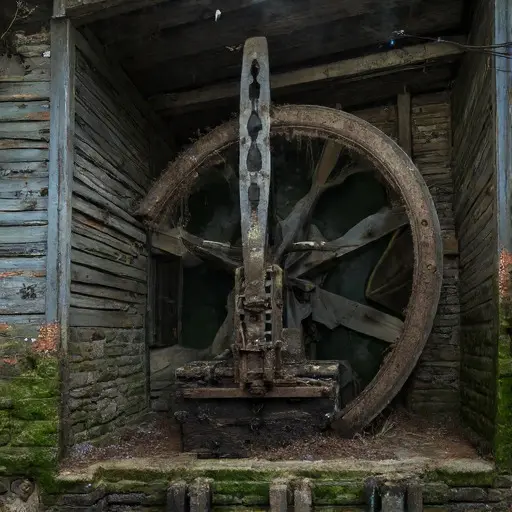
By the early 1930s, the Hartwell family began to reduce active milling operations as industrial grain processing facilities in nearby towns made small-scale river mills less economically viable The waterwheel was operated only intermittently during this period, and eventually ceased regular function altogether while the family continued to occupy the residential portion of the structure Maintenance shifted away from mechanical upkeep toward basic preservation of living spaces, leaving the mill chamber increasingly inactive despite remaining structurally intact
As milling activity declined, the relationship between the house and river slowly shifted from productive use to passive coexistence The sluice gates remained in place but were no longer actively adjusted, allowing water flow patterns to stabilize naturally around the structure The lower sections of the mill experienced increased algae staining and moisture accumulation, while upper residential rooms remained comparatively stable and dry The house itself did not deteriorate rapidly, but its functional identity gradually dissolved as industrial use ceased entirely
Final Stillness Beside the River
<img src=”https://beyondvisit.
com/wp-content/imagecontent/uploads/abandoned victorian house 98515518.webp” alt=”” />
By 1940 the remaining Hartwell descendants had fully vacated the Alderwick Millhouse as industrial milling became obsolete in the region and maintenance costs exceeded any practical benefit No new operators took over the mill, and the structure entered a state of passive abandonment without demolition or redevelopment The waterwheel remained in place but was never reactivated, and the sluice system was left untouched as the river continued its natural course
In the following decade, the house and mill aged slowly under constant moisture exposure without structural collapse The river remained steady and calm, preserving the reflective relationship between water and building even as human activity ceased entirely No restoration was initiated, and no significant alteration occurred to the structure or surrounding landscape
By 1950 the Alderwick Millhouse remained standing beside the river, fully abandoned but structurally stable The mill wheel stood motionless in its chamber, and the house remained intact above the waterline No return was recorded, no demolition occurred, and no new use was established The structure persisted in quiet overcast light, held between flowing water and still architecture, a Victorian riverside home left behind in calm industrial silence