The Aldermead Boathouse Home Left Quiet After Waterline Shift
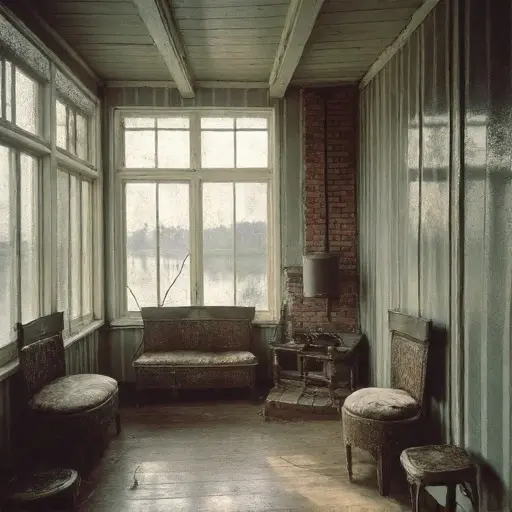
The Aldermead Boathouse Home was constructed in 1884 along the edge of a small rural lake as a combined family residence and functional boathouse for the Harrowell family The structure was modest in scale, consisting of a two-story main building with a narrow side extension used for storage, repair work, and seasonal boating equipment Its front façade extended partially over the water on reinforced stone pilings, allowing direct access to the lake while maintaining a stable living space above The design was intentionally simple but carefully engineered, balancing domestic needs with the practical requirements of water-based activity in a quiet rural setting
For several decades the boathouse functioned as a stable year-round residence, with the Harrowell family maintaining boats, nets, and small trade operations tied to the lake economy The house’s proximity to water required constant but light maintenance, particularly in reinforcing lower wooden panels and monitoring moisture levels in the foundation Despite this, the structure remained sound, and its subtle asymmetry—such as the offset attic dormer and uneven balcony rail spacing—was accepted as part of its gradual, lived-in character rather than structural flaw The surrounding lake remained calm and predictable, reflecting the house in soft gray tones beneath a consistently overcast sky
Early Moisture Aging and Slow Reduction in Use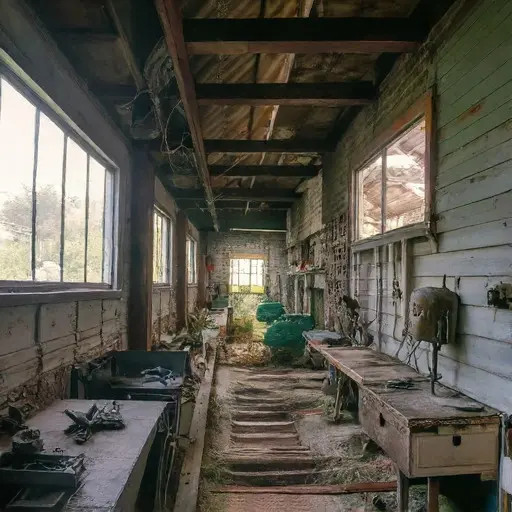
By the early 1930s, the Harrowell family began to reduce their presence at the boathouse as younger members relocated inland for work and schooling The structure transitioned from a full-time residence into a seasonal dwelling, with extended periods of vacancy during colder months The storage wing was among the first areas to fall out of regular use, followed by portions of the upper living quarters that required more frequent maintenance due to their proximity to water exposure Minor repairs continued for a time, but gradually became less frequent as the family’s connection to the lake economy diminished
Although no major structural damage occurred, signs of long-term moisture exposure became more apparent during this period Paint began peeling in thin layers, lower wood panels showed slight warping, and damp staining slowly crept upward from the waterline The boathouse remained stable and functional, but its daily rhythm faded as occupancy decreased
Final Stillness on the Quiet Lake
<img src=”https://beyondvisit.
com/wp-content/imagecontent/uploads/abandoned victorian house 38448026.webp” alt=”” />
By 1940 the Harrowell descendants had fully relocated from the Aldermead Boathouse, leaving it without permanent occupation for the first time since its construction Wartime disruptions and economic changes made continued maintenance impractical, and no coordinated effort was made to restore full-time habitation of the property Despite this, the structure remained intact and stable, requiring only minimal intervention to prevent further moisture damage
In the following years, the boathouse continued to age slowly in place without collapsing or being reclaimed by the environment The lake remained calm and unchanged, preserving the reflective relationship between water and structure while gently emphasizing its absence of life The building neither deteriorated rapidly nor was restored, existing instead in a suspended state of quiet neglect
By 1950 the Aldermead Boathouse Home remained standing at the lake’s edge, empty and undisturbed No restoration was initiated, no demolition occurred, and no return was recorded The house persisted in soft overcast light, reflected perfectly in the still water below, a quiet Victorian residence left behind in peaceful, unresolved abandonment