The Millhaven Viaduct House Left Empty After Line Closure
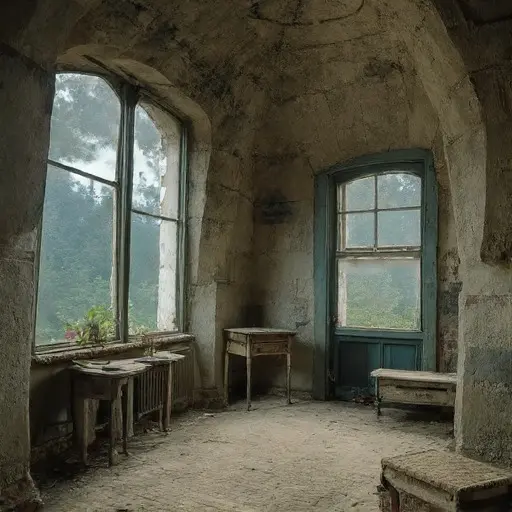
The Millhaven Viaduct House was constructed in 1889 as a small family residence integrated into a decommissioned section of railway infrastructure at the edge of a quiet desert valley The structure occupied only a few arches of the larger viaduct, utilizing its stone supports as natural load-bearing walls while adding compact residential volumes between and within the arch cavities The original occupants, the Corbridge family, adapted the unusual setting into a functional home by reinforcing interior floors with light steel framing and adding modest bay windows that fit within the curvature of the arch openings A small upper conservatory room was later added, overlooking the valley through a reinforced glass extension that remained stable despite the exposed location
For several decades, the house functioned as a quiet rural residence, supported by minimal agricultural activity in the surrounding valley The viaduct itself had long ceased railway operation, leaving the structure to serve only as a monumental architectural shell rather than active infrastructure The Corbridge family maintained the residence through careful upkeep of plaster surfaces, slate roofing, and iron railings, ensuring that the integration between house and viaduct remained structurally sound Despite its unusual foundation, the building remained stable and unremarkable in daily life, known locally as a quiet home nestled within the old arches
Early Decline After Infrastructure Abandonment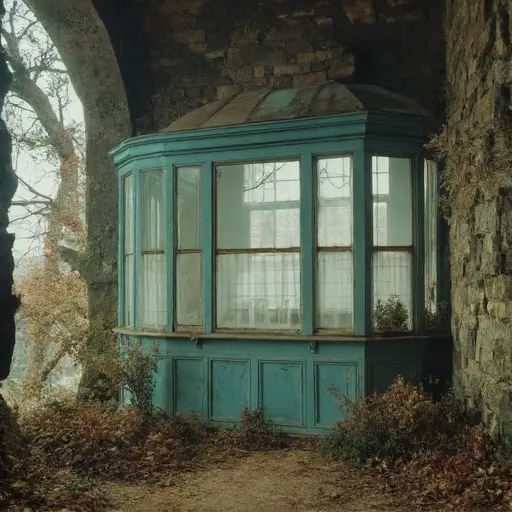
By the early 1930s, the Corbridge family began to gradually leave the Millhaven Viaduct House as economic conditions in the valley deteriorated and younger generations relocated to more populated regions The house transitioned from a permanent residence to a seasonal dwelling, with entire sections of the compact structure left unused for extended periods The upper conservatory room was among the first to fall out of regular occupation, followed by portions of the lower living areas that required more frequent maintenance due to their integration with the aging viaduct structure
Although no major structural damage occurred during this period, maintenance intervals grew longer, and minor deterioration became increasingly visible Hairline cracks appeared in plaster surfaces where the house met the viaduct’s stone arches, and iron railings showed slight rusting from exposure to shifting moisture conditions The building remained intact and stable, but its use steadily diminished until it was no longer actively inhabited year-round
Final Quiet Abandonment Within the Arches
<img src=”https://beyondvisit.
com/wp-content/imagecontent/uploads/abandoned victorian house 43705106.webp” alt=”” />
By 1940 the Corbridge descendants had fully vacated the Millhaven Viaduct House, leaving behind only minimal furnishings and maintenance records as they relocated permanently to nearby towns The closure of regional transport routes and shifting economic priorities made continued habitation impractical, and no new occupants were ever assigned to the structure Despite abandonment, the viaduct itself remained structurally stable, and the integrated house sections required no immediate demolition or emergency intervention
In the following years, the residence experienced only slow, natural aging rather than active decay Stone surfaces remained firm, while minor plaster and wood degradation progressed gradually under exposure to dry valley winds The conservatory and upper rooms remained intact but unused, preserving the architectural layering of the structure in a suspended state of quiet absence
By 1950 the Millhaven Viaduct House still stood within its arches above the desert valley, completely empty but structurally unchanged No restoration was initiated, no demolition occurred, and no return was recorded The house remained quietly embedded in the old railway viaduct, preserved in neutral overcast light, holding its position as a small abandoned fragment of domestic life within a larger forgotten infrastructure