The Alderwick Manor Complex Left Quiet After Family Line Ended
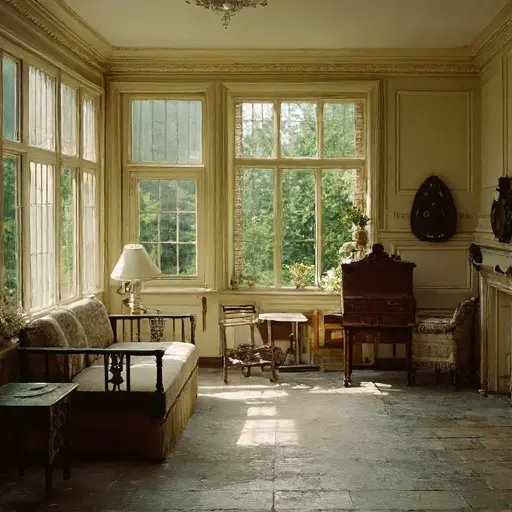
The Alderwick Manor Complex began as a modest Victorian country residence constructed in 1868, later expanded across generations as successive family members added wings, turrets, and service halls rather than replacing older sections The result was not a single architectural vision but a slow accumulation of design decisions, each layer respecting the previous one while subtly shifting alignment, producing a harmonious but irregular multi-wing structure by the early 20th century The Alderwick family maintained continuous residence for decades, supported by agricultural land and modest estate income, with each generation occupying different wings of the growing complex according to preference and function
By the 1910s, the manor had reached its full spatial extent, and further expansion became unnecessary as the estate’s agricultural output stabilized The house remained well maintained, though its older sections began to show subtle structural fatigue in the form of slight floor sagging and softened plaster edges rather than any severe deterioration During this period, the manor was known locally for its calm presence at the edge of the countryside forest, where tall grass and scattered trees framed its pale limestone walls in shifting seasonal light The atmosphere was stable and quiet, with no indication that the property would ever be fully vacated, only gradually lived in less intensely as the family’s younger members began to relocate to nearby towns
Early Reduction in Occupancy and Quiet Decline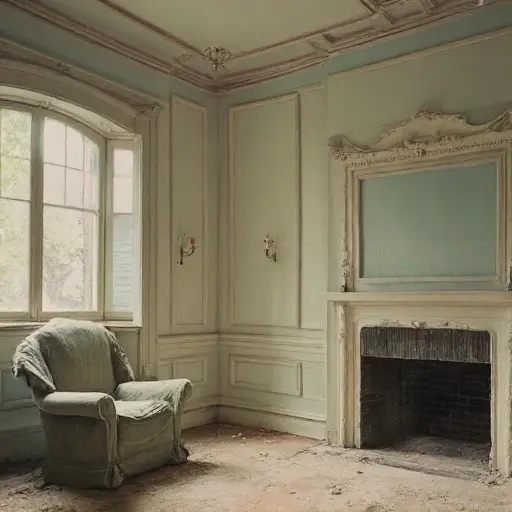
By the early 1930s, the Alderwick estate entered a period of slow administrative transition as inheritance divisions and changing rural economies reduced the need for full-time occupancy Portions of the manor were closed during winter months to conserve heating costs, leaving entire wings unused but preserved in stable condition Maintenance continued in essential areas, but decorative and secondary rooms began to collect dust as household activity concentrated into a smaller core of the building
Despite reduced occupancy, the manor did not experience structural decline in a conventional sense Instead, it transitioned into a layered state of partial use, where some wings remained active while others existed in suspended preservation The architectural asymmetry that had developed over decades now contributed to this segmentation, allowing parts of the house to be gently retired without affecting the integrity of the whole
Final Quiet Vacancy Without Ruin
<img src=”https://beyondvisit.
com/wp-content/imagecontent/uploads/abandoned victorian house 48469544.webp” alt=”” />
By 1940 the remaining Alderwick heirs had gradually dispersed due to urban migration and changing economic conditions, leaving the manor without a permanent household for the first time in its history The estate was not abandoned in haste but slowly released from active use, with maintenance continuing intermittently through hired caretakers until it eventually ceased altogether Wartime constraints and shifting property ownership laws complicated any attempt at unified management, and no single heir assumed full responsibility for the entire complex
As the decades progressed, the manor remained structurally sound, requiring no major repairs beyond minor weatherproofing, but it steadily lost its function as a lived-in residence Interior spaces remained furnished yet unused, with sunlight continuing to move through rooms that were no longer occupied The surrounding countryside remained unchanged, with tall grass and scattered trees gently encircling the property without encroaching upon it
By 1950 the Alderwick Manor Complex stood entirely vacant, preserved in quiet stillness at the edge of the forest No restoration was required, no collapse occurred, and no redevelopment was initiated The house remained intact and undisturbed, its layered Victorian wings holding their shape in warm afternoon light, empty but not разрушed—simply left behind in peaceful, unresolved abandonment