Silverknot Array Left Vacant After Wartime Fragmentation Failure
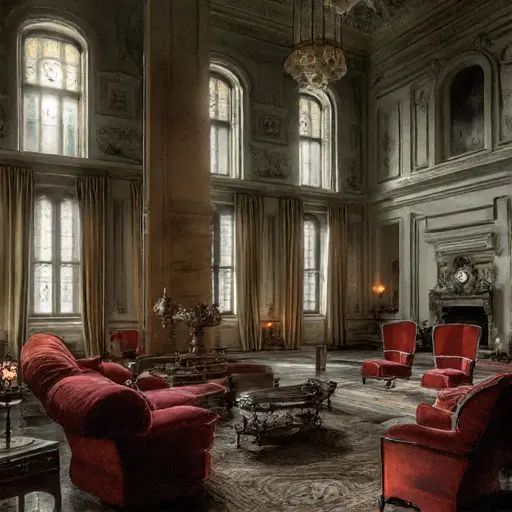
The Silverknot Array was occupied in its early years by the Delacroix engineering family, who acquired and expanded the structure between 1908 and 1914 The arrangement, already partially constructed when purchased, was unified under their supervision into a working residence shared across multiple Victorian sub-houses Each wing served a different household function: limestone rooms for formal living, iron-clad sections for work and storage, and glass-brick chambers for quiet study and observation of ambient light patterns The family initially maintained the structure through a small team of hired caretakers familiar with hybrid masonry systems
For a time, the residence functioned unusually well despite its complexity The interconnected load-bearing joints allowed movement between wings without visible strain, and the family treated the house as a single organism rather than separate buildings However, even in this early period, maintenance demands were unusually high The differing material systems required specialized upkeep, and small delays in repairs began to accumulate in administrative records By the late 1910s, rising material costs and the loss of skilled labor during wartime service began to place subtle pressure on the household’s ability to sustain the structure long-term
Maintenance Strain Across Interlocking Wings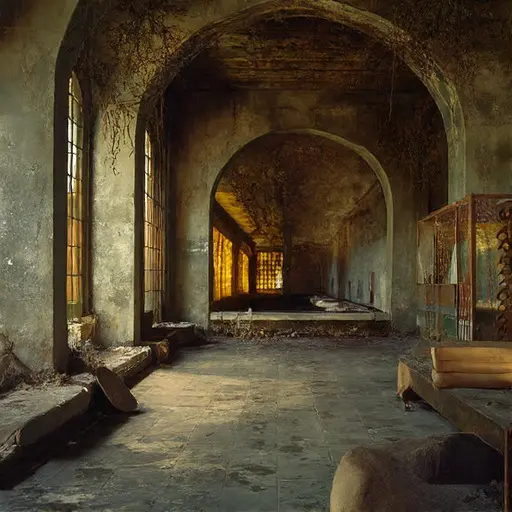
By the time of the Great Depression, the Silverknot Array had become financially unsustainable to maintain The Delacroix family attempted to preserve key structural systems, but the complexity of the interwoven architecture meant that failure in one wing affected the stability of others Repairs were delayed as creditors pursued fragmented ownership claims across the different sub-houses, each legally registered under separate deeds inherited and subdivided over decades Family members began relocating to urban centers for work, leaving caretakers to manage only portions of the structure
During the 1930s, maintenance records show increasing gaps in inspection cycles Roof drainage systems in the copper tray wing began to overflow, affecting humidity levels in the limestone and timber sections Staircases connecting dissimilar wings were occasionally sealed off for safety, disrupting internal circulation and further isolating portions of the house The building remained technically occupied in fragments, but no unified household function persisted, and the structure began to behave less like a home and more like a divided system under slow administrative collapse
Fragmentation and Final Evacuation
<img src=”https://beyondvisit.
com/wp-content/imagecontent/uploads/abandoned victorian house 44699865.webp” alt=”” />
After wartime labor shortages intensified in the early 1940s, the remaining caretakers were withdrawn or reassigned, leaving the Silverknot Array without coordinated oversight The fragmented ownership structure prevented any single authority from authorizing full restoration, and legal disputes over responsibility stalled all intervention efforts Sections of the building were officially declared unsafe, but no demolition was pursued due to the complexity of its interlocking foundations
By 1946, the last documented occupants had vacated isolated wings of the structure, leaving behind furniture, maintenance logs, and unfinished repair work The interconnected sub-houses ceased to function as a unified residence, and circulation between wings collapsed entirely as passages were sealed or structurally compromised Despite periodic municipal inspections, no restoration program was ever initiated due to the immense technical difficulty of separating the architectural systems
The Silverknot Array remained standing but fully abandoned, its internal corridors frozen in contradictory states of partial repair and long decay No heirs returned to consolidate ownership, and no governing body assumed responsibility for its restoration or removal As of the final inspection record in 1950, the structure still occupied the ravine, silent and intact in its fragmented totality, continuing its slow deterioration without resolution or return