The Bramblecross House on the Hillside and Its Abandonment
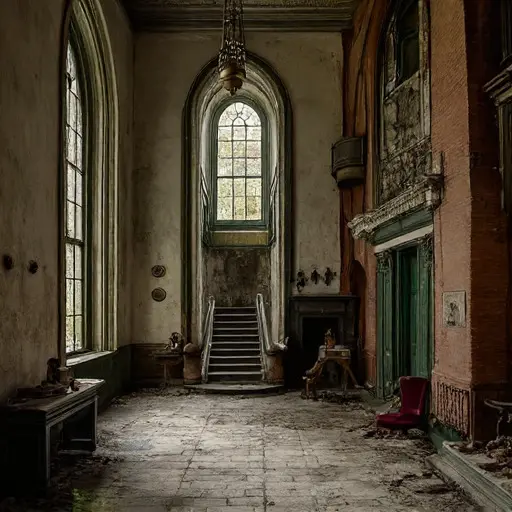
Bramblecross House was completed in 1892 for Edwin Laurence Kershaw, born 1845 in Derbyshire, a civil infrastructure inspector responsible for mapping hillside drainage systems and coordinating small rural construction zones. His work involved comparing multiple engineering plans across uneven terrain, often requiring parallel documentation of alternative structural layouts for the same sites.
He built the house directly into the slope to serve as both residence and working model for layered hillside construction techniques.
He lived there with his wife Helena Grace Kershaw and their two children, Arthur and Miriam, who assisted in cataloging survey notes and correspondence stored throughout the segmented property.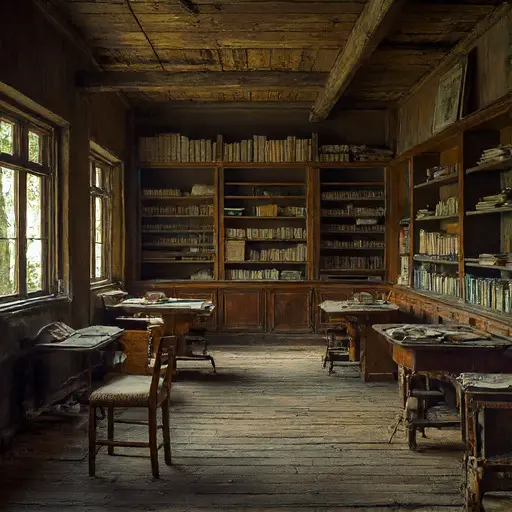
The decline began in 1907 when regional infrastructure authorities standardized hillside construction mapping into unified coordinate systems, replacing the earlier practice of parallel structural drafting used in uneven terrain analysis. Kershaw’s multi-model approach to civil planning was gradually deemed redundant in official surveys.
By 1911, he had ceased active inspection work and remained at Bramblecross House while attempting to reconcile the three structural documentation systems he had once maintained separately. Financial stability persisted, but professional relevance diminished as unified mapping replaced layered interpretation. Helena maintained the household during this period, though correspondence suggests increasing isolation as each section of the house seemed to occupy its own quiet version of domestic life.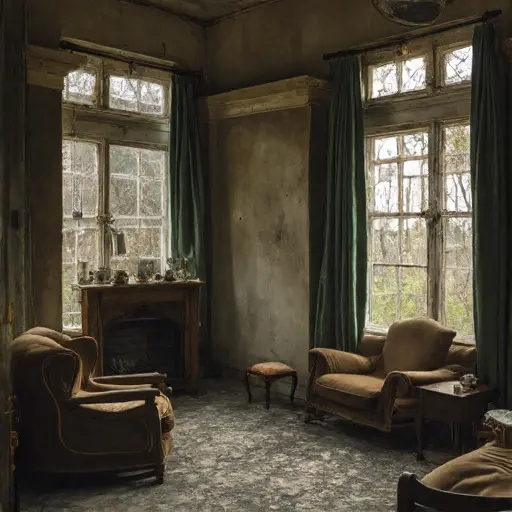
By 1913, Edwin Kershaw had withdrawn from active civil inspection entirely, leaving only archived correspondence distributed across regional engineering offices. Arthur’s name appears once more in a final property reconciliation document before disappearing from official records. Bramblecross House remained fully furnished but abandoned, its three structural lanes preserved in place, each maintaining its own quiet continuity.
The house still stands on the hillside, unchanged in its segmentation, as if it never fully decided which version of itself was real.