The Hollowbrook Lane House and the Record of Deferred Departure
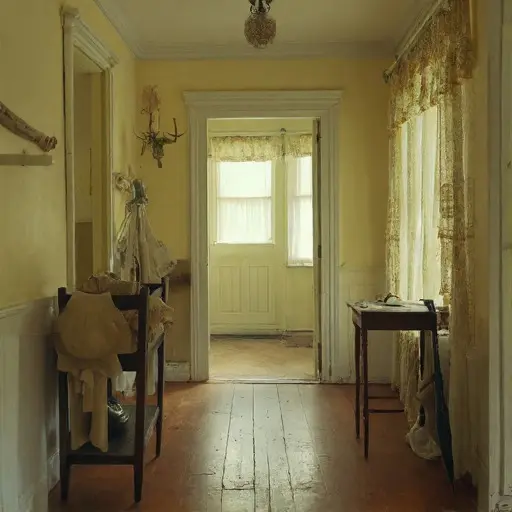
The Hollowbrook Lane House was built in 1904 by Henry Caldwell Merrin, born 1871 in Kent, a regional postal route supervisor responsible for organizing rural delivery lines between scattered farming settlements and township offices. His work required careful coordination of schedules, weather disruptions, and route reliability across lightly populated countryside roads.
He built the house just off the curved rural lane to remain close to a key junction point in the postal circuit, where multiple delivery routes converged before branching into surrounding farms.
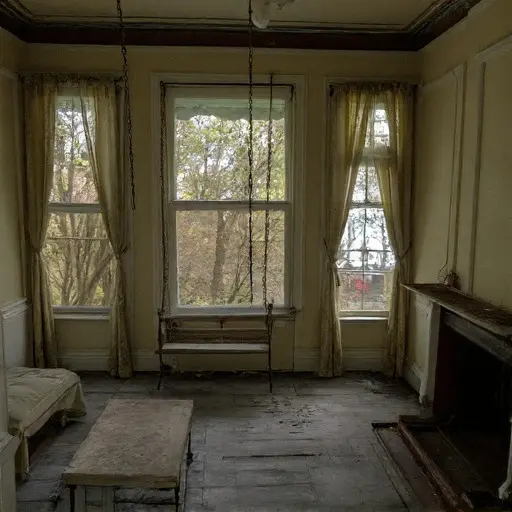
By 1910, Merrin’s postal logs began noting increasing delays in delivery consistency along routes that passed the house, even when weather and road conditions were recorded as unchanged. Reports indicated that mail arriving at the Hollowbrook junction required repeated verification due to mismatched timestamps between departure and arrival logs.
Internal correspondence from regional offices attributed these inconsistencies to administrative backlog, though Merrin insisted the irregularities began after structural changes were observed in nearby route markers and fence lines.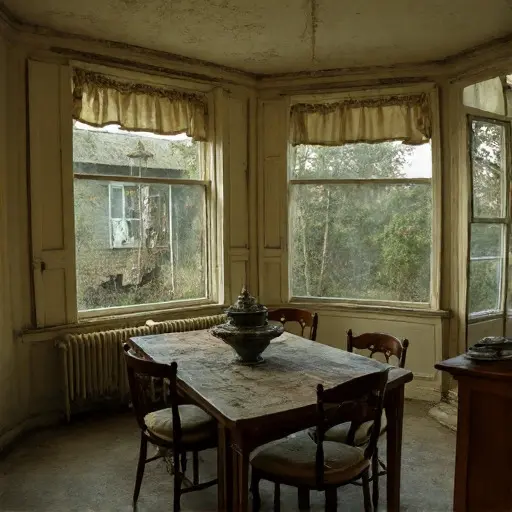
By 1913, household records ceased to be updated alongside postal logs, and the house was no longer listed as an active waypoint in delivery records. The final entries refer only to “missed returns” and “unconfirmed arrivals,” with no clarification of origin.
The Hollowbrook Lane House was left unoccupied shortly thereafter. It remains beside the rural curve of road, unchanged in posture, still holding the quiet impression of a home waiting for correspondence that never arrives.