The Miller Farmhouse and the Slow Folding of the Rooms
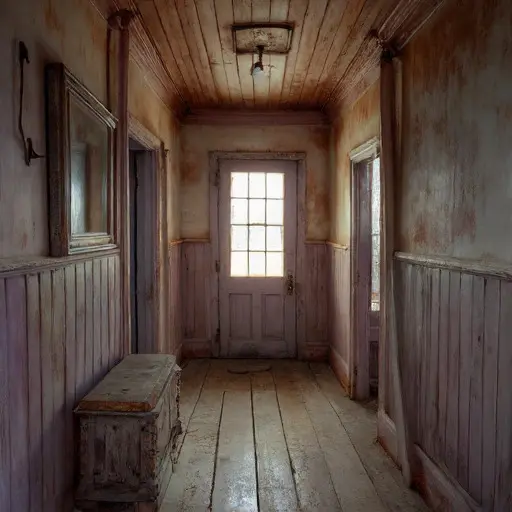
The Miller Farmhouse was built in 1898 by Jonathan Miller, born 1864 in Dorset, a rural grain accountant responsible for tracking harvest yields and land productivity for scattered farming cooperatives across the valley. He chose the meadow site for its central position between several tenant fields and used the farmhouse as both residence and seasonal accounting office.
His wife, Margaret Miller, maintained household records while also assisting in tallying crop reports during harvest cycles when labor shortages affected nearby farms.
The house began showing structural irregularities within a decade of completion, first recorded as uneven settling along the western foundation wall during winter frost cycles.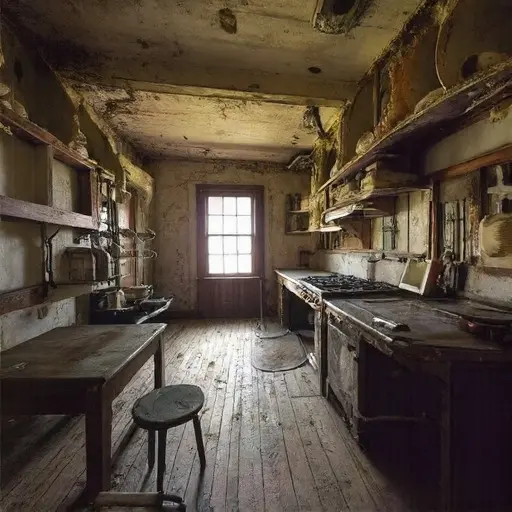
By 1907, Miller’s accounting ledgers began noting discrepancies between recorded grain output and storage measurements taken at different points inside the house, despite identical exterior measurements at the barn and silo.
He attributed the inconsistencies to shifting floor gradients affecting measurement tools, though repeated checks confirmed the same results across multiple interior rooms.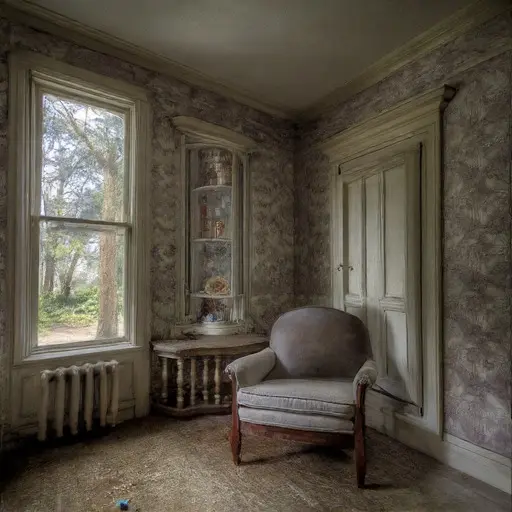
By 1912, the farmhouse was no longer used for full seasonal accounting, as interior measurements could no longer be reliably reconciled with external farm records. The Millers ceased correspondence with county offices shortly afterward.
The Miller Farmhouse was vacated in 1914. It still stands in the meadow, its rooms quietly folded along the same diagonal seam, as if the building has been slowly returning to a softer version of its own structure without ever fully collapsing.