The Brackenridge Slope House and the Gentle Drift of Foundations
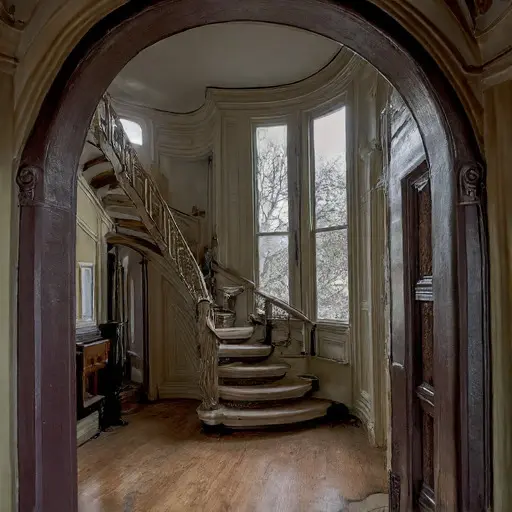
Brackenridge Slope House was built in 1892 for Arthur Llewelyn Marden, born 1840 in Bath, a regional land valuation clerk responsible for hillside property assessments, rural taxation records, and erosion-adjusted land registry corrections across uneven terrain districts. His work often required reconciling property boundaries in areas where soil movement and seasonal runoff altered physical markers over time.
He chose the hillside above the rural road as a permanent residence and reference point for his surveying work, believing proximity to shifting ground would improve the accuracy of long-term valuation models.
He lived there with his wife Catherine Marden and their son Edward, who assisted in copying land reports and maintaining duplicate valuation ledgers.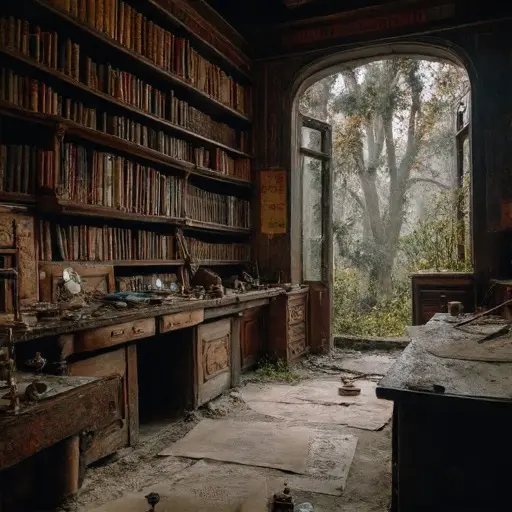
The decline began in 1903 when repeated municipal reassessments of hillside properties began producing conflicting valuation baselines due to gradual erosion and road realignment. Marden’s reports, once considered precise, increasingly disagreed with updated district maps, especially where retaining walls had shifted or collapsed.
By 1908, correspondence became increasingly fragmented, with overlapping revisions of the same property boundaries appearing in official records. Catherine’s handwriting disappears from household documents during this period, replaced by repeated annotations correcting earlier entries that no longer matched current terrain conditions.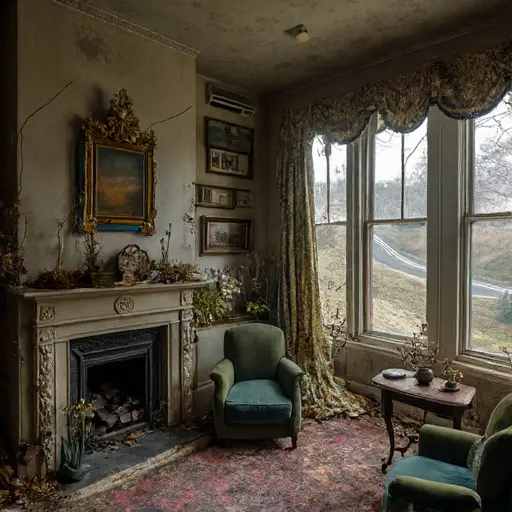
By 1912, Arthur Marden had withdrawn from active valuation work, continuing only limited private corrections of hillside records from a small office in town. Edward appears only once more in surviving documents, noted in a partial revision of a boundary ledger without signature or completion.
Brackenridge Slope House remained fully furnished but administratively unresolved. The ledgers stayed open in the study, the greenhouse continued growing in slanted light, and no formal reassignment of ownership was ever completed. The property was eventually listed as vacant above the winding road, still resting on its quiet incline, unchanged in presence but never fully agreeing with the ground beneath it.