The Ashcombe Cliff House and the Final Tide Record
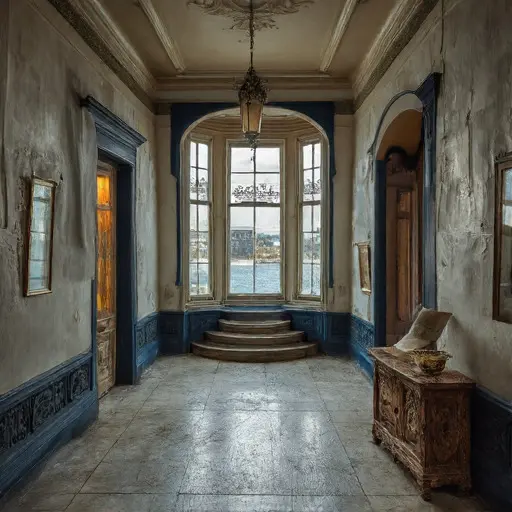
Ashcombe Cliff House was completed in 1896 for William Hartley Sennett, born 1846 in Portsmouth, a maritime insurance adjuster who specialized in coastal cargo risk assessment and shipping compensation claims along the southern trade routes. His wealth came from evaluating shipping losses, negotiating payouts for damaged freight, and advising insurers on long-term coastal exposure contracts. After decades working between harbors and insurance offices, he built the house above the cliff as a permanent residence where he could continue correspondence while retiring from active field assessments.
He lived there with his wife Eleanor Grace Sennett and their daughter Lydia, who assisted in maintaining claim records and coastal inspection notes. Early household documents show a disciplined rhythm of accounting, letter writing, and coastal weather logs carefully stored in the study.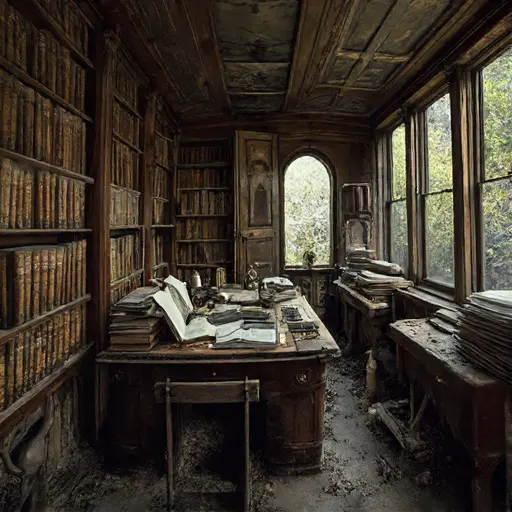
The decline began in 1909 when a sequence of severe coastal storms disrupted shipping lanes and produced an unusually high number of contested insurance claims. Sennett had personally approved several high-value policies tied to vessels operating near exposed cliff routes. As disputes multiplied, insurers delayed settlements and reclassified risk categories, reducing payout obligations across the board.
By 1912, correspondence became increasingly formal and fragmented. Some claims were partially honored, others indefinitely deferred. Lydia’s handwriting disappears from the records during this period, replaced by copied forms and incomplete summaries. Financial notes show repeated attempts to reconcile incoming losses with shrinking reserves.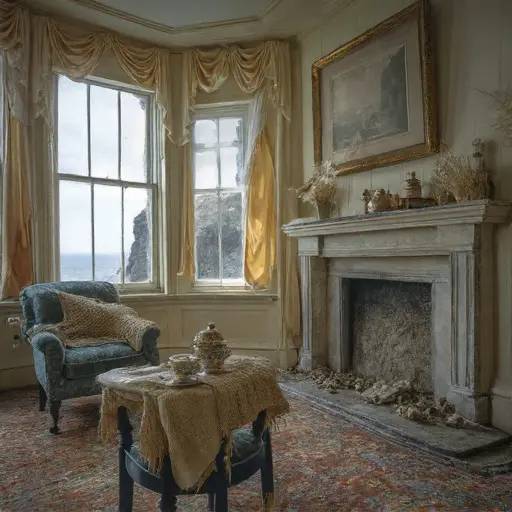
By 1914, William Sennett had withdrawn from active claims adjustment and moved temporarily into town offices to resolve outstanding disputes with insurers. Eleanor’s correspondence ceases shortly afterward, and no further entries appear in Lydia’s record books.
Ashcombe Cliff House remained fully furnished but unattended. The claim ledgers stayed open in the study, the greenhouse continued growing in salt-filtered light, and no transfer of ownership was ever finalized. The property was recorded as vacant above the cliff road, standing intact between land and sea, without closure or return.