The Whitmore House and the Failure of a Timber Empire
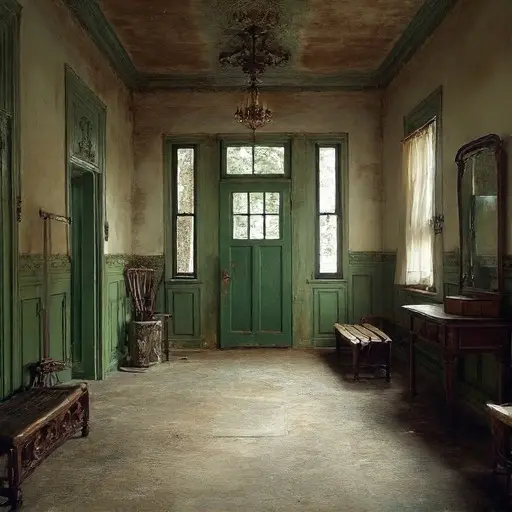
Whitmore House was completed in 1892 for Augustus Henry Whitmore, born 1847 in Michigan, the son of a sawmill operator who expanded the family business into a profitable timber company. By the late nineteenth century, Whitmore controlled logging camps, transport contracts, and several lumber mills supplying rapidly growing towns throughout the region. His success allowed him to build a substantial residence along a forest ridge overlooking a mist-filled valley.
He lived there with his wife Eleanor Whitmore and their two sons, Charles and Edward. The mansion served both as a family residence and an informal headquarters where forestry accounts, land deeds, and shipping records were maintained.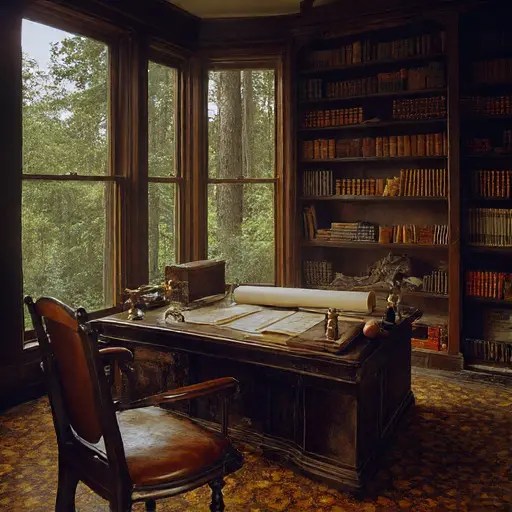
The decline began after aggressive expansion between 1904 and 1908. Whitmore purchased large tracts of forest using borrowed capital, expecting demand for lumber to continue rising indefinitely. Instead, construction activity slowed, prices weakened, and transportation costs increased. Several newly acquired holdings produced far less timber than company estimates had predicted.
Letters preserved in the office reveal mounting disputes with investors and creditors. Loans were refinanced repeatedly. Equipment purchases exceeded revenue. Timber rights became entangled in costly legal challenges with neighboring landowners.
Household records reflect the consequences. Servants were dismissed. Maintenance expenses fell sharply. Entire sections of the house were closed during winter months. Furniture inventories show valuable pieces removed and sold over several years. Water damage appeared beneath the slate roof, yet repairs were postponed.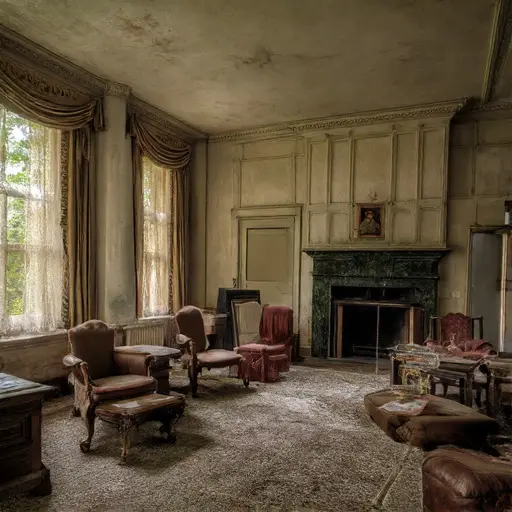
Augustus Whitmore died in 1913 while negotiating another extension on company debts. Probate papers found throughout the mansion suggest bitter disagreements between creditors and surviving heirs. Several account books end abruptly, their final entries incomplete.
The family eventually left. Ledgers remained open. Contracts stayed unsigned. Furniture stood where it had last been used. Whitmore House overlooked the silent valley thereafter, abandoned with its records intact and its financial collapse unresolved.