The Aldermere House and the Quiet Collapse of a Timber Survey Fortune
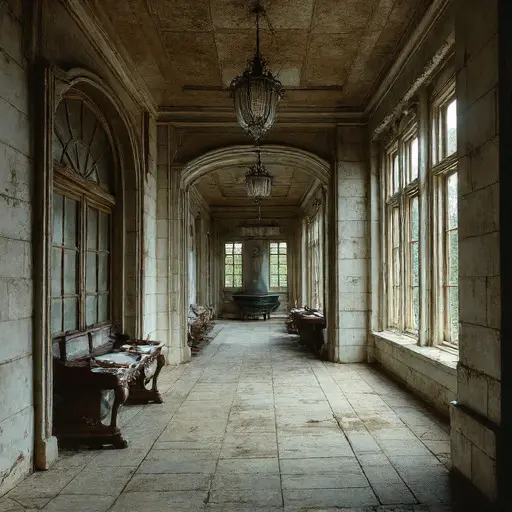
Aldermere House was completed in 1892 for Samuel Frederick Aldermere, born 1845 in Maine, a timber surveyor and forestry valuation consultant whose reports guided large woodland acquisitions throughout the northeastern interior. His wealth came from estimating commercial timber reserves and advising investors on future harvesting yields. The estate occupied the threshold between dense woodland and a still inland lake, allowing him to supervise survey teams while maintaining extensive forestry records.
He lived there with his wife Helen Aldermere and their son Charles, who gradually assumed responsibility for maintaining company ledgers and woodland assessments.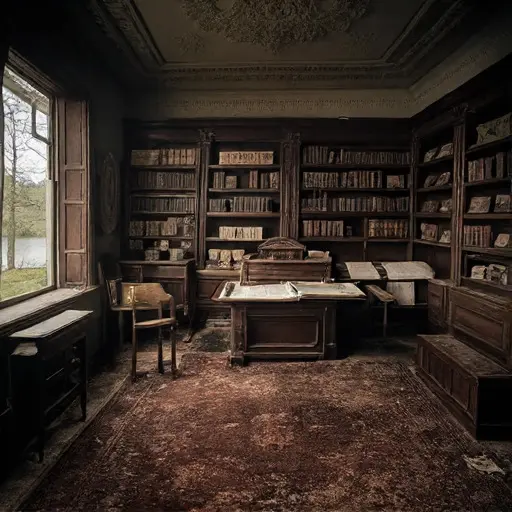
The turning point came after 1907 when several major timber reserves Aldermere had valued proved substantially smaller than projected. Investors who had relied upon his reports suffered losses as harvesting operations failed to produce expected yields. Lawsuits followed. Correspondence preserved inside the study reveals growing disputes over survey methods, disputed boundaries, and conflicting woodland measurements. By 1911, creditors had begun claiming assets against the company.
Financial records found throughout the house show the decline in careful stages. Furniture was repaired instead of replaced. Several rooms were closed to reduce upkeep costs. Silverware disappeared from inventory lists. Unfinished legal documents remained stacked beside overdue tax notices. Charles attempted to reorganize the accounts, but his revisions stop abruptly midway through a ledger dated March 1913.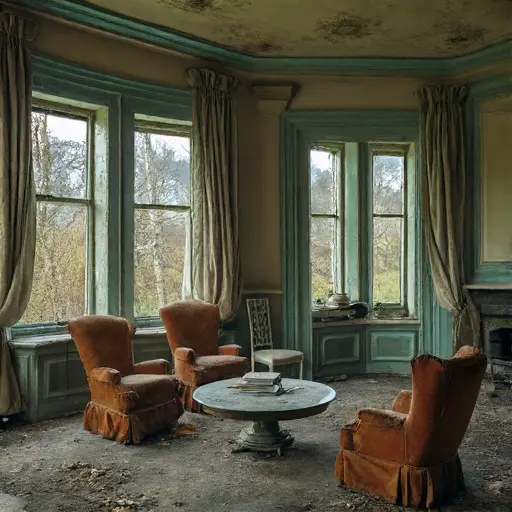
By late 1914, the Aldermere family had departed. The final ledgers remained unfinished in the study, legal files lay unsigned, and several rooms were locked without explanation. No buyer assumed ownership. The furniture remained, the records stayed where they were left, and the house stood empty between forest and lake, abandoned and unresolved.