The Rowecliffe House and the Quiet Dissolution of a Coastal Shipping Ledger Office
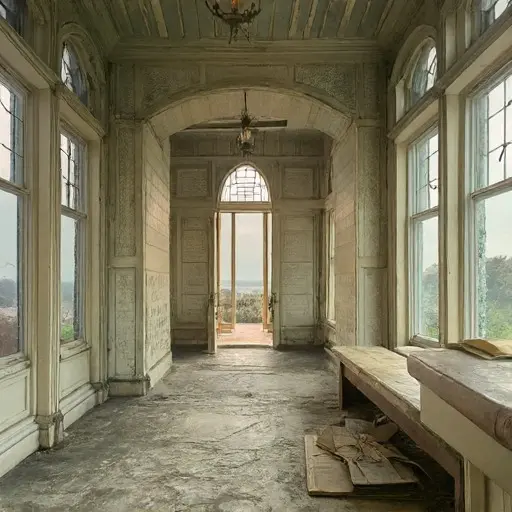
The Rowecliffe House was completed in 1890 for Jonathan Elias Rowecliffe, born 1840 in Devon, a coastal shipping accountant and maritime logistics auditor specializing in harbor-to-inland freight reconciliation and vessel scheduling finance. His wealth came from structuring ledger systems that synchronized shipping manifests with inland rail and cart transport, allowing coastal trade routes to operate with unprecedented financial precision. The house was built on a slight rise above the shoreline to oversee maritime accounting operations and freight documentation.
He lived there with his wife Clara Beaumont Rowecliffe and their son Henry, who later assisted in managing shipping ledgers and coastal audit records tied to regional port authorities.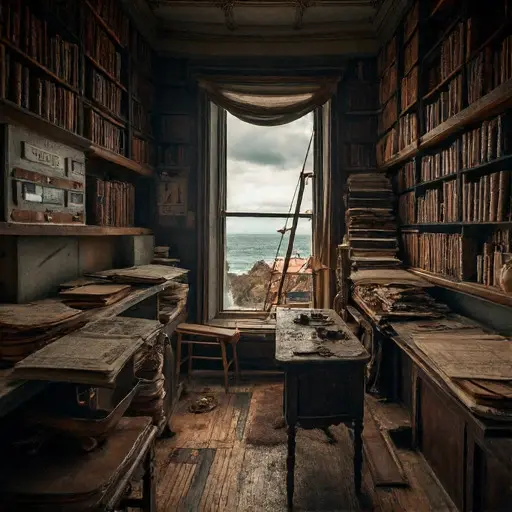
The decline began in 1905 after repeated inconsistencies emerged between recorded shipping manifests and inland delivery confirmations, caused by disruptions in harbor scheduling and shifting tidal loading conditions that invalidated tightly synchronized accounting models. Several shipping partners contested liability allocations when freight timing discrepancies accumulated across seasonal cycles, leading to growing mistrust in Rowecliffe’s reconciliation framework. He had personally guaranteed portions of the shipping ledger system, expecting operational stabilization through improved port coordination, but revised audits revealed persistent misalignment between recorded and actual cargo flow. By 1911, port authorities began restructuring accounting oversight, and correspondence shifted from routine manifest summaries to formal disputes over reconciliation methodology and contractual validity. Henry’s involvement in ledger maintenance ceased abruptly after a final audit identified unresolved inconsistencies in multiple bundled shipping accounts.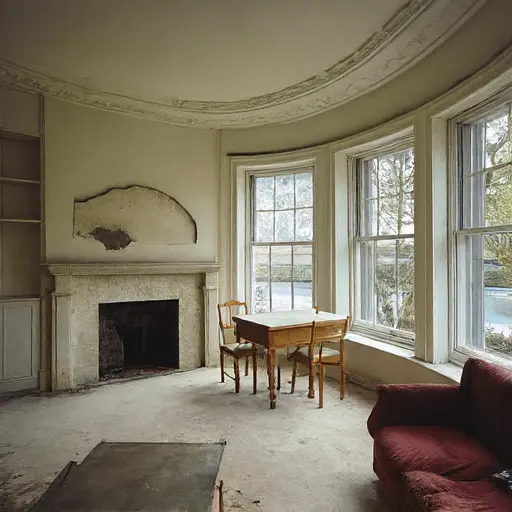
By 1913, Jonathan Rowecliffe had relocated to a regional port authority office to resolve outstanding shipping reconciliation disputes, leaving the house under only intermittent caretaker oversight. Clara’s correspondence ceased shortly afterward, and Henry’s name appears once more in a final institutional file concerning contested maritime accounting standards. The Rowecliffe House remained fully furnished but unmanaged, its shipping archives locked in the study and its sea-facing rooms left untouched. No sale was completed, no family returned, and the property was recorded as vacant, standing intact above the shoreline while quietly continuing to follow its own softened logic of form and drift.