The Blackwell House and the Quiet Dissolution of a Timberland Supply Firm
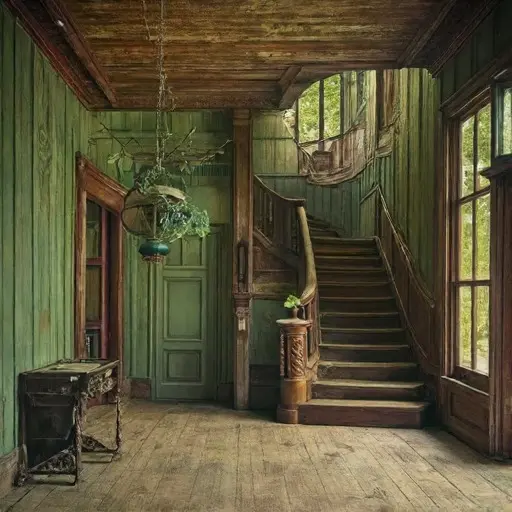
The Blackwell House was completed in 1891 for Edmund Calhoun Blackwell, born 1842 in Vermont, a timberland supply contractor specializing in forest harvesting rights and rural lumber distribution networks. His wealth came from coordinating agreements between logging camps, sawmills, and regional rail depots that transported processed timber to expanding eastern cities. The house was built at the edge of the forest to oversee cutting permits and shipment schedules, serving as both residence and administrative base.
He lived there with his wife Abigail Turner Blackwell and their son Charles, who later assisted in managing forestry ledgers and supply chain documentation tied to regional timber contracts.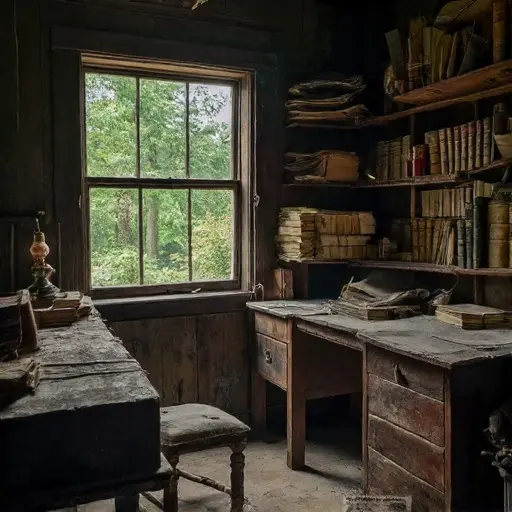
The decline began in 1906 after a series of labor disruptions and forest depletion reports reduced the reliability of contracted timber yields. Several logging partners defaulted when harvest quotas fell below projected output due to stricter conservation enforcement and unpredictable seasonal growth cycles. Blackwell had personally guaranteed portions of supply contracts, assuming alternate forest tracts would compensate for reduced output, but those reserves proved insufficient. By 1911, rail and mill partners began canceling agreements, and correspondence shifted from routine shipment schedules to formal claims and contested land-use assessments. Charles’s involvement in forestry coordination ended abruptly after a regional audit questioned the sustainability of bundled timber yield projections across multiple logging zones.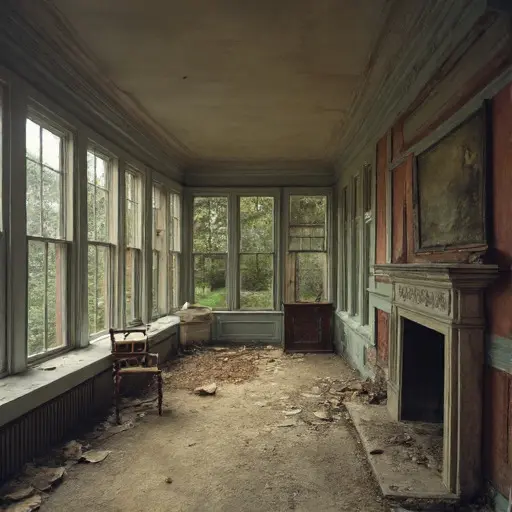
By 1913, Edmund Blackwell had relocated to a regional forestry office to manage unresolved supply disputes, leaving the house under only intermittent caretaker visits. Abigail’s correspondence ceased shortly afterward, and Charles’s name appears once more in a final regulatory file concerning disputed timber yield valuations. The Blackwell House remained fully furnished but unmanaged, its forestry records locked in the study and its greenhouse left to grow unchecked. No sale was completed, no family returned, and the property was recorded as vacant, standing intact at the forest edge while slowly being absorbed into the surrounding woodland without resolution.