The Holloway House and the Quiet Unraveling of a Suburban Lending Estate
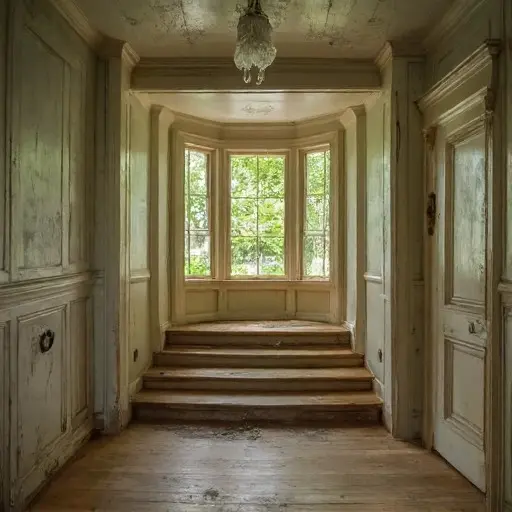
The Holloway House was completed in 1896 for Arthur Clayton Holloway, born 1850 in Pennsylvania, a suburban finance agent specializing in home lending and small municipal bond underwriting. His wealth came from structuring credit agreements between local banks and expanding residential districts during a period of steady suburban growth. The house was built as a permanent family residence and informal office for managing loan documents and property assessments.
He lived there with his wife Mary Ellen Holloway and their son George, who later joined a regional trust office handling mortgage reconciliation records.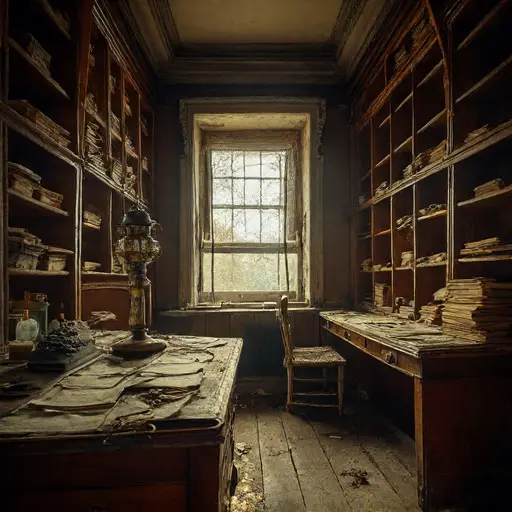
The decline began in 1908 after a regional housing slowdown caused widespread mortgage defaults across newly developed suburbs. Holloway’s firm had issued extended credit terms to multiple homeowners under rising valuation assumptions that did not hold after interest rates tightened. As repayments failed, banks began recalling loans and consolidating accounts under stricter oversight. Correspondence shifted from routine payment schedules to formal notices delivered weekly. George’s involvement in mortgage reconciliation ended abruptly after an audit flagged inconsistencies in valuation assumptions tied to several grouped property loans.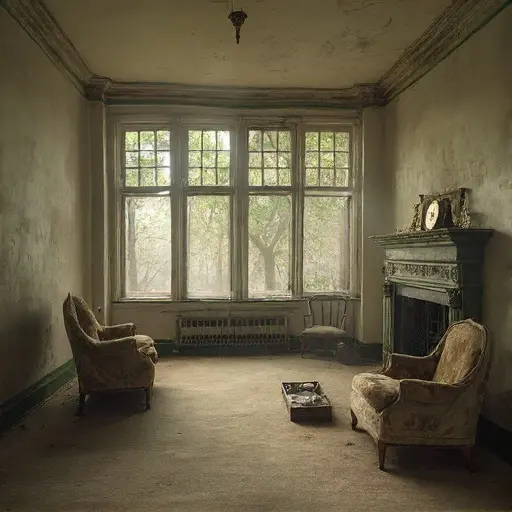
By 1913, Arthur Holloway had relocated to a downtown office to manage unresolved mortgage settlements, leaving the house under only occasional caretaker visits. Mary Ellen’s correspondence ceased shortly afterward, and George’s name appears once more in a final regulatory filing concerning disputed loan valuations. The Holloway House remained fully furnished but unmanaged, its financial records locked in the study and its suburban rooms left untouched. No sale was completed, no family returned, and the property was recorded as vacant, standing intact but abandoned without resolution.