The Ravenscar House and the Quiet Disappearance of a Coastal Shipping Fortune

The Ravenscar House was completed in 1895 for Jonathan Miles Ravenscar, born 1847 in Bristol, a coastal shipping agent and marine freight investor specializing in trans-channel trade insurance. His wealth came from underwriting cargo routes between British ports and continental harbors, particularly coal, textiles, and stone exports. The house was built after a decade of rising maritime commissions, intended as both family residence and informal office for coastal trade correspondence.
He lived there with his wife Edith Carrow Ravenscar and their son Philip, who later trained in naval logistics before assisting with shipping documentation.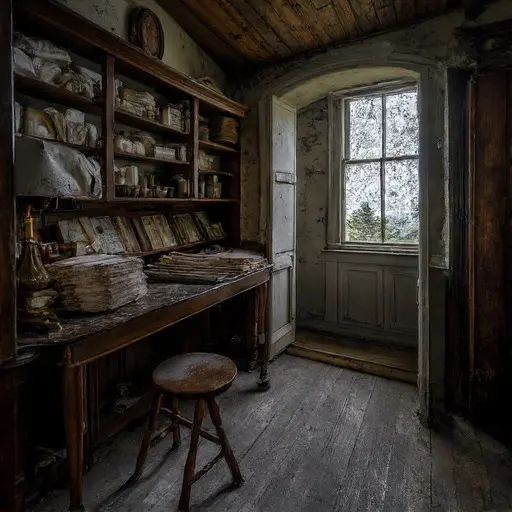
The decline began in 1906 after a series of violent storms along the western coast destroyed multiple insured shipments and damaged key harbor infrastructure tied to Ravenscar’s underwriting agreements. Several shipping partners defaulted simultaneously, triggering cascading liabilities across his contracts. Ravenscar personally guaranteed portions of the losses, assuming maritime conditions would stabilize. By 1910, creditors began reclaiming assets, and correspondence shifted from routine maritime accounting to formal legal notices delivered weekly. Philip’s naval appointment was quietly suspended pending review of contested freight insurance obligations.
By 1913, Jonathan Ravenscar had relocated to a rented inland office to manage unresolved maritime settlements, leaving the house under only occasional caretaker oversight. Edith’s correspondence ceased shortly afterward, and Philip’s name appears once more in a legal document concerning disputed shipping liabilities. The Ravenscar House remained fully furnished but unmanaged, its ledgers locked in the study and its sea-facing rooms left to gather salt and dust. No sale was completed, no family returned, and the property was recorded as vacant, standing intact but abandoned without resolution.