The Ellsworth House and the Quiet Disappearance of a Property Trust
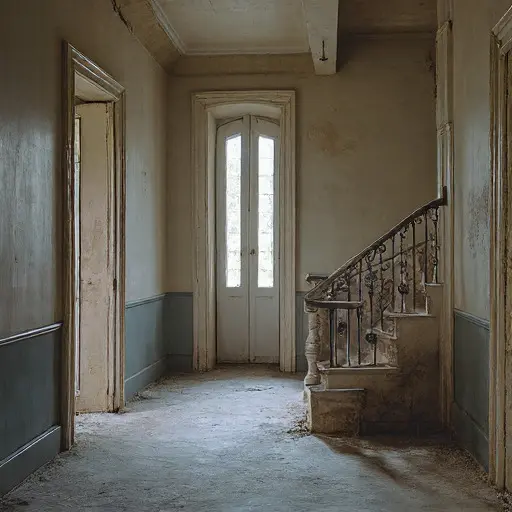
The Ellsworth House was completed in 1897 for Frederick James Ellsworth, born 1850 in Sheffield, a property trustee and rural investment manager overseeing estate mortgages and hillside land developments. His wealth came from administering pooled family trusts tied to agricultural leases and suburban expansion loans during a period of controlled regional growth. The house was built as a permanent residence after his retirement from active financial administration, intended to reflect stability rather than prominence.
He lived there with his wife Helen Carter Ellsworth and their son Samuel, who later studied land surveying before assisting with estate valuations.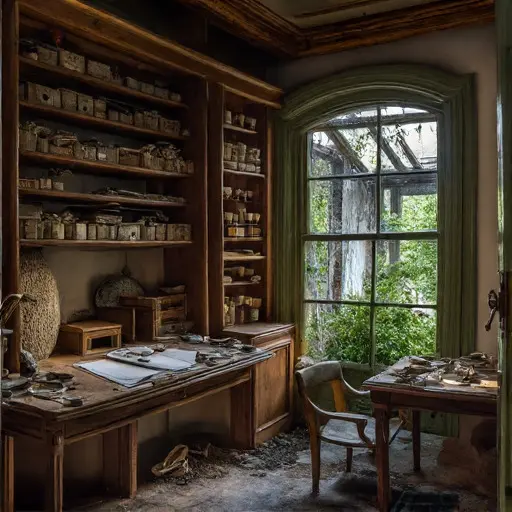
The decline began in 1905 when several suburban development loans defaulted after a slowdown in hillside expansion and a drop in land speculation. Ellsworth had guaranteed portions of the trust using personal holdings, assuming continued municipal growth that failed to materialize. As repayments faltered, banks initiated structured recall of credit lines. Correspondence shifted from routine estate management to formal notices delivered weekly. By 1910, portions of the property portfolio were quietly liquidated through agents, and Samuel’s surveying work was suspended pending review of contested valuations.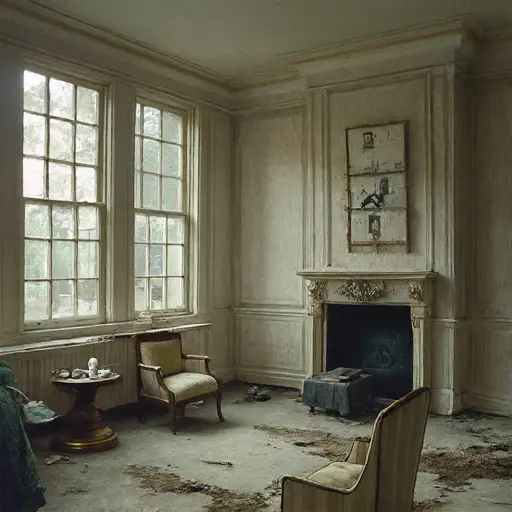
By 1913, Frederick Ellsworth had relocated to temporary offices in the city to manage unresolved trust disputes, leaving the house under minimal oversight. Helen’s correspondence ceased shortly afterward, and Samuel’s name appears only once more in a settlement document concerning unpaid valuations. The Ellsworth House remained fully furnished but unmanaged, its ledgers locked in the study and its greenhouse left to grow unchecked. No sale was completed, no family returned, and the property was recorded as vacant, standing intact but abandoned without resolution.