The Caldwell House and the Quiet Dissolution of a Banking Family
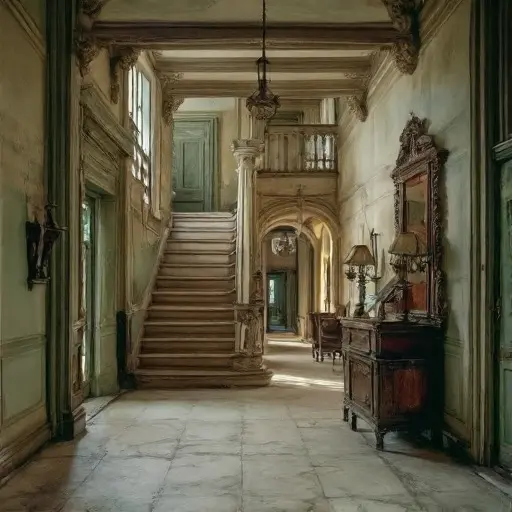
The Caldwell House was completed in 1896 for Arthur Henry Caldwell, born 1853 in Bristol, a financier specializing in railway bonds and provincial bank investments. His wealth came from steady returns during the expansion of inland rail infrastructure and municipal credit schemes. The house was built as a permanent family residence, reflecting disciplined financial success rather than aristocratic excess, with carefully ordered interiors and restrained decoration.
He lived there with his wife Eleanor Brooks Caldwell and their son Frederick, who later trained in commercial law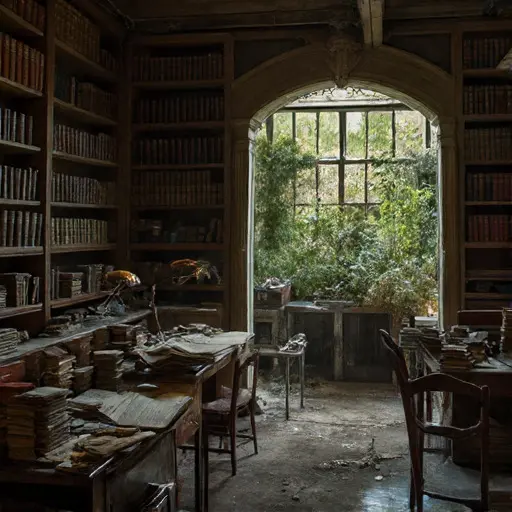
The decline began in 1908 when several railway companies defaulted on interest payments following a regional credit contraction. Caldwell had guaranteed multiple bond portfolios, assuming stability that did not hold. As defaults spread, his liabilities exceeded liquid assets. Banks began calling in secured loans, and correspondence shifted from routine reports to formal demands. By 1911, portions of the household collection were quietly sold through intermediaries, and Frederick’s legal apprenticeship was interrupted as creditors pursued settlement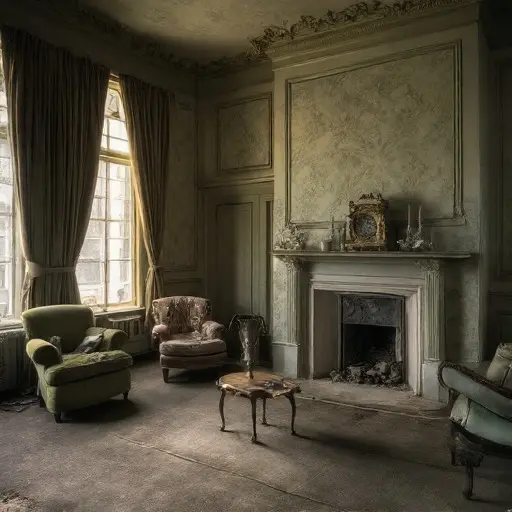
By 1913, Arthur Caldwell had relocated to a rented lodging in London for financial supervision, leaving the house under minimal caretaker oversight. Eleanor’s correspondence ceased shortly after, and Frederick’s name appears only once in a final legal filing regarding unpaid obligations. The Caldwell House remained fully furnished but unmanaged, its ledgers locked in the study and its greenhouse left to grow unchecked. No sale was finalized, and no family returned. The property was recorded as vacant, standing intact but abandoned without resolution