The Broken Marceau House
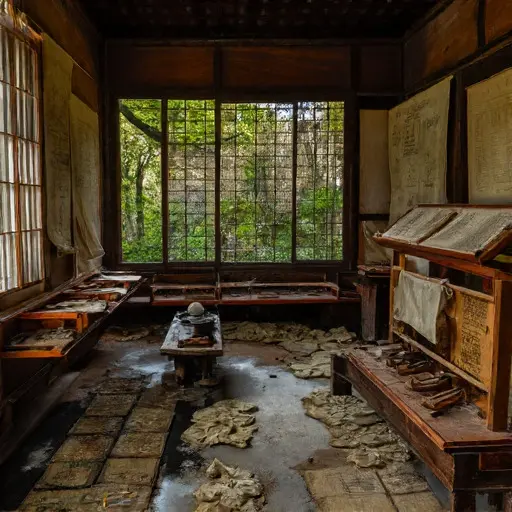
The Marceau House was established in 1902 on the outskirts of a silk-producing district in western Japan for Henri Marceau (1866–1912), a silk export inspector employed by international trading firms and customs offices to certify the quality, thread consistency, and dye stability of raw silk destined for European luxury textile markets.
The villa functioned as both residence and inspection station, where Marceau and his assistants examined silk filament strength, verified cocoon harvest quality, and recorded export classifications required for pricing agreements between Japanese producers and foreign import houses. His household included his wife Aiko and his assistant Kenji Nakamura, both responsible for maintaining grading logs and sealed export certificates.
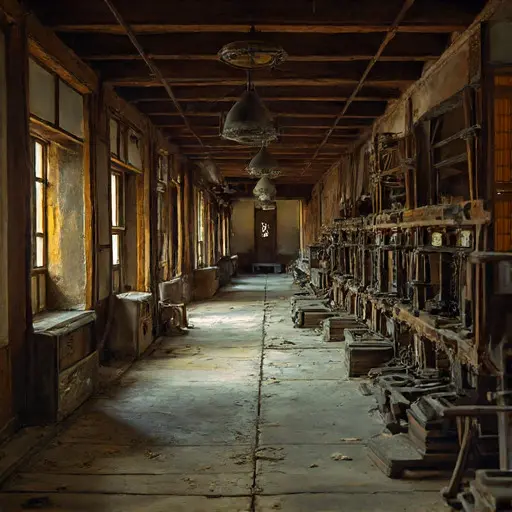
The turning point came in 1908 when synthetic silk production methods in Europe rapidly advanced, allowing manufacturers to bypass traditional raw silk grading systems by chemically standardizing fiber quality at industrial scale.
At the same time, new international trade agreements began favoring bulk textile contracts over individual inspection certification, reducing the role of independent grading stations across exporting regions.
Inspection requests stopped arriving. Export seals were no longer validated. The villa’s certification authority faded without formal closure.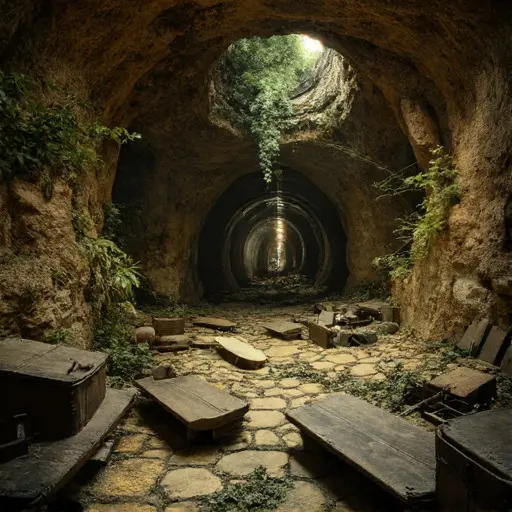
By 1912, Henri Marceau was formally removed from international textile inspection service following the dissolution of independent silk grading offices and the consolidation of industrial textile certification under corporate manufacturers.
Inside the final export ledger, inspectors found an incomplete silk classification entry for a shipment that had already been blended into synthetic production lines.
The Marceau House remains abandoned among the mulberry groves, its silk unraveling in silence, its systems obsolete, and its rooms slowly dissolving into thread, dust, and time.