The Ruined Bellerose House
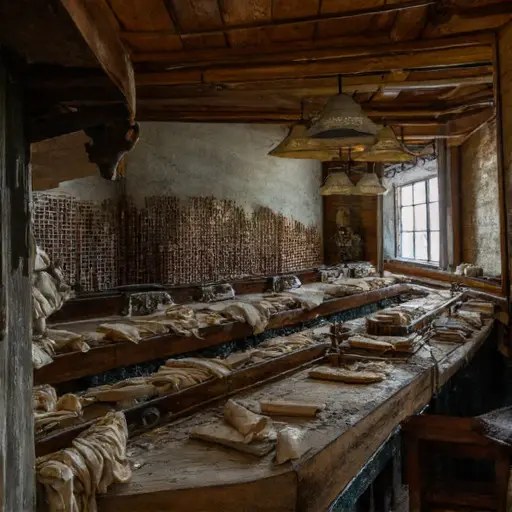
The Bellerose House was constructed in 1901 in a remote river valley of Quebec for Émile Bellerose (1865–1912), a postal relay clerk employed by provincial mail authorities to coordinate winter correspondence routes between isolated farming settlements, logging camps, and small administrative outposts spread across the region.
The villa functioned as both residence and mail sorting station, where Bellerose and his assistants processed incoming and outgoing correspondence, maintained delivery schedules, and updated route reliability logs based on river freeze conditions and sled travel accessibility. His household included his wife Madeleine and his assistant Lucien Tremblay, both responsible for maintaining postal registers, route adjustment ledgers, and seasonal delivery charts.
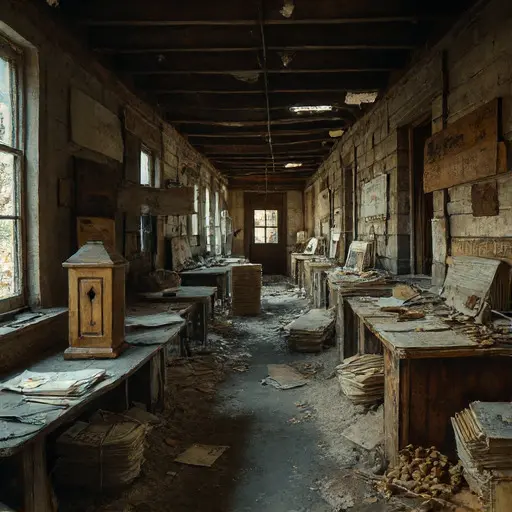
The turning point came in 1909 when rural postal service reforms introduced centralized rail-linked mail distribution hubs, eliminating small relay stations that depended on seasonal river and sled logistics.
At the same time, improved telegraph and early telephone networks reduced reliance on physical correspondence for urgent communication, accelerating the closure of isolated postal sorting posts across the region.
Mail deliveries stopped arriving. Route schedules were no longer updated. The villa’s sorting system fell silent mid-season.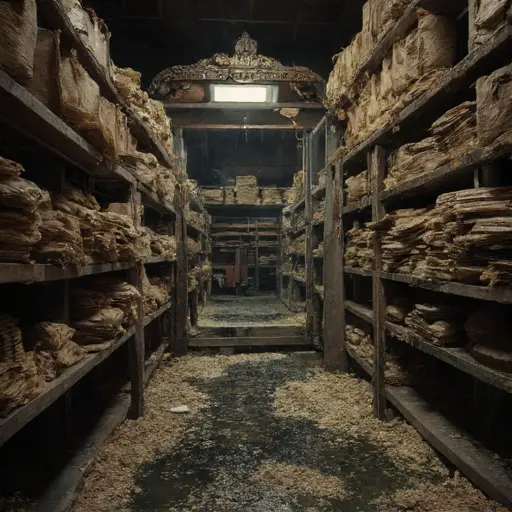
By 1912, Émile Bellerose was formally removed from provincial postal service following the dissolution of rural relay stations and the centralization of national mail distribution networks.
Inside the final routing ledger, inspectors found an undelivered letter addressed to a settlement that had already been removed from official postal maps.
The Bellerose House remains abandoned in the river valley, its letters unclaimed, its systems obsolete, and its rooms slowly fading into frost, paper, and silence.