The Vanished Calder House
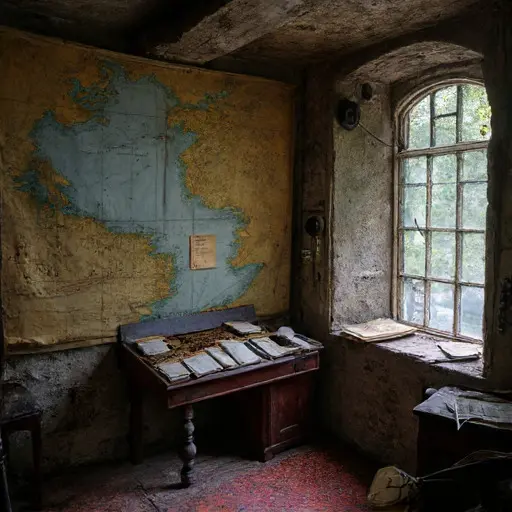
The Calder House was built in 1902 on a remote Scottish island for Thomas Calder (1865–1912), a coastal weather station supervisor employed by maritime safety boards and shipping authorities to record storm patterns and issue fog and gale warnings for vessels crossing the North Atlantic approaches.
The villa functioned as both residence and operational forecasting post, where Calder and his assistants manually tracked barometric shifts, sea pressure changes, and wind direction logs transmitted to mainland ports. His household included his wife Margaret and his assistant Ian McRae, both responsible for maintaining weather registers and storm warning bulletins.
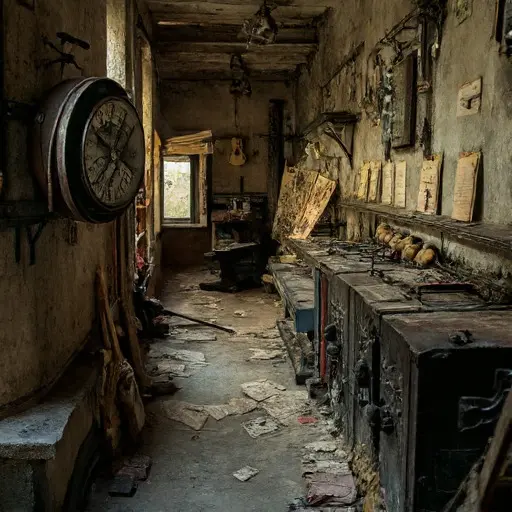
The turning point came in 1909 when automated coastal telegraph stations were installed along the mainland, allowing centralized meteorological offices to issue faster and more accurate storm warnings than isolated island stations could provide.
At the same time, the shipping routes near the island were rerouted due to new steam navigation channels, reducing the strategic need for localized forecasting posts like Calder House.
Messages stopped arriving. The telegraph line went silent. No replacement staff were ever sent.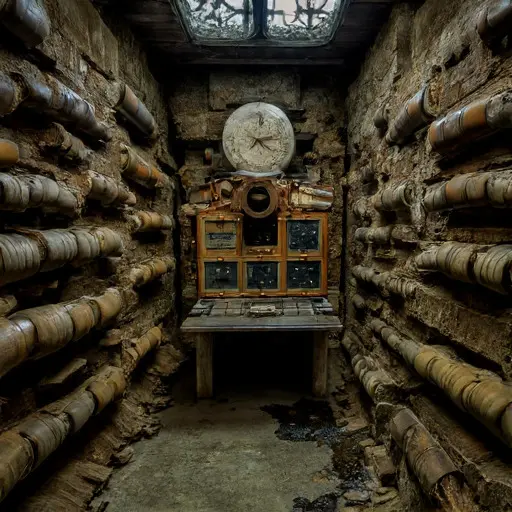
By 1912, Thomas Calder was officially removed from coastal service following the closure of island weather stations and the centralization of national meteorological operations.
Inside the final storm register, inspectors found an unissued gale warning that was never transmitted before the telegraph line was dismantled.
The Calder House remains abandoned on the island cliff, its instruments rusting in salt air, its forecasts unfinished, and its rooms slowly fading into mist, wind, and silence.