Absolute Stillness in the House the Candle Forger Never Extinguished
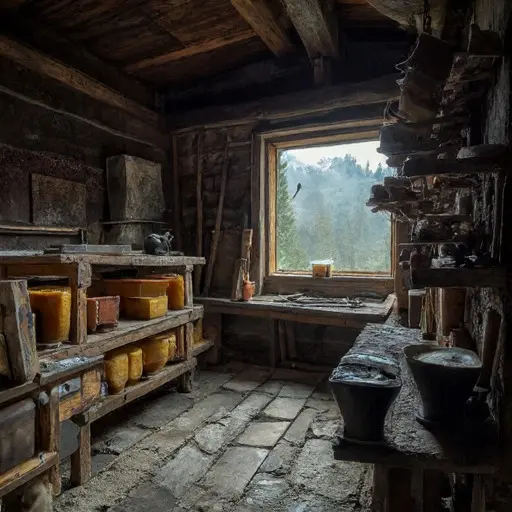
The wax still smells faintly warm.
Even in a cold room.
Even after years of still air.
It clings to the edges of the molds as if heat recently left but never fully disappeared.
This house belonged to Jonas.
He worked as a candle forger, crafting long-burning ritual candles, alpine travel candles, and emergency light sources for mountain communities cut off during winter seasons.
The workshop occupied the lower stone room where temperatures stayed stable year-round.
Iron molds lined the walls. Beeswax bricks sat stacked beside linen-wrapped wick bundles. Wooden cooling racks stretched across the center of the room like quiet scaffolding for light.
The house did not store fire.
It stored the ability to make it.
At the Wax Tempering Hearth Table
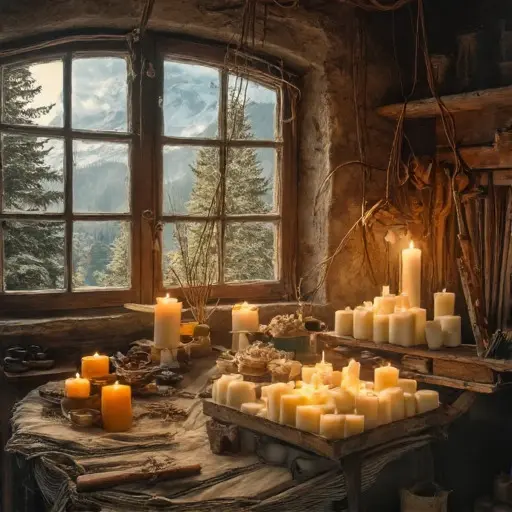
Jonas worked most often at the Wax Tempering Hearth Table.
The thick stone-slab table in the center of the workshop was used to soften wax slowly using controlled heat from an embedded iron core beneath the surface.
His wife died during a severe winter avalanche season many years earlier.
After that, Jonas stopped delivering candles personally.
For a long time, the profession remained essential.
Mountain villages depended on long-burning hand-forged candles during winter storms, power failures, and travel blackouts when roads became impassable for weeks at a time.
Then electrification expanded.
Remote grids reached high-altitude settlements, replacing traditional light-making practices with centralized power systems and battery storage.
Jonas kept forging anyway.
Not for markets.
Not for orders.
But for continuity.
Still, the decline was not only technological.
Winters grew longer, but less predictable. Freeze-thaw cycles destabilized supply routes for beeswax and disrupted alpine beekeeping cycles that had supported the craft for generations.
Then came isolation.
A prolonged series of mountain closures due to unstable snowpack conditions cut off access roads entirely for extended periods. Deliveries stopped. Trade routes collapsed.
Jonas remained inside the workshop.
One final winter storm sealed the valley for weeks.
During that time, he continued working at the Wax Tempering Hearth Table, shaping wax into long emergency candles as storage supplies ran low.
No rescue reached the village during a secondary avalanche warning that blocked the only remaining access trail.
Jonas was found later when the thaw finally came.
The workshop remained intact beneath snow-dim light.
The house was never reopened for craft use again.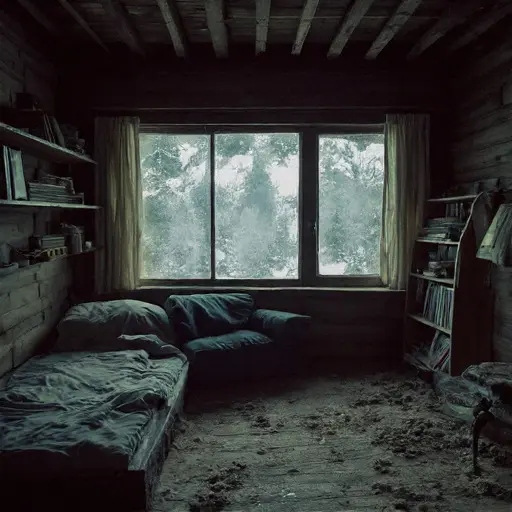
The wax blocks remain stacked.
The molds are still warm in memory only.
And at the Wax Tempering Hearth Table, Jonas’s unfinished candles continue waiting in silence—holding the last light he never returned to extinguish or complete.