Stubborn Quiet in the House Where the Clockmaker Worked Alone
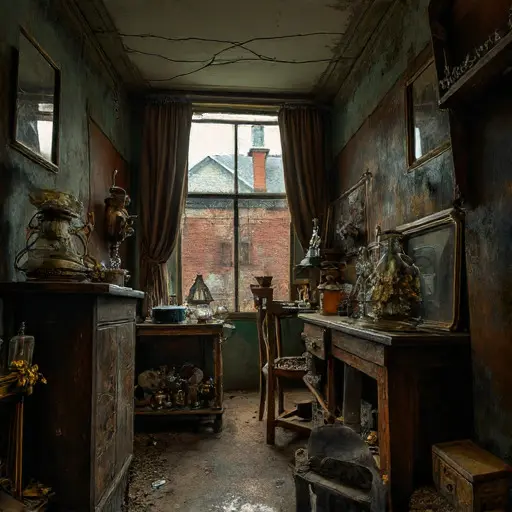
The clocks stopped at different times.
That is usually the first thing visitors notice.
Some rest near noon.
Others froze just before midnight.
A small wall clock above the doorway still points toward three minutes past four.
Nothing was synchronized here except the work.
This townhouse belonged to Stefan.
He worked as a mechanical clockmaker, repairing household clocks, church regulators, and pocket watches for much of his life.
The workshop occupied the upper floor.
Tiny drawers lined the walls. Brass gears sat inside labeled tins. Magnifying lenses and oil cloths remained arranged across a long bench worn smooth by decades of hands and tools.
The house felt disciplined without becoming cold.
Meals were eaten downstairs.
Repairs happened above.
And every room carried some version of measured sound.
Beneath the Brass Pendulum Shelf
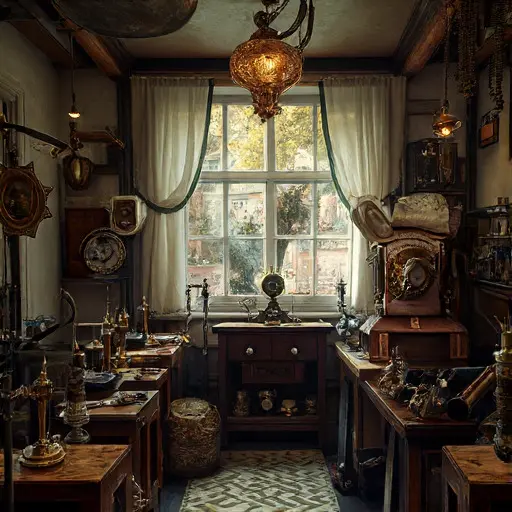
Stefan spent most days beneath the Brass Pendulum Shelf.
The long ledge above his bench stored unfinished repairs and clocks waiting for parts.
His wife handled customers while he worked quietly upstairs.
People brought him wedding gifts, inherited watches, and clocks that had belonged to grandparents.
Repairs often became conversations.
For years the profession remained steady.
Mechanical clocks needed care and households expected objects to last.
Then time changed.
Quartz movements and inexpensive factory clocks reached local shops at prices independent repairmen could not compete with. Broken clocks were replaced rather than repaired and fewer apprentices learned traditional mechanisms.
Stefan kept working anyway.
But another change hurt more.
The old commercial quarter surrounding the townhouse gradually emptied.
Historic businesses closed, rent increased, and many longtime residents moved elsewhere. Foot traffic disappeared and neighboring workshops fell dark one after another.
The street grew quieter.
So did the house.
In his later years, Stefan repaired mostly heirlooms and sentimental pieces.
One unfinished regulator still stands inside the workshop near the Brass Pendulum Shelf.
Its case had been polished.
Its movement nearly restored.
He never completed it.
Neighbors later recalled hearing faint ticking through the townhouse walls during a week of heavy snow.
Stefan died peacefully not long afterward.
No family returned permanently to live there.
The tools remained.
The clocks stayed where they rested.
And inside the workshop, every stopped face preserves its own small version of departure—as though the house kept time differently after the clockmaker was gone.