Defiant Quiet Inside the House the Mapmaker Refused to Leave
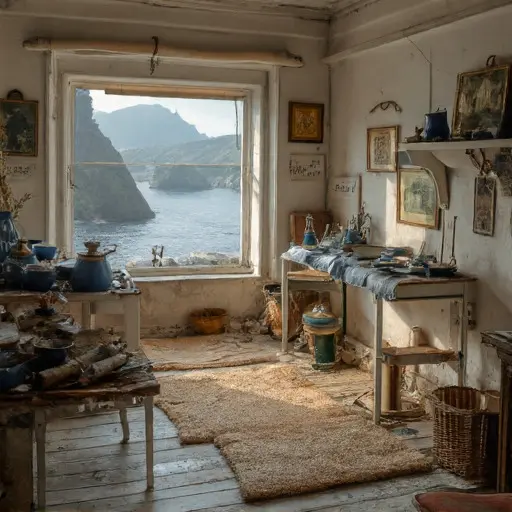
The maps remain rolled with ribbon.
Not displayed.
Not framed.
Stored exactly where they were left, stacked inside shallow shelves beside the desk.
The ribbons have faded unevenly from years of sunlight drifting through the window.
This house belonged to Levent.
He worked as a coastal cartographer, producing and updating navigation charts for small harbors, fishing routes, and shoreline communities.
His work rarely appeared in books.
It lived in working hands.
The house sat above the water and reflected that life without becoming an office.
Compasses rested beside teacups. Survey notebooks shared shelves with family photographs. Weather pencils and folded charts occupied the same drawer where others might keep letters.
The rooms felt practical.
Used.
Never curated.
At the Tide Archive Desk
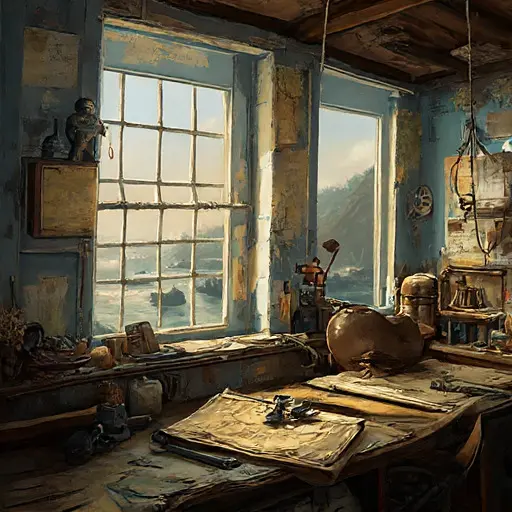
Levent worked most often at the Tide Archive Desk.
The heavy wooden table stood beside the eastern window where morning light reached the paper before heat curled its edges.
His wife managed the household downstairs while he spent long weeks charting changes along the coast.
Their children eventually left for the city.
The house did not.
For years his profession remained necessary.
Harbors shifted. Sandbanks moved. Small fishing communities relied on locally updated charts more often than outsiders realized.
Then navigation transformed.
Satellite positioning and digital marine systems replaced much of the manual surveying that men like Levent had spent decades learning. Updated maps arrived electronically and regional chart offices closed or merged.
He retired officially.
Not emotionally.
The harder blow came later.
Fishing itself changed.
Large commercial operations and declining coastal catches weakened the small harbors his work had once served. Several docks fell quiet and local boat traffic steadily disappeared.
Levent continued updating old notebooks anyway.
Mostly for himself.
Mostly for memory.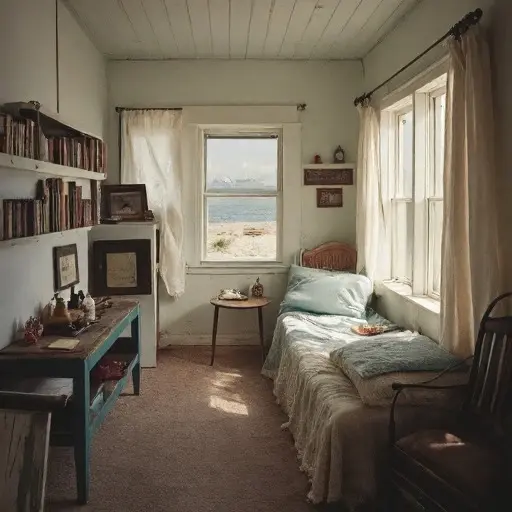
In his final years, only a few rooms stayed active.
The kitchen.
The upstairs bedroom.
And the study beside the Tide Archive Desk.
One incomplete shoreline correction still rests there—notes penciled beside a harbor sketch where erosion had altered part of the coast.
He never finished the revision.
Neighbors later said Levent had spent an entire afternoon working during heavy sea fog, pausing often to watch the water from the window.
He died quietly not long afterward.
No one removed the charts.
The desk stayed where it was.
And the faded ribbons still hold the maps closed, preserving a coastline that changed faster than the man who spent his life trying to understand it.