Unbroken Silence in the House Where the Tailor Stayed Too Long
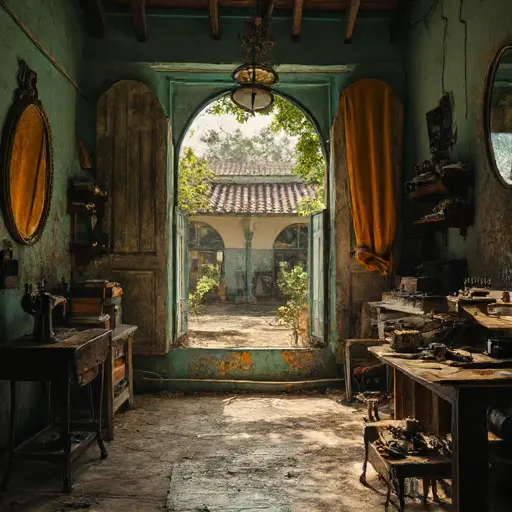
The measuring tape still hangs from the nail.
Yellowed with age and curled at the ends, it rests beside a wooden doorway polished smooth by decades of passing hands.
Nothing in the room looks staged.
Only paused.
This house belonged to Safiye and her family for nearly sixty years.
She worked as a custom tailor, sewing dresses, jackets, school uniforms, and wedding garments for people across the neighborhood.
The sewing room occupied the brightest corner of the home.
Bolts of fabric filled cedar cupboards. Tin boxes held spare buttons sorted by color. Chalk marks still faintly dust the worktable where she cut patterns by hand.
Her profession shaped the house quietly.
Clients entered through the courtyard carrying cloth and measurements. Tea was served before fittings. Conversations lasted longer than appointments.
The home carried sound.
Laughter.
Pins dropping onto wood.
Footsteps crossing tile.
Near the Blue Pattern Cabinet
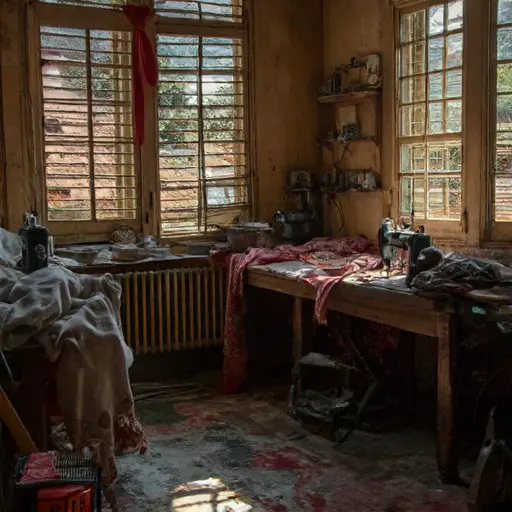
Safiye spent most afternoons near the Blue Pattern Cabinet.
The painted cupboard stored paper templates gathered across decades—school uniforms from the 1970s, ceremonial dresses, winter coats, and handwritten alterations folded into careful bundles.
Her husband died first.
The children eventually moved away.
But Safiye remained in the house and continued sewing.
For years the work stayed steady.
People still repaired clothing and ordered garments made to fit rather than purchased off shelves.
Then shopping changed.
Mass-produced fashion and imported clothing reached local markets at prices independent tailors could not match. Ready-made garments replaced fittings and neighborhood workshops closed one after another.
Safiye adapted as long as she could.
Shorter orders.
More repairs.
Less income.
But the hardest change arrived later.
The old market district began emptying.
Commercial redevelopment pushed longtime shops away and younger families settled elsewhere. Foot traffic faded and with it the community that had once filled her courtyard.
The house grew quieter.
Rooms closed one by one.
The sewing room remained open.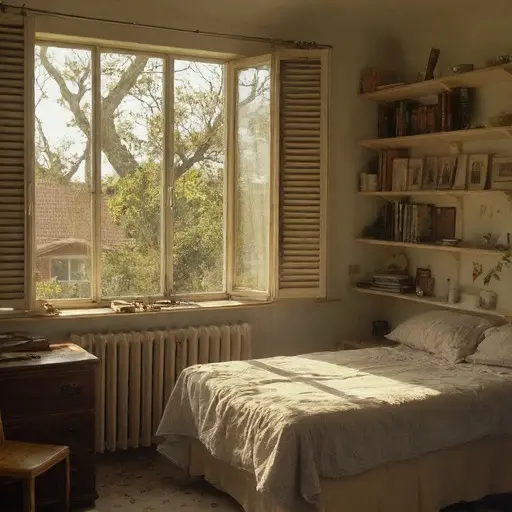
In her final years, Safiye repaired clothing mostly for neighbors and out of habit.
One unfinished garment still rests inside the sewing room—a child’s jacket pinned carefully at the sleeve.
She never finished it.
Neighbors later said she had spent an entire evening working near the Blue Pattern Cabinet while rain moved across the rooftops.
She died peacefully in her sleep later that night.
No one sold the house.
The machines stayed.
The fabric remained folded.
And the measuring tape still hangs from the nail, waiting beside a room that once knew exactly how people wished to be seen.