Ferocious Stillness Entered the Apartment Where Celina Counted the Fatigue of Umbrellas
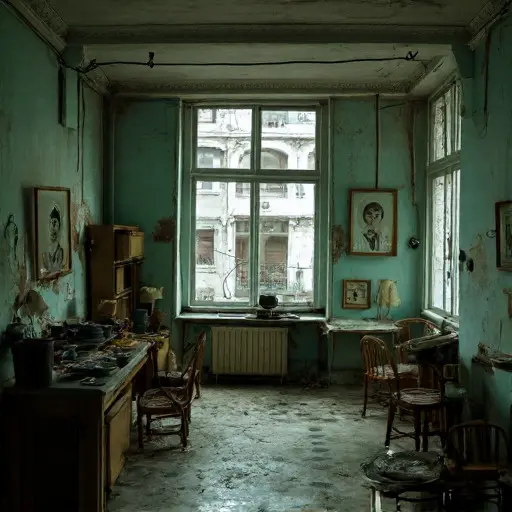
The umbrellas remain open.
That alone unsettles visitors.
Not folded against the walls.
Not stored inside stands.
Open.
Dozens of them bloom across the studio like dark flowers frozen mid-rain, their fabric stretched carefully beneath ceiling hooks and drying lines.
Celina said closed umbrellas lied about weather.
The apartment belonged to her for nearly thirty years.
She lived alone and practiced a profession most people misunderstood even when it still existed.
Celina was an umbrella fatigue analyst.
Her work involved studying how umbrellas weakened over time—how tension, wind strain, fabric memory, and rib deformation revealed changing urban weather and material resilience. Manufacturers, commuters, and repair guilds once relied on specialists like her to evaluate durability and storm behavior.
She measured weather through surrender.
The repair studio still preserves her scrutiny.
Spring gauges remain beside stitching awls. Rain ledgers lie beneath ceramic paperweights. Metal ribs hang from hooks beside repaired canopies labeled by storm type, street district, and structural failure.
The room feels permanently mid-storm.
Around the Bent Monsoon Frame
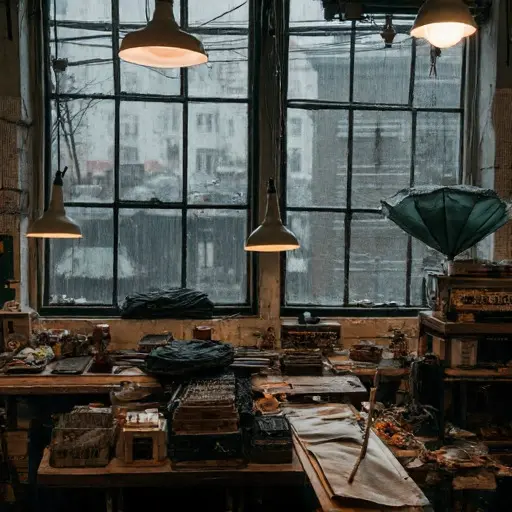
Celina worked around the Bent Monsoon Frame.
The circular testing rig stood near the eastern windows and allowed her to simulate directional wind strain against repaired umbrellas without tearing delicate fabric.
One unfinished assessment still rests there.
The canopy restored.
The fatigue threshold untested.
Celina inherited fragments of the profession through repair shops and commuter cooperatives that once treated umbrellas as personal tools rather than disposable purchases.
People remembered her refusing to repair carelessness.
For decades the work survived.
Urban repair culture and local manufacturers still valued durability studies tied to daily weather and craftsmanship.
Then replacement became cheaper.
Fast manufacturing, discount imports, and throwaway consumer habits steadily displaced repair economies and erased the demand for fatigue analysis. Umbrellas became temporary conveniences.
Celina disliked disposable handles.
She said they expected failure.
Still, she continued repairing and documenting strain behavior long after customers dwindled.
Then the rain shifted.
Climate irregularity brought increasingly violent crosswinds and sudden downpours that overwhelmed traditional umbrella designs and rendered older fatigue comparisons unreliable.
The rain survived.
Its manners changed.
Already living with severe rheumatoid arthritis and worsening circulation in her hands, Celina spent longer evenings inside the studio preserving repair records few people wanted.
One autumn storm arrived with extraordinary gusts after days of pressure instability.
Celina remained inside the testing area beside the frame, attempting to document an unusual canopy collapse pattern caused by spiraling wind.
A shattered window and falling glass ended the work before help arrived.
The funeral gathered tram workers, seamstresses, and elderly neighbors who still carried umbrellas Celina repaired years earlier.
The apartment remained afterward.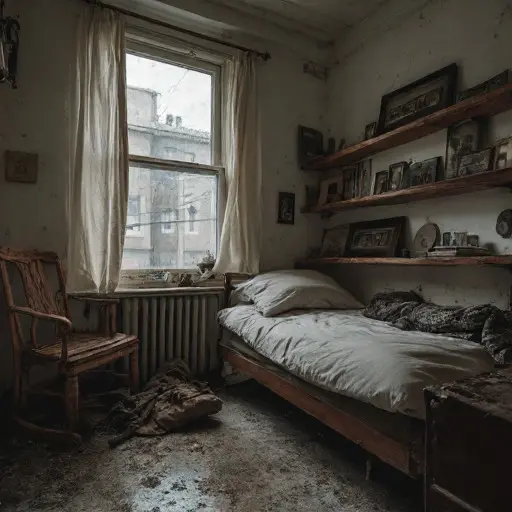
The spring gauges remain beside the awls.
The umbrellas still open toward the ceiling.
And around the Bent Monsoon Frame, Celina’s unfinished fatigue study continues waiting in silence—holding the last storm she never returned to teach fabric how to survive.