Ruthless Tenderness Stayed in the Boathouse Where Ina Folded the Geography of Fog
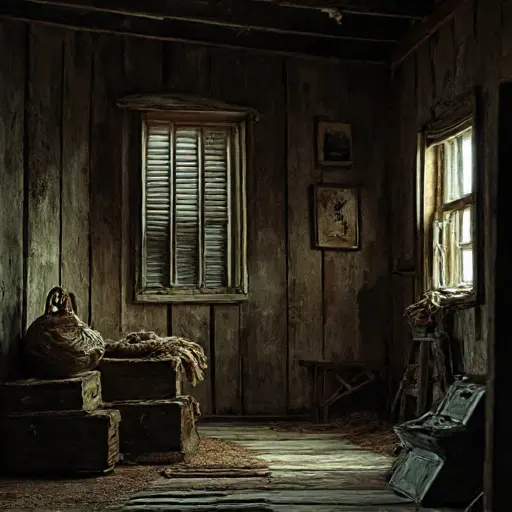
The ropes drip even in dry weather.
No leak explains it.
No rain reaches the loft.
Yet thin moisture still gathers along the hanging cords above Ina’s tables, darkening the fibers before dawn and drying only after full daylight reaches the river.
People once joked that the house sweated.
Ina said it remembered.
The boathouse stood where the river widened and slowed before splitting around reed islands. She lived there alone for decades, occupying the upper loft while the lower floor stored abandoned skiffs and weather instruments nobody else understood.
Her profession sounded invented.
Perhaps that helped kill it.
Ina was a fog contour folder.
She studied river fog not through photography or forecasting but through cloth geometry. Using suspended linen, weighted cords, and moisture-reactive dyes, she recorded how fog entered waterways, bent around current, and settled against landforms. Ferrymen, marsh pilots, and river settlements once relied on people like her to understand dangerous crossings and seasonal visibility.
She mapped uncertainty.
The loft still preserves her vocabulary.
Lengths of pale fabric hang from cedar poles. Moisture stains bloom across folded studies pinned to the walls. River journals sit beside glass humidity tubes and shallow trays holding chalk gathered from shoreline deposits.
Nothing inside feels decorative.
The room was built for hesitation.
Between the Veiled Current Rack
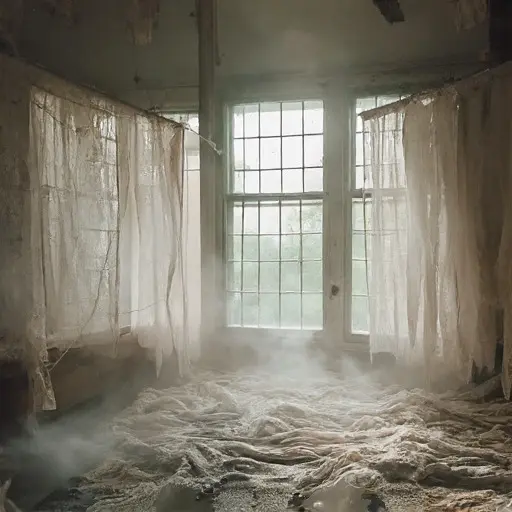
Ina worked most intensely near the Veiled Current Rack.
It was not furniture in the ordinary sense—more an arrangement of rails suspended above the floor where wet cloth studies could settle into shape without collapsing under their own moisture.
One unfinished contour still hangs there.
The lower folds stained.
The northern drift unresolved.
She learned the craft from pilots who navigated fog before engines grew reliable and before shoreline lights multiplied into confusion.
Old ferrymen trusted her.
Not because she predicted weather.
Because she noticed where it hesitated.
For years her work mattered quietly. Fog studies informed crossings, guided seasonal transport, and helped villages understand how river breathing shifted across changing water and shoreline growth.
Then the skies filled.
Commercial drone corridors and surveillance traffic spread along the river systems, introducing persistent mechanical turbulence and artificial lighting that altered low fog formation near populated channels. Patterns Ina had documented for decades became increasingly distorted.
The fog still arrived.
It no longer settled honestly.
She tried adapting.
New journals appeared.
New measurements.
But the river she understood began speaking in interrupted grammar.
Already living with severe vestibular disease that distorted balance and depth perception, Ina climbed the loft ladders more carefully each season. Her handwriting grew uneven. Some cloth studies remained unfinished for months.
One autumn brought unusually warm nights and strange fog—thin, restless, refusing the shapes she expected.
Ina remained awake until morning working beside the rack, refolding damp linen and comparing it against older contours gathered during calmer years.
When neighbors finally entered the loft later that day, they found her seated beneath the suspended studies.
The journals open.
Her pulse gone.
The funeral drew ferrymen who no longer needed her maps and river families who still remembered mornings when Ina could describe fog before opening the shutters.
Afterward, nobody dismantled the loft.
The cords still darken before sunrise.
The humidity tubes remain along the sill.
And between the Veiled Current Rack, Ina’s unfinished fog contour continues hanging in silence—holding the last geography of river mist she never returned to fold into memory.