Profane Quiet Gathered Around the Manor Where Eirwyn Tuned the Breathing of Bells
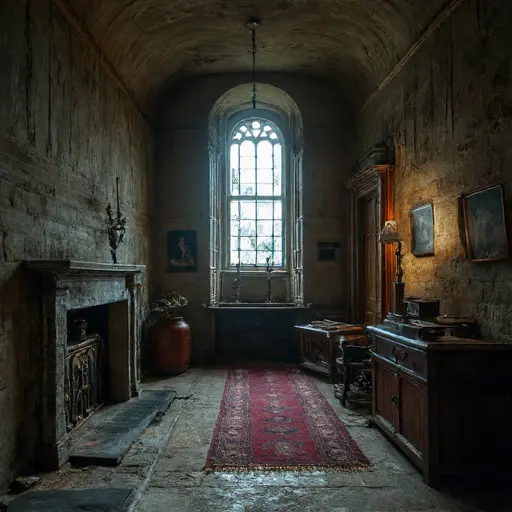
The bells are covered in linen.
Every one of them.
Small handbells, corridor bells, chapel bells, and cracked bronze pieces rest beneath pale cloth wrappings that soften their shape and mute their presence.
Eirwyn said exposed bells became impatient.
The manor belonged to her for nearly forty-five years.
She lived alone and practiced a profession that once belonged to estates, chapels, and isolated communities before automation silenced the need for it.
Eirwyn was a bell respiration tuner.
Her work involved calibrating how bells released and sustained resonance within enclosed spaces. She studied not melody but breathing—the rise, hold, and fading body of sound shaped by chamber size, humidity, and metal fatigue.
She tuned disappearance itself.
The bell chamber still preserves her devotion.
Felt mallets remain beside resonance chalk. Bronze charts hang beneath iron pins. Sound diaries lie stacked near cabinets carrying wrapped bells marked by alloy, weather response, and architectural setting.
The room feels paused between echo and silence.
Along the Hollow Peal Gallery
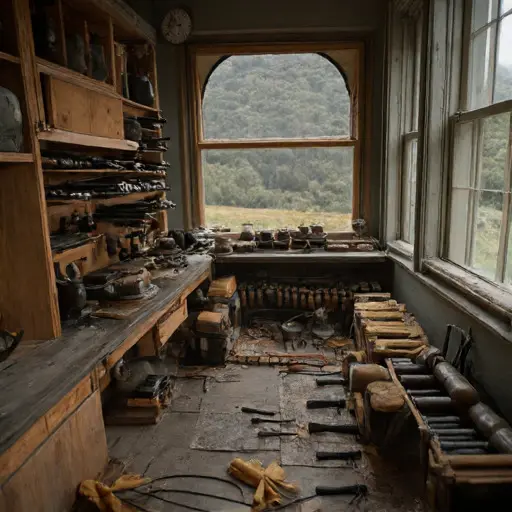
Eirwyn worked along the Hollow Peal Gallery.
The long interior passage held sound unusually well and allowed her to measure decay and resonance without interference from the outer rooms.
One unfinished calibration still rests there.
The strike interval marked.
The breathing profile incomplete.
Eirwyn inherited fragments of the profession through chapel custodians and estate caretakers who believed bells shaped emotional geography as much as communication.
People remembered her standing motionless after striking metal, waiting longer than seemed necessary.
For decades the work endured.
Historic halls and ceremonial spaces still valued tuned resonance tied to architecture and communal ritual.
Then notification replaced gathering.
Electronic systems, recorded chimes, and automated signaling steadily displaced live bell use. Sound became efficient and stripped of locality.
Eirwyn tolerated convenience.
She mourned substitution.
Still, she continued restoring bell respiration long after commissions faded.
Then the roofs emptied.
Rural depopulation and the abandonment of older estates and chapels removed the acoustic spaces her work depended upon. Chambers collapsed. Towers closed.
The bells survived.
Their lungs vanished.
Already living with advanced tinnitus and degenerative nerve pain, Eirwyn spent longer evenings inside the gallery documenting bells no building still wanted.
One storm-heavy night she remained calibrating a cracked chapel bell whose resonance reminded her of childhood services long gone.
Lightning struck the manor ridge and destabilized old masonry above the gallery.
Part of the chamber collapsed before dawn.
The funeral gathered shepherds, caretakers, and elderly parish families who still remembered Eirwyn insisting that every bell carried grief differently.
The manor remained afterward.
The felt mallets remain beside the chalk.
The linen still wraps the bells.
And along the Hollow Peal Gallery, Eirwyn’s unfinished resonance study continues waiting in silence—holding a final breath of sound she never returned to release.