Tyrannical Quiet Had Nested in the House Where Yara Collected the Weight of Feathers
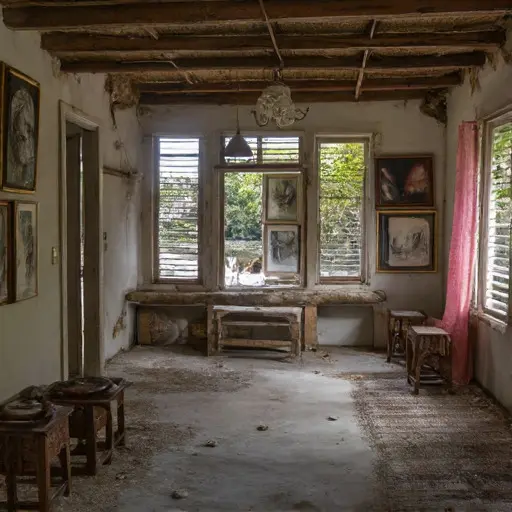
The feathers rest inside drawers of sand.
That detail surprises people.
No glass domes.
No cabinets.
Only shallow trays lined with fine pale sand where feathers lie half-buried like fragile relics waiting to be excavated.
Yara said sand listened better than velvet.
The delta house belonged to her for most of her life.
She lived alone and practiced a profession that vanished somewhere between natural history and migration lore.
Yara was an avian drift assessor.
Her work involved studying the fall behavior, moisture retention, and windborne travel of naturally shed feathers gathered from migratory wetlands. Fishers, bird sanctuaries, and environmental recorders once consulted specialists like her to understand ecological shifts through feather drift and settlement patterns.
She studied flight after departure.
The specimen room still preserves her tenderness.
Balance trays remain beside drying mesh. Drift charts hang beneath shell weights. Feather journals lie near shelves carrying labeled specimens arranged by migration season, water exposure, and species silhouette.
The room feels weightless.
Almost temporary.
Within the Tide Quill Chamber
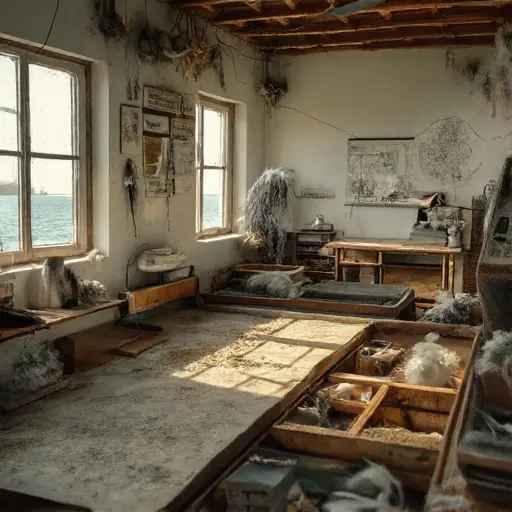
Yara worked inside the Tide Quill Chamber.
The low interior room maintained stable airflow and protected delicate specimens from disruptive currents sweeping through the riverside house.
One unfinished assessment still rests there.
The feather measured.
The migration attribution uncertain.
Yara inherited fragments of the profession from wetland trackers and bird wardens who believed fallen feathers recorded movement invisible to ordinary observation.
People remembered her pockets always carrying down.
For decades the work survived.
Wetland stations and local conservation circles still valued feather drift records linked to migratory timing and environmental change.
Then tagging replaced patience.
Satellite tracking, digital migration mapping, and biometric monitoring steadily displaced observational feather work. Movement became coordinate data rather than physical encounter.
Yara admired the accuracy.
She mourned the touch.
Still, she continued gathering and cataloguing shed plumage long after institutions stopped asking for her findings.
Then the waterways clogged.
Plastic accumulation and industrial debris altered current behavior throughout the delta and disrupted the feather dispersal systems Yara spent decades studying. Drift paths became chaotic and contaminated.
The birds survived.
Their traces scattered differently.
Already living with chronic kidney disease and severe tremors affecting her hands, Yara spent longer mornings inside the chamber sorting specimens she feared would soon lose meaning.
One flooding season she remained working after warnings spread through nearby settlements, determined to rescue damp collections stored low inside the chamber.
Water entered faster than expected.
Neighbors found the house days later.
The funeral gathered fishers, bird volunteers, and aging marsh families who still remembered Yara releasing feathers into the wind before recording them.
The house remained afterward.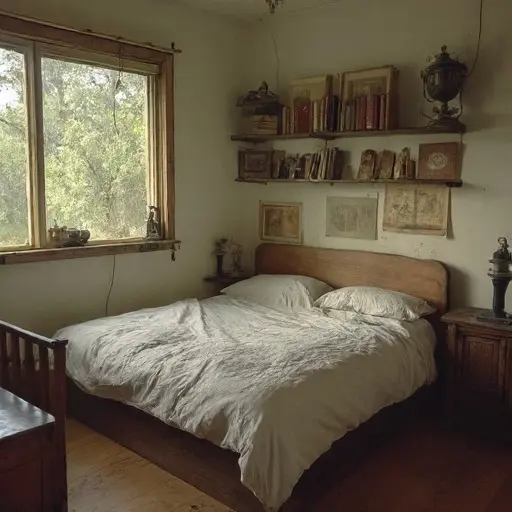
The balance trays remain beside the mesh.
The journals still rest near the shelves.
And within the Tide Quill Chamber, Yara’s unfinished feather record continues waiting in silence—holding the memory of flight she never returned to follow.