Savage Stillness Dwells in the Bungalow Where Nalin Tracked the Hunger of Light
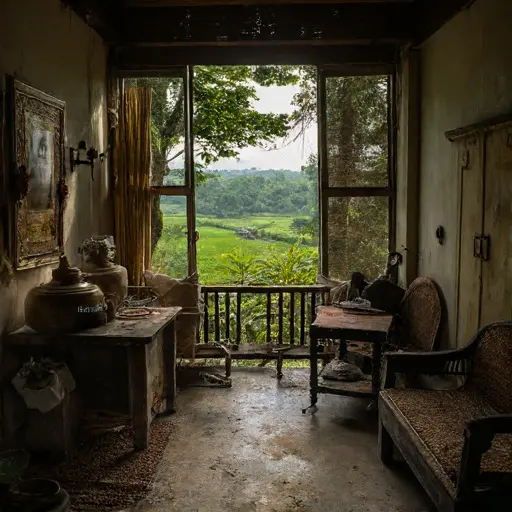
The mirrors face upward.
All of them.
Not toward walls.
Not toward one another.
Toward the ceiling, where faded circles of light still wander across plaster whenever the afternoon sun survives the clouds.
Nalin arranged them carefully.
The bungalow belonged to him for more than thirty years.
He lived there alone and practiced a profession that emerged briefly between folk astronomy and environmental study before disappearing almost unnoticed.
Nalin was a solar appetite recorder.
His work involved documenting how light intensity changed across landscapes, homes, and cultivation spaces according to seasonal haze, humidity, and reflective behavior. Farmers, architects, and observatories once sought his records to understand how sunlight was absorbed or weakened locally.
He measured desire in brightness.
The solar room still preserves his routines.
Reflective dishes rest upon bamboo stands. Exposure journals remain tied with cord. Small smoked-glass lenses lie beside chalk diagrams showing the migration of sunlight across interior surfaces.
The room feels observant.
As though daylight itself once entered under supervision.
Around the Radiant Basin Ledge
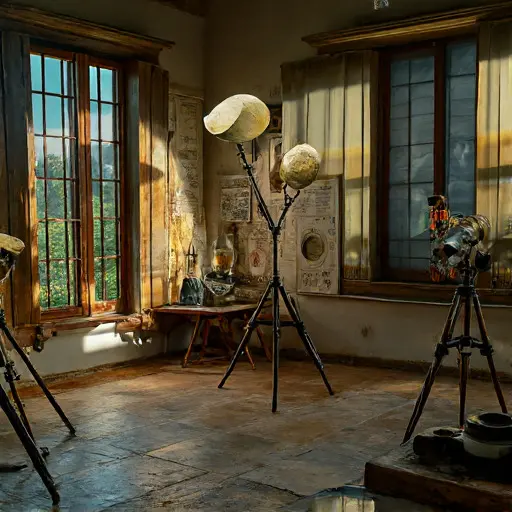
Nalin worked beside the Radiant Basin Ledge.
The shallow ledge beneath the western shutters allowed him to compare reflected and direct light without distortion from interior shadow.
One unfinished survey still rests there.
The observations charted.
The absorption index absent.
Nalin inherited neither wealth nor tradition.
He learned through collaboration with agronomists and old stargazers who believed local light carried character beyond standard measurements.
For decades the work endured.
Small agricultural communities and passive-design builders still valued localized solar records shaped through long observation.
Then calibration centralized.
Satellite radiation mapping, automated solar sensors, and predictive environmental software steadily displaced manual light tracking. Precision increased. Patience disappeared.
Nalin admired the technology.
He grieved the relationship.
Still, he continued recording sunlight by hand.
Then the haze thickened.
Uncontrolled agricultural burning and worsening air pollution altered atmospheric clarity across the region, flattening the subtle solar patterns Nalin spent decades comparing.
The light arrived differently.
Its appetite changed.
Already living with severe glaucoma and recurring respiratory illness, Nalin spent longer afternoons inside the solar room chasing distinctions growing harder to trust.
One monsoon season he remained at the ledge during extreme humidity while comparing smoke-filtered sunlight against older records.
A sudden cardiac episode struck before evening arrived.
He died quietly among the mirrors.
The funeral gathered growers, teachers, and aging builders who still remembered notebooks filled with his impossible descriptions of hungry light.
The bungalow remained afterward.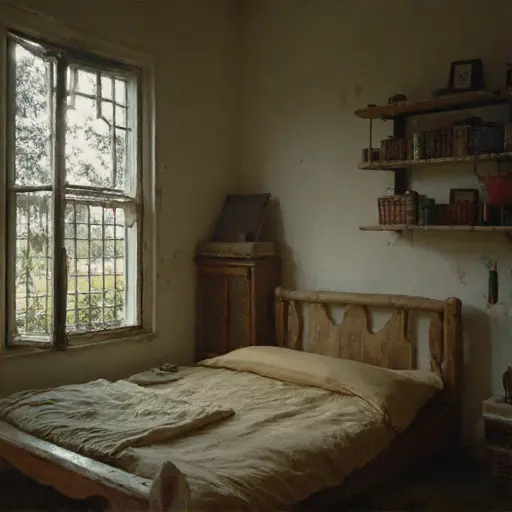
The smoked lenses remain beside the journals.
The mirrors still face the ceiling.
And around the Radiant Basin Ledge, Nalin’s unfinished sunlight survey continues resting beneath wandering light—waiting for brightness he never returned to measure.