Brittle Light Still Leaks From the House Where Samira Measured Forgotten Dust
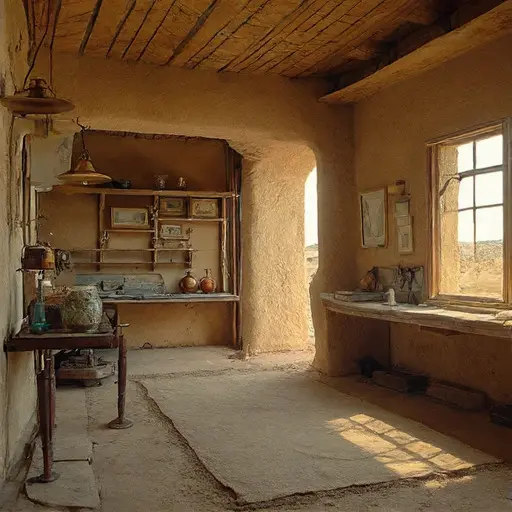
The shelves glitter after sunset.
Not brightly.
Just enough to make strangers pause.
Dust gathers everywhere inside the house, yet certain jars continue catching light as though tiny stars had settled inside the glass and forgotten how to leave.
The house belonged to Samira Haddad.
She lived there alone and practiced a profession so narrow that even nearby villagers struggled to explain it correctly.
Samira was a dust spectrum classifier.
Her work served conservators, astronomers, and restoration circles that once relied on specialists capable of distinguishing environmental dust by origin, mineral content, and atmospheric behavior. She catalogued particulate patterns gathered from deserts, ruins, workshops, and seasonal winds.
She studied what most people wiped away.
The upper laboratory still reflects that devotion.
Fine brushes rest beside ceramic trays. Collection funnels hang from hooks near the wall. Dozens of sealed jars remain labeled by date, storm season, and location.
The room feels suspended between science and ritual.
Near the Silt Prism Niche
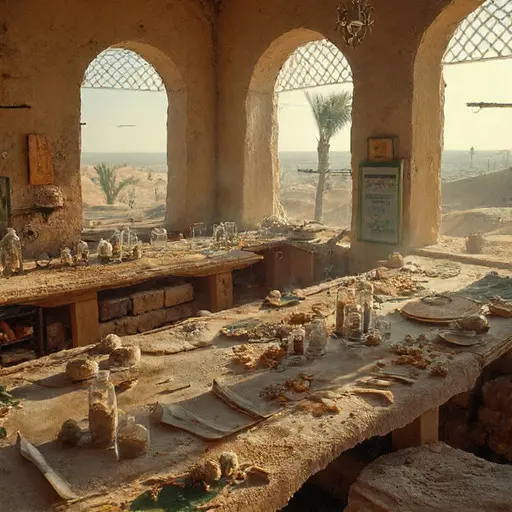
Samira worked nearest the Silt Prism Niche.
The recessed shelf faced northeast and remained protected from sudden drafts that could disturb delicate classifications.
One unfinished specimen still rests there.
The dust collected.
The spectrum chart blank.
Samira had once collaborated with archaeological teams and observatories before retreating permanently to the house after losing her younger brother.
Visitors remembered her patience more than her conversation.
For decades the work mattered.
Museums, restoration projects, and environmental studies still depended upon specialists who could identify contamination and atmospheric origin without automated systems.
Then analysis accelerated.
Portable spectroscopy devices, automated lab scanning, and centralized material databases steadily replaced manual classification. What once required years of sensory knowledge became machine output delivered in seconds.
Samira respected the accuracy.
She mistrusted the detachment.
Still, she continued gathering samples from ruins and seasonal winds.
Then the highways arrived.
Large transport corridors and freight expansion redirected regional movement and filled surrounding air with industrial particulate that overwhelmed older atmospheric patterns. Historic dust signatures became harder to isolate and increasingly meaningless within contaminated layers.
The skies grew busier.
Her samples grew stranger.
Already managing severe lupus and recurring fatigue, Samira pushed herself through long evenings cataloguing disturbances she could no longer fully interpret.
One summer sandstorm cut power and isolated the district for nearly two days.
She remained upstairs working beside the jars.
By the time neighbors reached the house, she had passed away quietly from complications worsened by illness and dehydration.
The funeral brought restorers, teachers, and former excavation workers who remembered her hands stained pale with mineral powder.
Afterward, nobody emptied the shelves.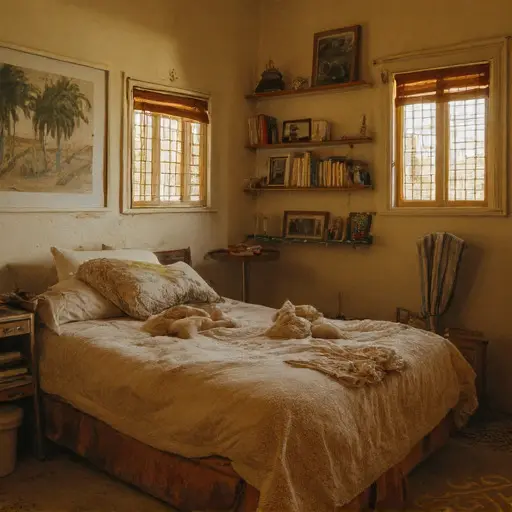
The funnels still hang from their hooks.
The labels remain tied around the jars.
And beside the Silt Prism Niche, Samira’s unfinished dust specimen continues holding particles from a landscape she never finished teaching herself to read again.