The Eerie Residence Beyond the Saffron Fields Never Surrendered Darius’s Final Echo
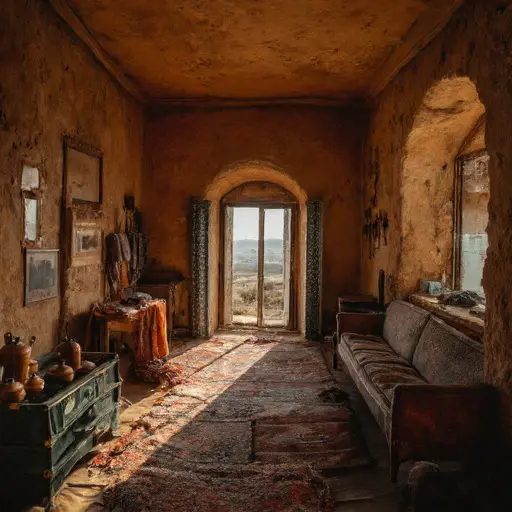
The walls were measured before they were painted.
That was Darius’s habit.
He carried chalk and string through empty rooms long before furniture entered them, tapping stone with his knuckles and listening longer than most people found comfortable.
The residence beyond the saffron fields belonged to him.
He lived there alone and worked in a profession that existed entirely around sound people rarely noticed.
Darius was an echo chamber tuner.
His work involved shaping and calibrating interior acoustics for ceremonial halls, shrines, recital rooms, and gathering spaces where reflected sound carried cultural or spiritual importance. He adjusted wall panels, hanging textiles, and resonance surfaces so voices returned with intended depth and clarity.
He did not compose music.
He sculpted return.
The vaulted room still bears his calculations.
Wooden resonance panels lean against walls. Chalk arcs remain faintly visible across plaster. Small tuning pipes and cloth dampeners lie beside notebooks crowded with sketches of invisible pathways.
The Resonance Step Vault
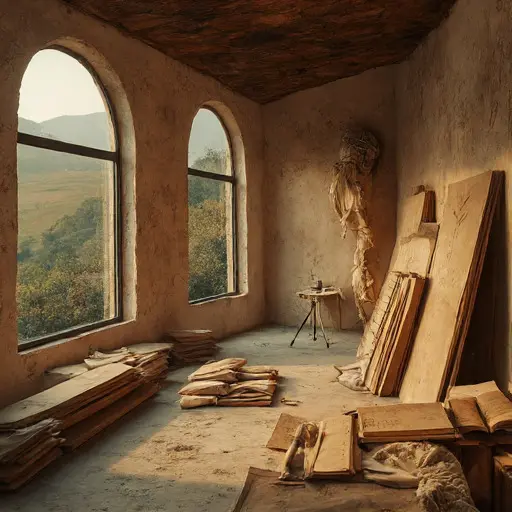
Darius worked from the Resonance Step Vault.
A raised stone platform occupied the far end of the room where he tested how footsteps, chants, and spoken syllables traveled through enclosed space.
One unfinished acoustic panel still rests there.
Its frame secured.
Its inner lining absent.
Darius once traveled between ceremonial buildings and old assembly halls before retreating permanently to the residence after political unrest disrupted much of his work.
People remembered him as courteous but distant.
For years his profession survived through restoration and ritual architecture.
Then amplification conquered intimacy.
Portable sound systems, digital audio correction, and standardized acoustic engineering replaced much of the handcrafted tuning once performed by specialists. Modern venues preferred predictable sound over architectural nuance.
Darius distrusted speakers.
He said they flattened memory.
Still, he continued accepting smaller commissions and restoring older spaces.
Then the caravans stopped.
Cross-border trade restrictions and shifting regional transport routes weakened nearby cultural networks that had supported restoration work and seasonal gatherings for generations.
The halls quieted.
So did his calendar.
Already suffering from progressive hearing loss and increasing vertigo, Darius spent longer hours alone inside the vaulted room listening for imperfections few others could hear.
One evening, while adjusting suspended panels above the platform, he suffered a fatal fall after losing balance.
The funeral drew former singers, caretakers, and stonemasons who remembered the warmth of rooms he had tuned.
Afterward, the residence remained untouched.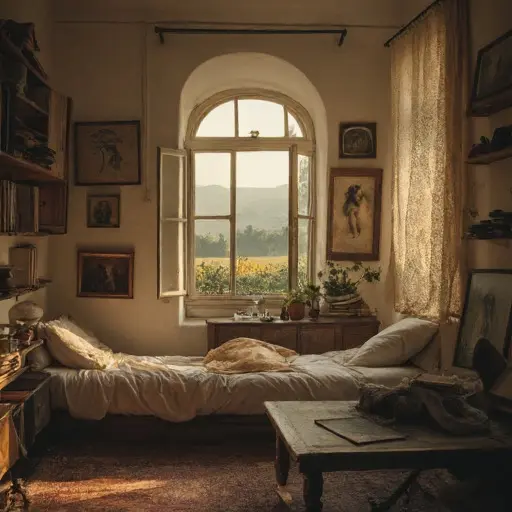
The chalk marks remain faint along the walls.
The tuning pipes still rest beside the notebooks.
And inside the Resonance Step Vault, Darius’s unfinished chamber continues holding the last unfinished echo he never returned to hear fade.