The Sinister Cottage by the Moss Fjord Never Released Astrid’s Final Tide
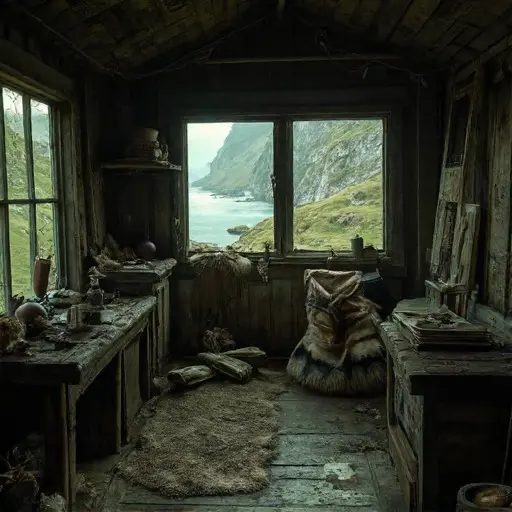
The basin remained full.
That detail unsettled the few people who entered after Astrid died.
Rainwater had leaked through beams.
Salt gathered along the floor.
But the basin near the hearth still carried clear water covered by a thin lid of glass.
Astrid left it that way.
The cottage beside the fjord belonged to her for most of her adult life.
She lived alone and practiced a profession shaped by coastlines and memory rather than commerce.
Astrid was a tidal reflection keeper.
Her work involved preserving and recording the reflective behavior of coastal water during ceremonies, navigational traditions, and seasonal observances. Certain coves and fjords were believed to carry recognizable patterns of light and tide interaction. Astrid documented these surfaces using bowls, mirrors, and controlled water basins that allowed communities to preserve visual references tied to place.
She archived water by studying light.
The lower room still reflects her method.
Stone bowls line narrow shelves. Reflection charts remain pinned beneath glass weights. Small silver mirrors rest beside tide diaries crowded with sketches of ripples and shoreline angles.
Inside the Brackish Mirror Hollow
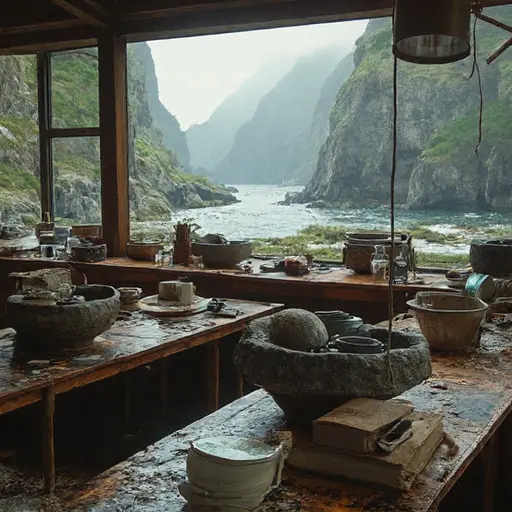
Astrid built her work around the Brackish Mirror Hollow.
The recessed space sat below the western wall where outside glare weakened and surface reflections became easier to read.
One unfinished tide study still rests there.
The basin filled.
The sketch absent.
Astrid had once traveled between inlets and remote shoreline settlements carrying cases of bowls and mirrored plates.
People considered her strange but useful.
For years her work survived through coastal communities preserving old navigational and ceremonial knowledge.
Then surveillance replaced witnessing.
Drone imaging, digital shoreline mapping, and automated coastal monitoring steadily erased demand for human observation and localized reflection records. What Astrid documented by eye became data gathered remotely.
She never trusted the replacement.
She believed water changed when nobody stood beside it.
Then the kelp forests thinned.
Warming currents and industrial harvesting damaged marine ecosystems throughout nearby waters, altering shoreline clarity and the reflective qualities Astrid spent decades recording.
The fjord looked different.
So did her work.
Already coping with chronic epilepsy and increasing exhaustion, Astrid continued visiting shoreline basins alone.
One evening during heavy fog she suffered a fatal seizure while returning from the rocks below the cottage.
The funeral was small.
Mostly fishers and older residents attended.
Afterward, no one emptied the basins.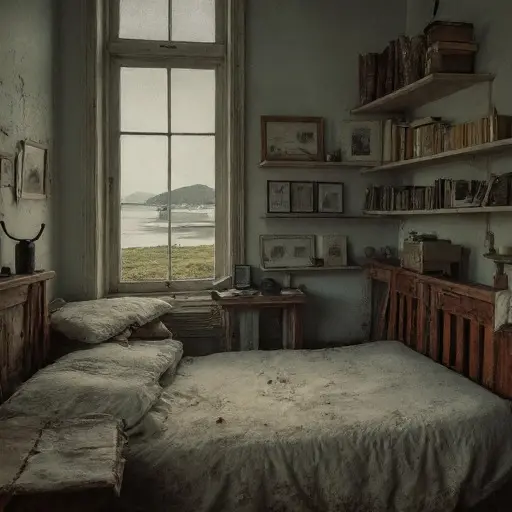
The silver mirrors remain near the diaries.
The tide charts still cling beneath their weights.
And within the Brackish Mirror Hollow, Astrid’s unfinished basin continues holding the same silent water that once taught her how a coastline remembered itself.