The Cursed House Behind the Mango Courtyard Where Leela’s Shadows Never Finished Dancing

The room still carries posture.
That is what unsettles people.
Even empty, it feels occupied by movement.
A scarf draped over a chair hangs as though recently dropped. Small ankle bells rest beneath the wall shelf beside folded fabrics that never found storage. Light enters through lattice screens and falls across the floor in shapes that resemble stage marks.
The house belonged to Leela Narayanan.
She lived there alone and practiced a profession built on disappearance.
Leela was a shadow choreography recorder.
Her work existed alongside dance but rarely inside it.
She documented ceremonial and regional dances through moving shadow notation—recording how bodies projected against walls, fabric screens, and lamplight so performances shaped by silhouette could be preserved beyond memory.
She did not teach dancing.
She archived motion.
The performance room still reflects her discipline.
Projection cloth hangs from ceiling beams. Charcoal sticks remain beside notebooks. Brass lamps line a shelf where she adjusted light angles to study posture and gesture.
The Lamp Veil Alcove
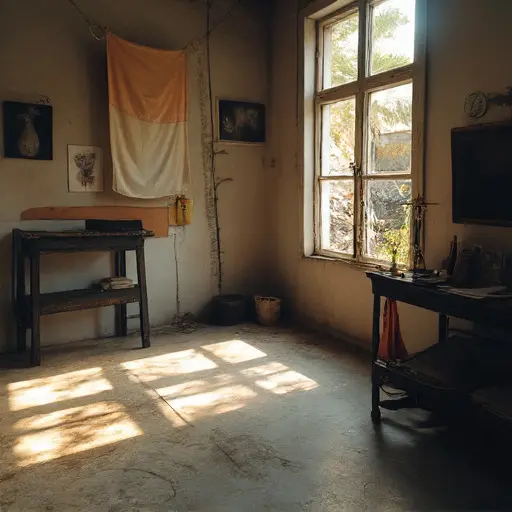
Leela worked inside the Lamp Veil Alcove.
The shallow recess allowed her to layer lamplight against cloth and record silhouettes without outside glare disturbing the forms.
One unfinished shadow chart still hangs there.
Only the opening sequence mapped.
Leela had once traveled with cultural troupes and festival ensembles before settling permanently in the house after her mother died.
Visitors remembered her as observant rather than expressive.
She watched before speaking.
For decades the work survived through cultural academies and heritage programs seeking to preserve older performance traditions.
Then performance accelerated.
Short-form digital entertainment, shrinking rehearsal culture, and declining support for slow archival arts steadily displaced shadow documentation. Performances moved online while embodied preservation lost funding and urgency.
Leela continued anyway.
She believed memory weakened when movement survived only as footage.
Then the festivals changed.
Urban redevelopment and stricter event regulations gradually displaced many neighborhood performance spaces and reduced seasonal gatherings that once sustained local dance traditions.
The invitations slowed.
So did the work.
Already living with untreated diabetes and worsening vision, Leela spent longer evenings inside the room revisiting old recordings beneath lamplight.
One summer blackout stretched through the district during oppressive heat.
Neighbors later believed she continued working through the night using oil lamps alone.
She passed away quietly before dawn.
The funeral brought former dancers carrying bells and scarves she once documented.
The house remained untouched afterward.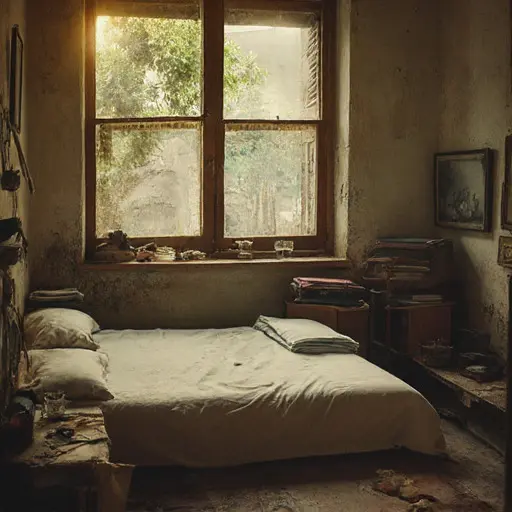
The lamps remain beside the wall.
The projection cloth still hangs from the beam.
And within the Lamp Veil Alcove, Leela’s unfinished shadow notation continues waiting for the final movement she never returned to trace.