The Ruined House Beyond the Kelp Shore Where Aino’s Lantern Ink Never Dried
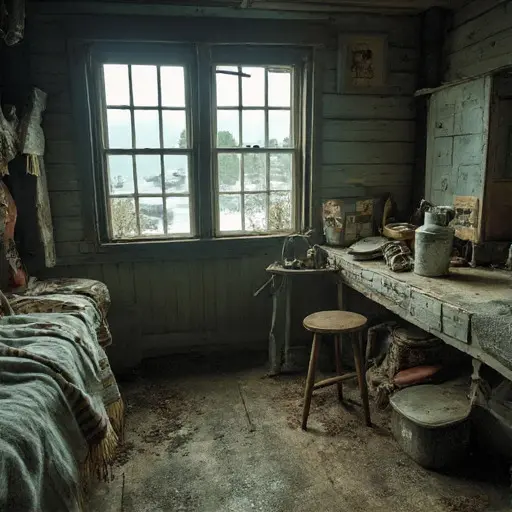
Nobody noticed the stains at first.
The walls distracted people.
Salt had climbed them in pale veins over the years, leaving the house looking as though the sea had tried quietly to move indoors.
But the real traces remained on the table.
Black ink.
Still pooled inside shallow dishes.
Still staining cloth beneath brushes that had not been touched since Aino died.
The shoreline house belonged to Aino Kaarna.
She lived there alone and practiced a trade tied to darkness more than daylight.
Aino was a storm lantern script painter.
Her work involved lettering and illustrating protective maritime lantern panels used by fishing crews and coastal families during seasonal departures. The glass or mica panels carried prayers, route symbols, weather warnings, and family markings believed to guide or safeguard those traveling rough water.
She painted for visibility.
And for comfort.
The workroom still feels arranged around departure.
Thin lettering brushes remain inside ceramic jars. Mica sheets lean beneath shelves. Ink formulas sit beside maritime notebooks crowded with symbols and tide references.
The Blackwater Pane Bench
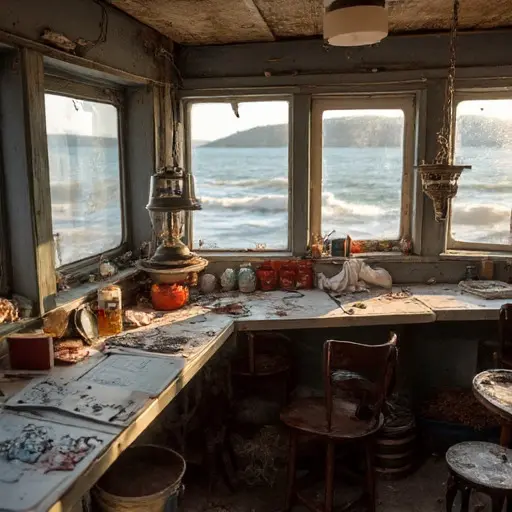
Aino preferred working at the Blackwater Pane Bench.
The bench faced west toward the shoreline where evening light helped reveal imperfections invisible during the day.
One unfinished lantern still rests there.
Its border complete.
Its central script missing.
Aino had grown up among fishing families and continued painting long after most crews modernized.
For decades the work survived through custom orders and inherited ritual.
Then navigation transformed.
LED maritime systems, digital route mapping, and industrial fishing consolidation steadily displaced handmade lantern traditions. Younger crews viewed symbolic panels as sentimental rather than practical.
Aino accepted the decline poorly.
She painted anyway.
Sometimes without commission.
Then the herring disappeared.
Shifting ocean temperatures and collapsing local fish stocks devastated nearby coastal livelihoods and accelerated the closure of smaller harbors and family fleets.
The shoreline changed with the economy.
So did the house.
Already living with worsening rheumatoid illness and increasing difficulty using her hands, Aino worked longer nights trying to finish pieces for the few families who still asked.
One winter storm cut electricity across the coast.
Neighbors later believed she continued working by oil lamp after temperatures inside the house fell dangerously low.
By morning, she had died beside the bench from complications worsened by exposure and illness.
The funeral gathered former fishers carrying lanterns she had painted decades earlier.
The house remained behind.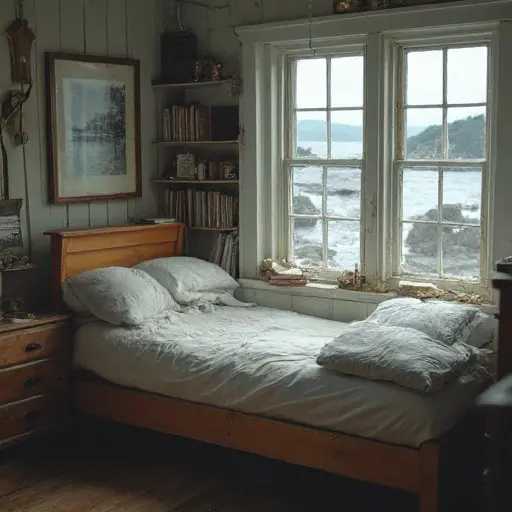
The mica sheets remain beneath the shelves.
The tide notebooks still rest near the wall.
And at the Blackwater Pane Bench, Aino’s unfinished lantern waits beneath ink that never fully dried after the sea took away the world it was painted for.