The Ghosted House Beyond the Lavender Slope Where Elias’s Stars Never Settled
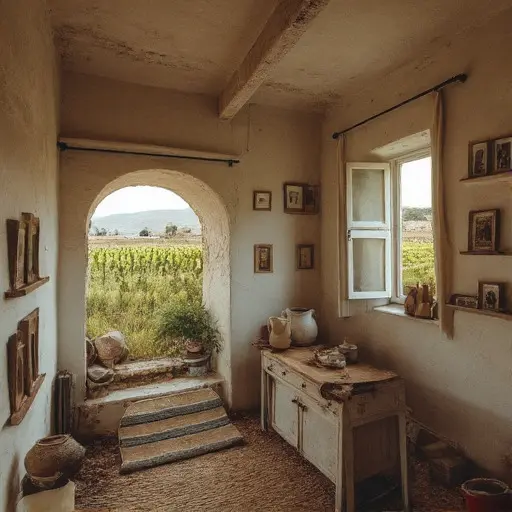
People said the ceiling looked unfinished.
They were wrong.
It was moving.
Not mechanically.
Slowly.
A constellation mobile suspended from horsehair shifted almost imperceptibly whenever evening air entered the room, casting wandering stars across walls that still smelled faintly of lavender and beeswax.
The house belonged to Elias Moreau.
He lived there alone and worked in a profession few people knew had ever existed.
Elias was a constellation ceiling aligner.
His work involved designing and positioning celestial ceiling installations inside observatories, libraries, chapels, and private studies—carefully arranging suspended stars and illuminated constellations so they mirrored seasonal night skies as accurately as architecture allowed.
He did not study astronomy academically.
He built its atmosphere.
The upper chamber still carries his precision.
Thin brass wires remain stretched between beams. Wax marking dots sit beside rulers and faded star tables. Hand-cut celestial pieces rest beneath cloth covers near the wall where he once tested angles by candlelight.
The Zenith Lantern Shelf
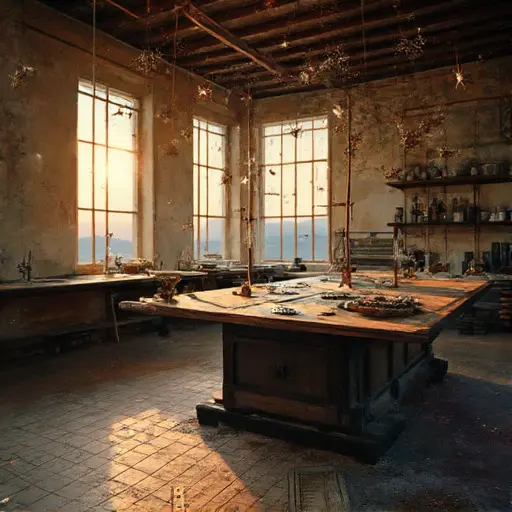
Elias worked beside the Zenith Lantern Shelf.
It stood near the highest beam of the room where reflected light remained most consistent during evening calibration.
One unfinished sky arrangement still hangs there.
Its northern stars completed.
Its southern arc absent.
Elias never married and preferred long solitary nights to company.
Neighbors rarely saw him before dusk.
For years, his work attracted observatories, estates, and cultural institutions interested in handcrafted celestial interiors.
Then projection replaced construction.
Digital planetarium systems, projection mapping, and programmable lighting steadily displaced physical constellation installations. Institutions modernized. Handmade celestial ceilings became expensive curiosities rather than living spaces.
Elias disliked the shift.
He called projected stars impatient.
Still, he continued accepting small commissions and restoring older work.
Then the apiaries collapsed.
A widespread pollinator disease devastated nearby lavender and honey farming, damaging local economies that had quietly supported artisans and cultural preservation across the region. Funding disappeared with harvest income.
Elias lost nearly all remaining work.
Already struggling with worsening insomnia and untreated cardiac disease, he spent longer nights alone inside the chamber adjusting stars nobody had commissioned.
One evening he suffered a fatal heart episode while standing beneath the installation.
The candle had burned nearly to its base when neighbors noticed darkness where light usually glowed.
His funeral was small.
The house remained.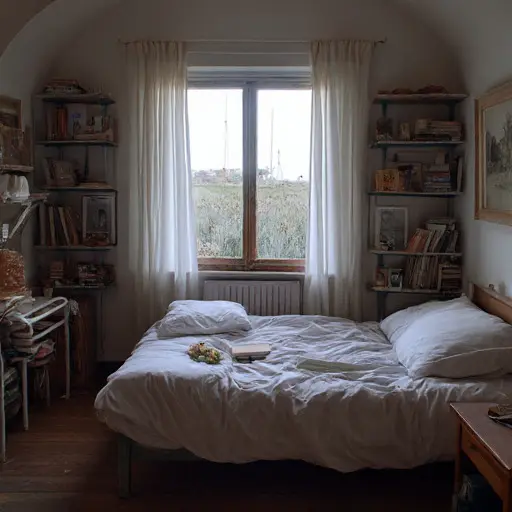
The brass wires remain suspended beneath the beams.
The charts still rest near the table.
And beside the Zenith Lantern Shelf, Elias’s unfinished constellation continues drifting softly across the ceiling that outlived the man who tried to settle the stars.