The Veiled House Along the Cypress Road Where Noura’s Mirrors Lost Their Light
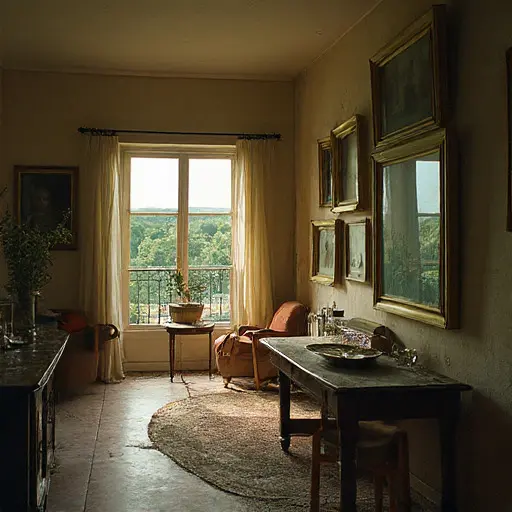
Visitors noticed the mirrors immediately.
Not because they were large.
Because none of them reflected clearly anymore.
Their surfaces had darkened with age, carrying strange clouds beneath the glass like weather trapped inside silver.
The house belonged to Noura Vukasin.
She lived there alone and practiced a profession that had almost vanished before she died.
Noura was a silver mirror backing restorer.
Her work focused on repairing antique mirror backs—the delicate metallic layers hidden behind glass that created reflection itself. Estates, churches, and families once relied on artisans like her to rescue mirrors damaged by moisture and time.
She believed deterioration deserved patience.
Inside the house, that belief still lingers.
Sheets of protective paper remain draped over furniture. Fine brushes sit beside chemical bottles long evaporated dry. Mirror fragments lean against walls wrapped in linen and marked with dates written in fading ink.
Her workshop occupied the former dining room.
The Mercury Panel Nook
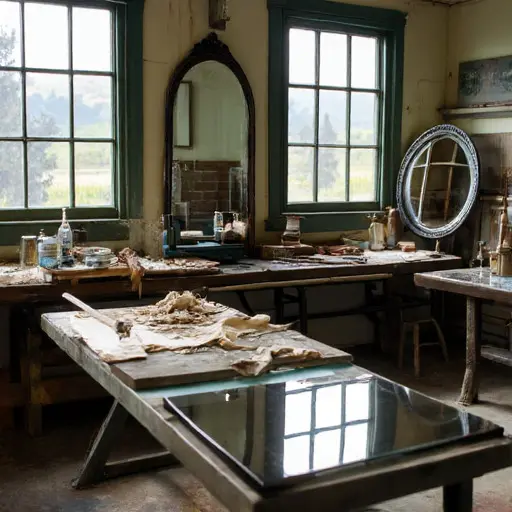
Noura worked beside the Mercury Panel Nook.
It stood near the western window where she judged reflection under shifting daylight rather than artificial lamps.
One unfinished mirror remains there now.
Its silver backing repaired only halfway.
Noura inherited the house from an aunt who had taught her restoration work as carefully as prayer.
She never moved away.
Former clients remembered her caution—how she refused rushed work and insisted mirrors carried the memory of rooms they survived.
For decades, there was enough demand.
Then interiors changed.
Minimalist renovation trends and cheap imported reproductions steadily displaced antique restoration. Older mirrors were discarded or replaced rather than repaired. Skilled backing work became increasingly rare and economically impractical.
Noura continued regardless.
But commissions slowed.
Then the vineyards failed.
A fungal blight spread across surrounding grape regions and crippled much of the local economy tied to seasonal agriculture and estate maintenance. Restoration budgets vanished alongside harvest income.
Noura lost many remaining clients.
Already living with worsening neurological illness, she grew increasingly isolated.
One autumn evening she suffered a fatal fall inside the workshop while attempting to reposition a damaged mirror alone.
The funeral was modest.
Relatives secured the house and left most things exactly where they stood.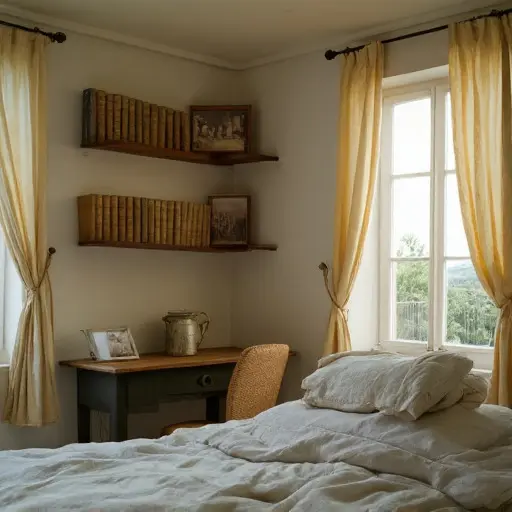
The curtains still move when wind reaches the corridor.
The brushes remain beside the table.
And inside the Mercury Panel Nook, Noura’s unfinished mirror continues to hold only part of the light she was trying to return.