The Bleak Apartment Above the Tram Line Still Keeps Luka’s Winter Sky
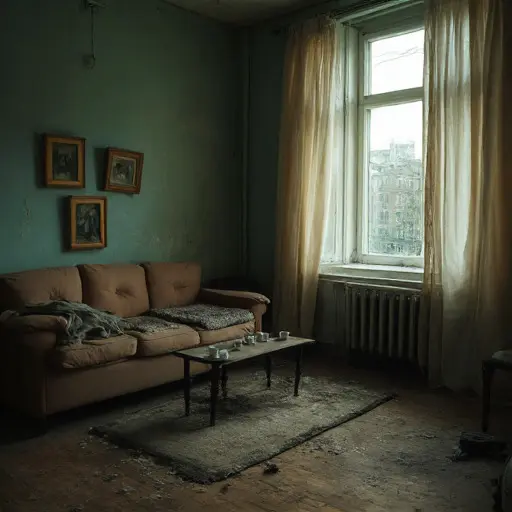
People in the building remembered the telescope before they remembered the man.
It stood beside the same window for years.
Even after Luka died, nobody moved it.
The apartment overlooked tram tracks and winter rooftops where the sky opened wider than expected between buildings.
That mattered to him.
Luka Perovic lived there alone and worked in a profession almost impossible to explain quickly.
He was a meteor sketch archivist.
Before digital imaging became universal, Luka preserved hand-drawn observations of storms, cloud formations, auroras, and unusual atmospheric events gathered by amateur weather observers and retired enthusiasts across several regions. He catalogued, restored, and sometimes redrew damaged weather sketches that institutions no longer considered important.
To Luka, they mattered deeply.
The apartment reflected that obsession.
Drawers carried folded pressure maps. Pencils rested beside cloud journals. Shelves bowed under weather atlases and notebooks filled with annotations impossible for outsiders to decode.
He worked most often near the northern wall.
The Aurora Drawer
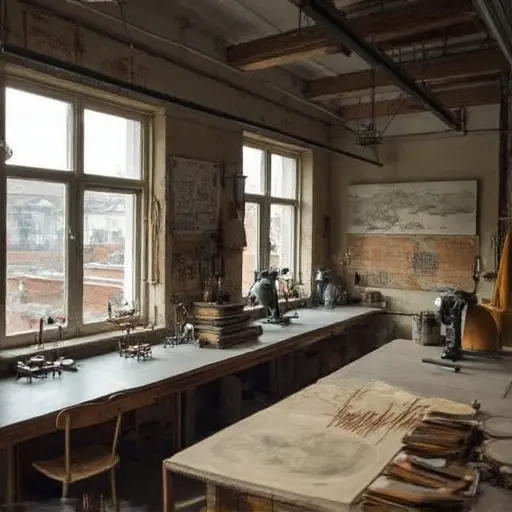
Luka called the narrow storage cabinet the Aurora Drawer.
It contained his most fragile material—storm sketches mailed by observers who had long since died, northern light studies, and rare winter sky records wrapped carefully in tissue paper.
One unfinished restoration still rests there.
A charcoal sky study interrupted halfway through repair.
Luka never married.
His neighbors knew him only as the quiet man who tracked weather and rarely missed snowfall.
For years, regional museums and private researchers purchased or commissioned his restoration work.
Then archives moved online.
Large meteorological digitization programs and AI-assisted cataloguing made manual atmospheric restoration increasingly obsolete. Funding shifted toward databases and automated recognition systems. Hand-preserved weather art became difficult to justify financially.
Luka watched the change happen in real time.
He continued anyway.
More slowly.
More privately.
Then the blackout winter arrived.
A prolonged energy crisis brought repeated heating failures and rolling power outages across older districts. Luka refused to leave the apartment despite worsening conditions and increasingly severe circulation problems.
During one freezing outage, he suffered hypothermic complications and passed away alone beside the window where he observed the sky.
The funeral drew only distant cousins and two former archive colleagues.
Most of the apartment remained untouched afterward.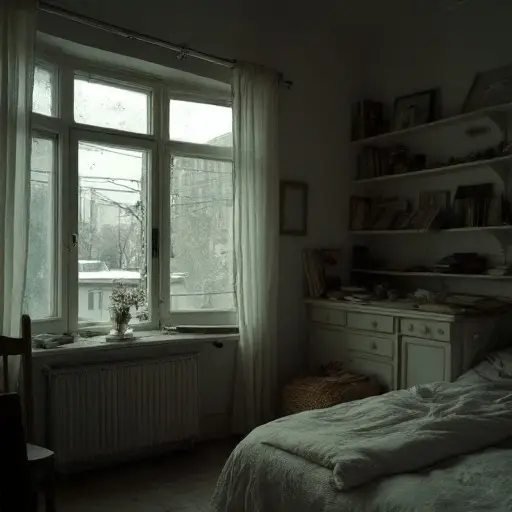
The telescope still faces north.
The cloud journals remain stacked near the radiator.
And inside the Aurora Drawer, Luka’s unfinished winter sky still waits beneath paper that has not been unfolded since the night he stopped watching the weather.