The Ruined Farmhouse Where Oona’s Glass Seeds Were Left Behind
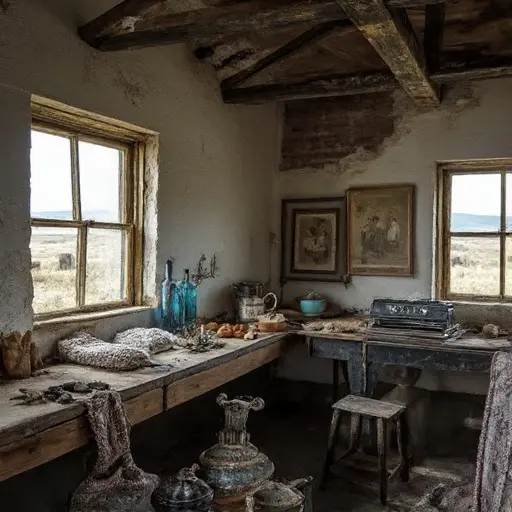
Nobody in the village called them ornaments.
They called them seeds.
Small glass drops—green, amber, cobalt—kept inside shallow wooden trays and scattered across shelves throughout the farmhouse.
Visitors always asked about them.
Oona Rinne usually smiled and said they were waiting for spring.
The farmhouse stood alone above the grazing fields and belonged to her family long before she inherited it. By the time Oona lived there alone, most neighboring properties had already emptied.
She worked as a memorial glass seed blower.
It was an unusual trade tied to remembrance traditions that had nearly vanished.
Oona shaped tiny glass forms meant to resemble seeds, preserving fragments of floral ash or symbolic pigments inside them. Families placed them in gardens, burial sites, or memory boxes rather than displaying them as jewelry or decoration.
The work required stillness.
Her workshop occupied the former pantry beside the kitchen where temperatures stayed stable enough for delicate heating.
Glass rods rested beside iron tongs. Cooling trays lined the shelves. Ash samples and flower pigments sat inside labeled jars no larger than teacups.
The Ember Shelf Hollow
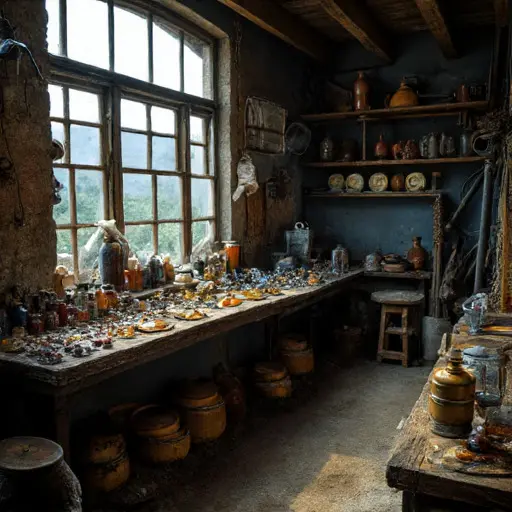
Oona called the deepest recess the Ember Shelf.
That was where she stored pieces carrying personal stories.
One unfinished seed remains there now.
Opaque blue.
Partially cooled.
She never remarried after losing her husband and became increasingly private with age, though people still remembered seeing soft furnace light beneath the farmhouse windows after dusk.
For years her commissions arrived steadily.
Then attitudes changed.
Cremation services consolidated and standardized memorial products became widely marketed through funeral companies, replacing many independent artisans who once worked directly with grieving families. Personal memorial craftsmanship declined quickly.
Oona adapted poorly.
She distrusted catalog memorials and disliked commercial packaging.
So she worked less.
And stayed home more.
Then came the grazing disease.
A prolonged livestock epidemic spread through nearby farms and devastated local incomes. Quarantine restrictions isolated already struggling rural communities and left many households under heavy strain.
Oona rarely left the farmhouse during those months.
Already managing untreated diabetes and weakened circulation, she delayed medical appointments as services became harder to reach.
One freezing morning she passed away quietly in the kitchen before neighbors realized something was wrong.
Her funeral drew only a small gathering.
The farmhouse remained unresolved afterward.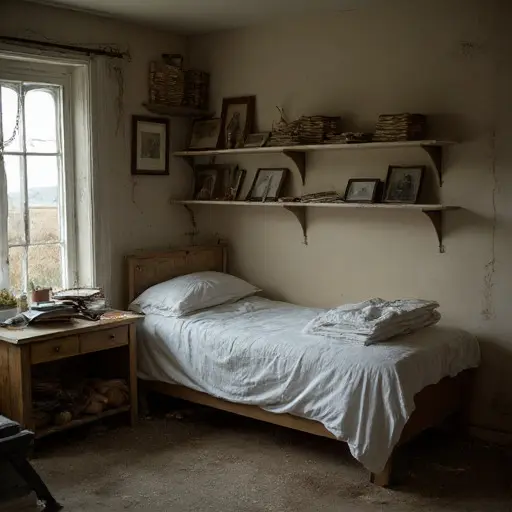
Years have weathered the roof and silvered the fences.
But inside, little moved.
The trays remain beside the furnace.
The jars still line the shelves.
And within the Ember Shelf hollow, Oona’s final glass seed continues to wait—holding a memory she never finished sealing.