The Shrouded Cottage Near the Black Shore Where Edda’s Bottles Remain Unopened
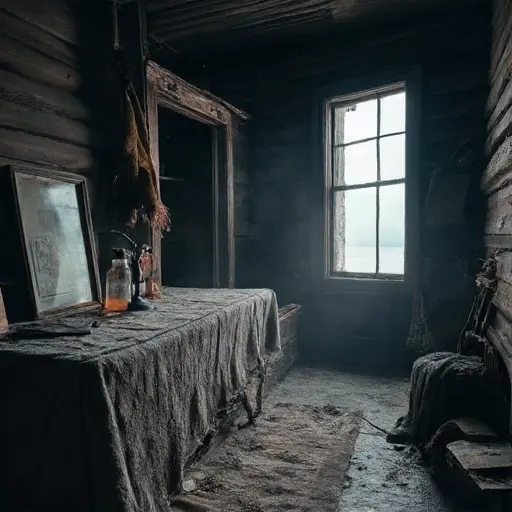
The bottles survived the storms.
That alone became part of the story.
People expected the sea air to claim them eventually.
Salt damaged nearly everything along the shoreline—hinges, paint, roof edges, even window frames.
But the bottles remained lined across the shelves exactly as they had been.
The cottage belonged to Edda Solheim.
She spent most of her life there working as a sea fog scent distiller.
The profession sounded invented to outsiders.
It was not.
Edda blended oils and mineral extracts designed to recreate maritime scents—cold shoreline air, kelp, smoke, wet stone, pine carried from inland forests. Small galleries, heritage museums, and collectors once commissioned such sensory recreations for exhibitions and private installations.
Her cottage doubled as laboratory and refuge.
Copper distillation pots rested beside drying racks. Seaweed bundles hung from beams. Shelves carried dozens of stoppered bottles labeled in careful handwriting.
Nothing inside felt decorative.
Only purposeful.
The Tidal Glass Hearth
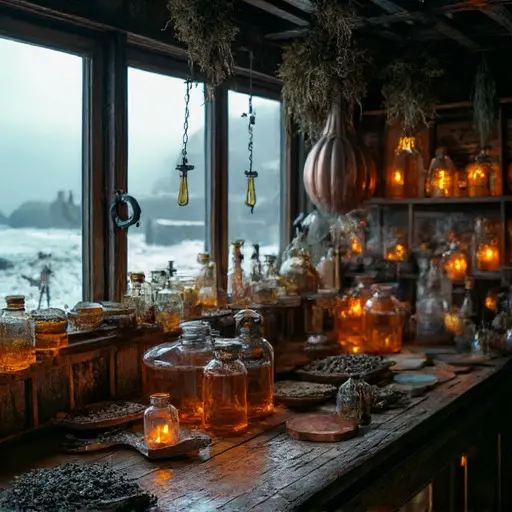
Edda worked closest to what she called the Tidal Glass Hearth.
The space sat beside the old stove where temperature stayed steady enough for delicate extractions.
One sealed bottle still rests there.
Unlabeled.
She had lived alone since the death of her partner, keeping to routines shaped by tides and weather rather than clocks.
Locals remembered seeing her gathering shoreline materials after storms and carrying driftwood baskets back toward the cottage.
For years her unusual craft found loyal patrons.
Then museums changed.
Budget cuts and increasingly digital exhibition design pushed aside sensory installations and small-scale artisan commissions. Virtual displays replaced immersive physical experiences. Requests dwindled. Shipping fragile blends became too expensive.
Edda adapted badly to decline.
She worked slower but refused to abandon the process.
Then winter ice arrived unusually early.
Several seasons of shifting marine temperatures altered coastal conditions and made shoreline travel increasingly dangerous. Edda continued gathering materials despite warnings about unstable rock and freezing spray.
One evening she slipped while collecting mineral deposits along the shore below the cliffs.
The sea returned her hours later.
The funeral brought distant relatives and a few museum curators who remembered her work.
They locked the cottage afterward and left most things untouched.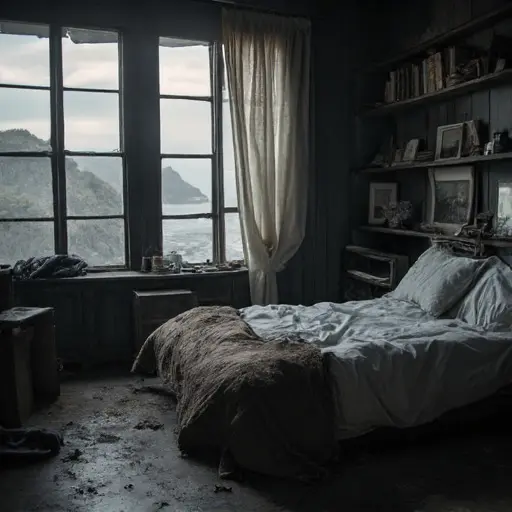
Years later, the cottage still smells faintly of salt and smoke.
The copper pots remain near the stove.
The labels still cling to the bottles.
And beside the Tidal Glass Hearth, Edda’s final distillation remains sealed—waiting in silence beside the sea that shaped it.