The Absent House Beyond the Tea Hills Still Holds Amara’s Work
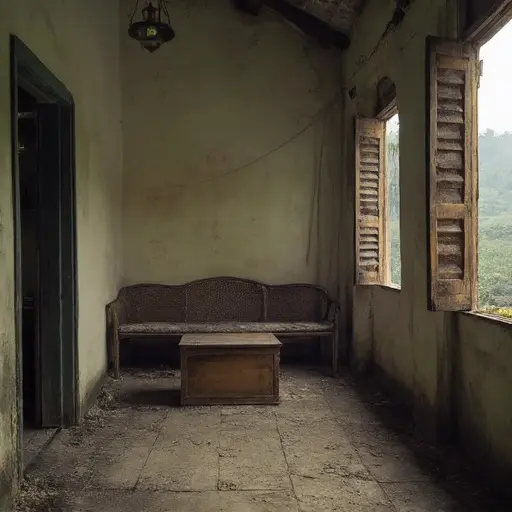
The lock rusted before the paint faded.
People noticed that first.
Rain collected beneath the veranda steps.
Ferns crept toward the walls. Yet nobody entered.
The house had belonged to Amara Sen.
She spent most of her adult life there working as a monsoon kite paper dyer.
The profession sounded strange even to nearby towns.
Amara prepared weather-resistant dyed papers used by traditional kite builders who flew during seasonal winds and post-rain festivals. Her work had little to do with the kite frames themselves. She specialized in color, texture, and resilience—papers that could survive damp air and sudden wind shifts without tearing.
Inside the house, those colors still remain.
Rolls of indigo and saffron paper sit inside narrow cupboards. Drying cords cross the workshop ceiling. Pigment stains mark the floorboards near a low basin where she mixed dyes by hand.
Her favorite place sat near the rear veranda.
The Indigo Rail Room
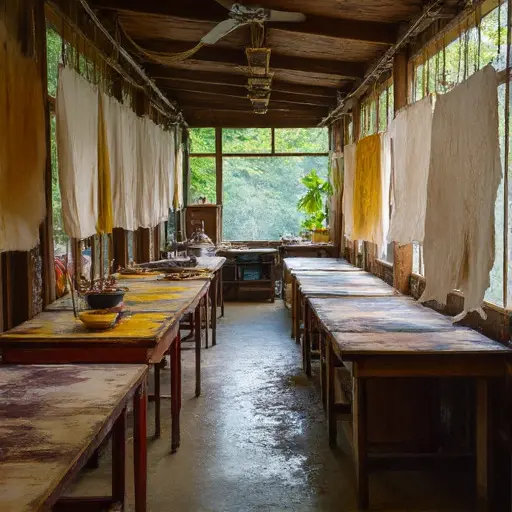
Amara called it the Indigo Rail.
A long wooden support stretched beneath the windows where dyed sheets dried in moving air.
One unfinished bundle still hangs there.
She lived alone after her father died, refusing repeated invitations to move closer to family in the city.
The house became both workshop and shelter.
Neighbors remembered her standing beneath the veranda during storms, watching wind patterns move through the hills before beginning new dye batches.
For years, the work sustained her.
Then synthetic festival materials changed everything.
Cheap waterproof plastics and factory-colored imports flooded seasonal markets, replacing handmade kite papers almost overnight. Builders who once ordered from Amara either closed their workshops or switched materials entirely.
Her commissions nearly vanished.
Still, she continued working.
Not for profit, some believed.
Simply because stopping would have felt like abandoning a language she still understood.
Then the railway expansion arrived.
A major construction corridor cut across nearby hills, bringing blasting, slope clearing, and months of unstable earth around surrounding villages. Landslides became common during rain.
One monsoon afternoon, while traveling home with pigment supplies, Amara was caught in a hillside collapse along a temporary road.
She did not survive.
Her relatives arranged the funeral and removed only personal documents.
The house remained behind.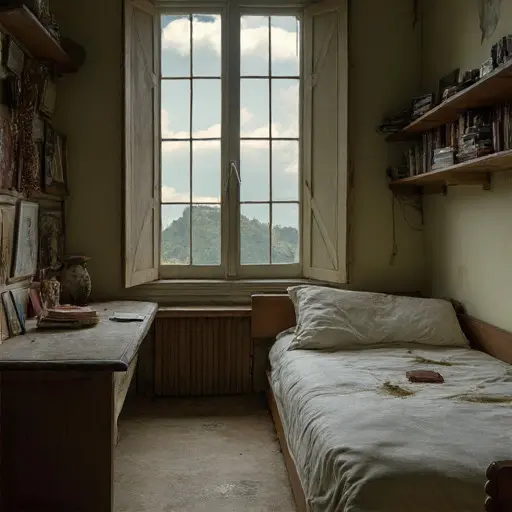
Today, wind still reaches the veranda before rain.
The kettles remain on their shelf.
The drying cords still stretch across the ceiling.
And inside the Indigo Rail room, Amara’s final dyed kite paper continues to hang exactly where the season left it.