The Cursed Silence of Bramble House
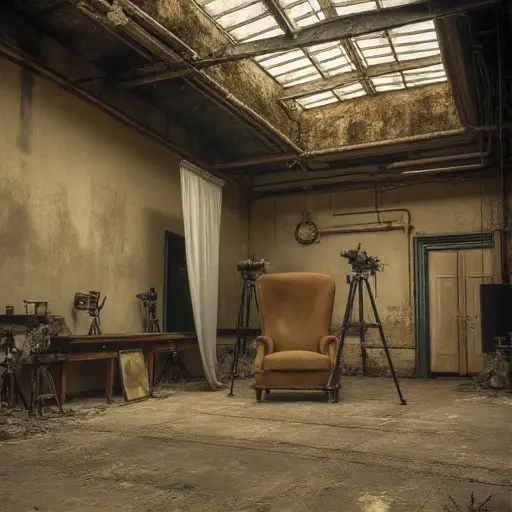
The word negatives appeared repeatedly throughout the journals left behind by portrait photographer Elias Brenner, who operated Bramble House with his wife Ruth and their daughter Miriam during the late 1920s. Wealthy families, newlyweds, and grieving relatives all visited the studio for formal portraits beneath Elias’s skylight.
The Brenners became known for capturing unusually lifelike photographs.
Then customers started asking for their portraits back.
Miriam Brenner and the Locked Darkroom
Seven details remained behind to explain the family after the house was abandoned: Elias’s brass camera lens resting beside shattered glass plates; Ruth’s pearl hairpin left near the dressing mirror; Miriam’s sketchbooks stacked beneath the staircase; a cracked flash bulb blackened by heat; unpaid portrait orders tied with silk ribbon; muddy footprints leading repeatedly toward the basement darkroom; and a final sentence written shakily inside Elias’s ledger reading, “Do not develop the final negatives after midnight.”
Nobody understood why he wrote it.
Several former clients later claimed faces inside their finished portraits appeared subtly different after each viewing. According to local rumor, Elias had begun experimenting with imported photographic chemicals acquired through a traveling supplier who disappeared shortly afterward.
Miriam reportedly became obsessed with one unfinished family portrait stored inside the darkroom.
She refused to let anyone remove it.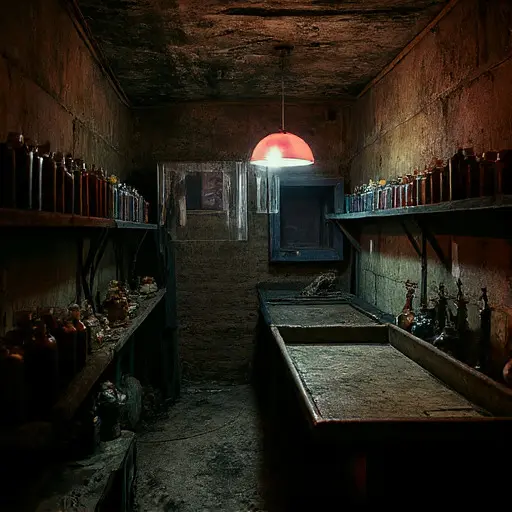
The Portrait Nobody Collected
The Brenner family decline accelerated after a severe mold outbreak damaged large sections of Bramble House during an unusually wet autumn in 1929. Moisture seeped into the studio walls and ruined dozens of stored negatives.
Yet Elias reportedly continued developing photographs downstairs long after midnight.
Neighbors later claimed lights still glowed beneath the darkroom door even after the family had supposedly gone to sleep.
Then Miriam vanished first.
Elias and Ruth disappeared less than a week later.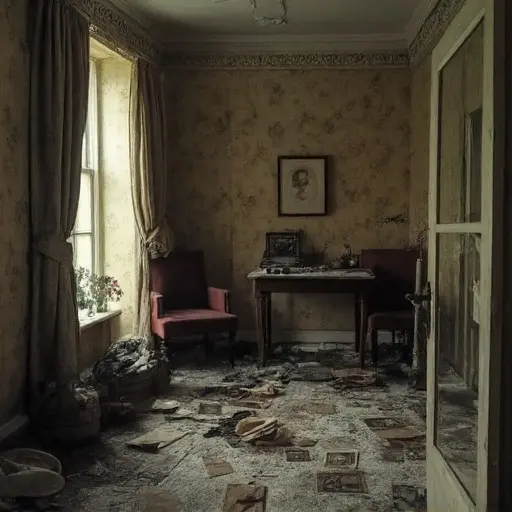
When authorities eventually forced open the sealed darkroom months later, every portrait negative remained stored exactly where Elias had catalogued them.
Except one.
The unfinished family portrait Miriam refused to surrender had vanished completely.
The final page of Elias Brenner’s journal mentioned the negatives only once more before ending abruptly:
“The people inside the photographs keep changing places.”