The Dark Summer of Hollow Creek House
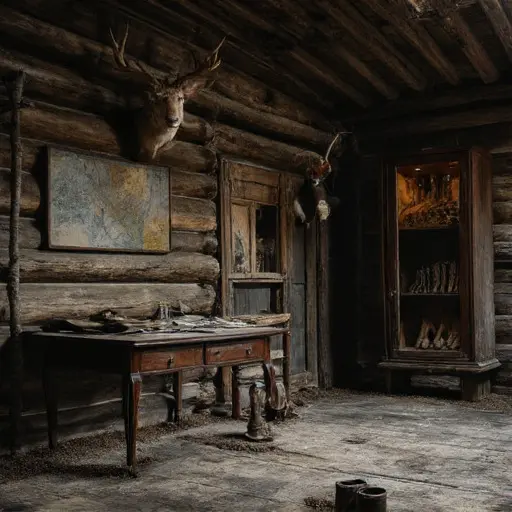
The word trails appeared constantly throughout the notebooks left behind by Walter Grayson, owner of Hollow Creek House and leader of seasonal hunting expeditions through the surrounding forests. The lodge stood isolated beyond the final railway stop, surrounded by pine valleys and steep ravines locals avoided after dark.
Walter lived there with his wife Miriam and his younger brother Owen, who worked as a trapper during winter months.
People in town described the Graysons as quiet but respected.
Until the summer of 1934.
Owen Grayson’s Final Route
Seven details remained behind to explain the family long after the forest reclaimed the property: Walter’s compass left open beside unfinished trail maps; Miriam’s gardening gloves drying near the stove; Owen’s hunting knife abandoned beside muddy footprints; a cracked field radio missing its batteries; unpaid timber permits tied with twine; wet animal traps stacked untouched near the cellar stairs; and a final note scribbled inside Walter’s route journal reading, “If Owen returns after dark, do not let him back inside immediately.”
Nobody understood what it meant.
Several nearby loggers later claimed Owen had started behaving strangely after disappearing alone into the northern ravines for nearly four days earlier that summer. Walter reportedly forbade anyone from searching for him afterward.
But Owen eventually returned on his own.
He never explained where he had been.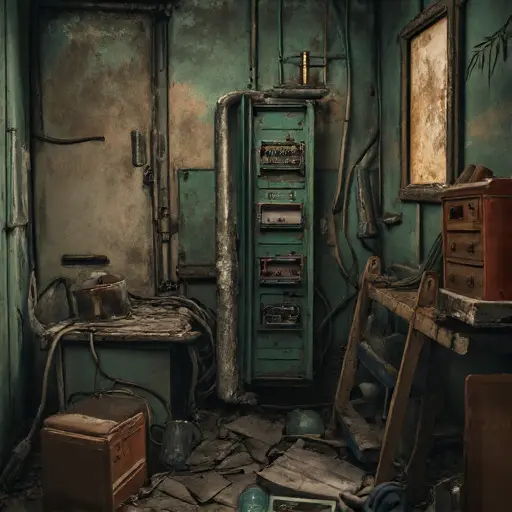
The Last Night at Hollow Creek
The family decline accelerated after a violent storm cut electricity to the surrounding valley for nearly a week. During that time, neighboring cabins reported hearing rifle shots echoing deep in the forest almost every night.
Walter stopped visiting town entirely.
Miriam was seen only once afterward purchasing kerosene and medical bandages.
Then, during the final storm of August, every light inside Hollow Creek House went dark.
Nobody ever saw the family again.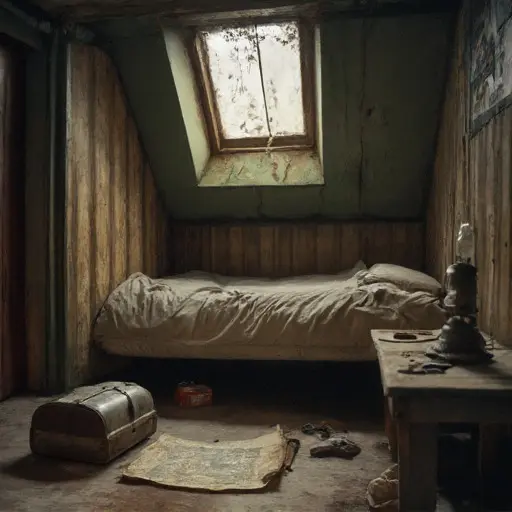
When authorities eventually searched the lodge, all three rifles remained inside the cabinet untouched.
No signs of struggle were found.
But Walter’s trail journal ended abruptly halfway through a sentence discussing unfamiliar tracks near the northern ravine.
The final page mentioned only one thing clearly:
“The trails do not lead back the same way anymore.”