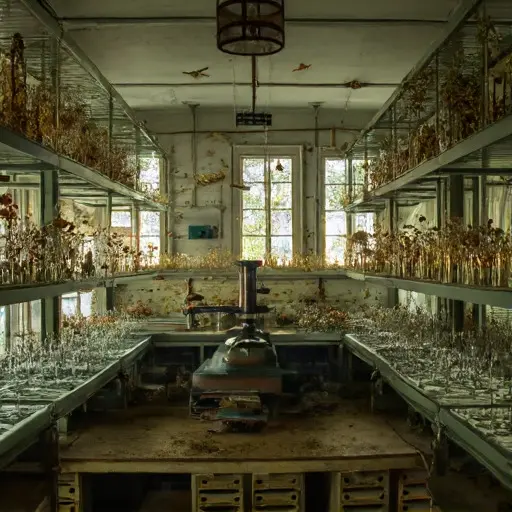
The word inventory appears repeatedly across damp sheets spread over the writing desk, each page cataloguing rare orchids, glasshouse equipment, and imported soils. Figures are precise, yet increasingly contradictory. The conservatory was meant to be self-sustaining—an empire of controlled growth—but the inventory reveals a slow unraveling of order into excess, where classification outpaced care and value became impossible to stabilize.
Edwin Alistair Harrington, Botanical Import Merchant
His name is etched on a brass plaque still fixed beside a locked potting cabinet: Edwin Alistair Harrington, Merchant of Botanical Imports. Born 1861 in Cape Town, his correspondence shows education in trade rather than academia. A pressed passport fragment rests in a ledger, stamped with multiple ports, and a faded photograph shows a wife named “Isabelle Harrington” beside a crate of labeled saplings.
Seven traces define his presence: soil-caked gloves folded neatly beside invoices; a humidification log ending mid-page; a broken sealing wax stamp bearing his initials; annotated plant lists with missing price columns; a ledger noting “delayed shipment from coastal agent”; a brass key bent from repeated use in stubborn locks; and a recurring mark—loss acceptable if growth continues—written in botanical margins.
His routine appears to have revolved around measurement, adjustment, and constant recalibration of living goods.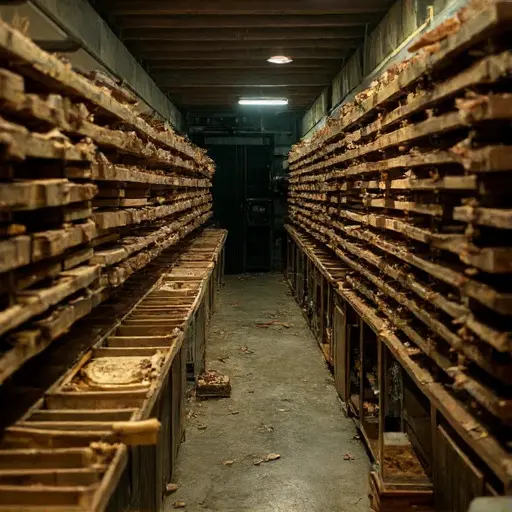
Collapse of Controlled Growth
Records suggest Harrington’s empire depended on fragile international supply chains—seeds from Southeast Asia, orchids from South America, medicinal plants from African colonies. A sudden interruption appears in the logs: quarantined shipments, rejected inspections, and delayed permits. The word “contamination” is written once, then crossed out repeatedly.
No evidence of external disaster inside the manor itself—only internal stagnation. The conservatory’s climate journals stop abruptly, mid-season, with humidity readings left incomplete. A handwritten note requests “temporary cessation of imports,” but no resumption follows.
Inside the final ledger, inventory totals collapse into uncertainty. Some entries are doubled, others erased entirely. The value of living stock becomes indistinguishable from loss once propagation fails.
No auction record exists. No transfer deed follows. The manor remains fully furnished, its conservatory still humid with the memory of growth but emptied of purpose.
The plants continue to survive without direction, and the accounting books remain open, as if waiting for a harvest that will never be declared.
