The £94,000 Bellamy House — Obscured Fortunes in a Silent Strong Room
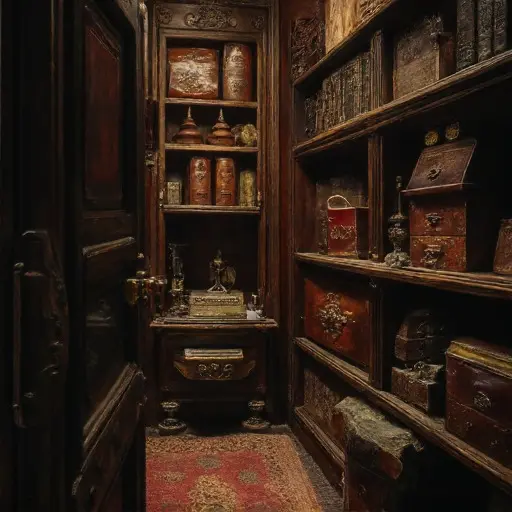
Bellamy House preserved its wealth inwardly. Beyond the public rooms lay the strong room, where £94,000 had been reduced to papers, sealed cases, and careful tallies. The hush inside carried the gravity of paused decisions, and the sense that appraisal—once constant—had stopped without conclusion.
Edward Lionel Bellamy, Auctioneer and Valuer
Edward Lionel Bellamy, born 1854 in Bath, earned his standing as a licensed auctioneer and professional valuer of estates. Educated privately and apprenticed young, he built trust through precision rather than display. His life is legible in objects: numbered tags tied to jewelry cases, chalk marks on crates, a monocle left atop a velvet tray, and notebooks listing provenance in an exact hand. His wife, Clara Bellamy, appears only through correspondence bundled with ribbon. Bellamy’s routines were fixed—morning inspections, afternoon calculations, evening reconciliations—his temperament cautious, methodical, and exacting.
Scandal, Seizure, and Suspended Worth
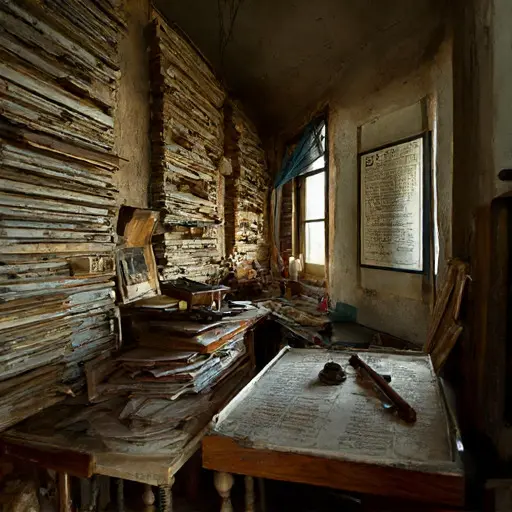
In 1909, allegations of improper collusion between buyers and sellers clouded Bellamy’s reputation. Though never proven, the inquiry froze accounts and delayed settlements. The strong room reflects the interruption: lots separated but unsold, receipts unsigned, and a register ending mid-line. Some assets were reclaimed by clients; others remain unidentified, their ownership unclear. The precise appraisal of the house’s contents—Bellamy’s own and those entrusted to him—was never finalized.
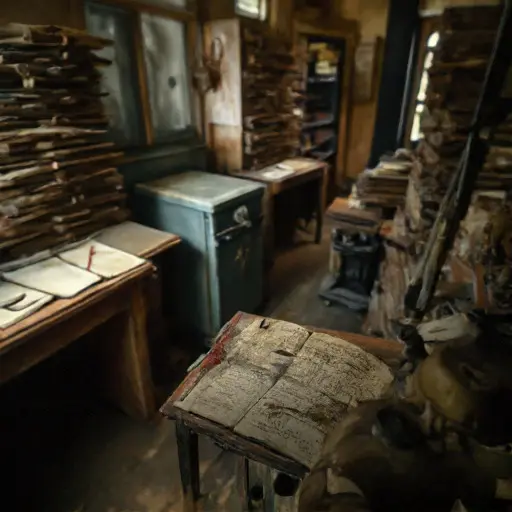
At the back of the strong room, a label reads only: “Hold pending resolution.” No resolution followed. Bellamy House remains closed, its rooms intact, its cases sealed or empty, and its fortunes obscured—counted, questioned, and finally left to dust.