The £88,000 Calderwood House — Vanished Equity in a Forgotten Billiard Room
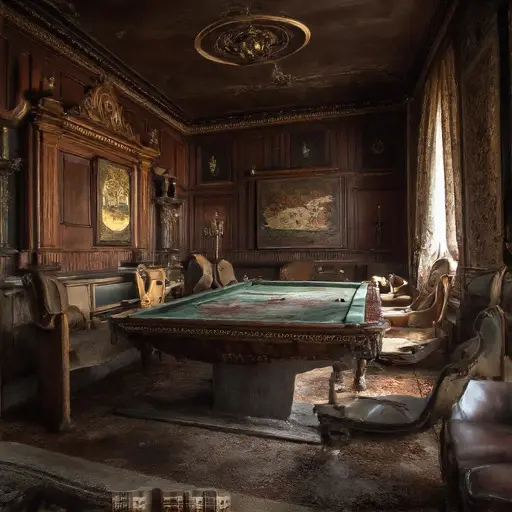
Calderwood House held its silence tightly, nowhere more so than in the billiard room, where halted recreation masked serious financial deliberation. Here, amid cues and charts, lingered the residue of £88,000 managed with restraint—equity measured in ships, cargoes, and promissory notes, now left unguarded in paper and dust.
Thomas Edwin Calderwood, Shipbroker
Thomas Edwin Calderwood, born 1857 in Hull, earned his standing as a North Sea shipbroker.
Apprenticed early and educated through practice rather than university, he built connections with Scandinavian timber firms and Baltic insurers. Evidence of his life persists in the room: a monogrammed cue worn smooth by habit, ledgers annotated with freight rates, a brass telescope by the window, and a wool overcoat folded with care on a chair. Married to Anna Calderwood, née Sørensen, his temperament was methodical, his routines fixed—mornings of correspondence, afternoons of negotiation, evenings of quiet games played beneath calculated calm.
Contracts Broken and Accounts Frozen
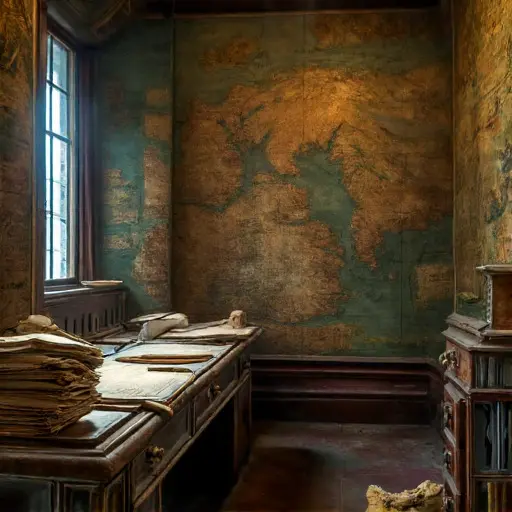
In 1912, a sudden trade embargo disrupted Calderwood’s Baltic routes. Contracts collapsed, insurers delayed, and liquidity vanished. The billiard room bears quiet testimony: a ledger left open to disputed sums, chalk abandoned mid-mark, and a locked drawer forced and emptied. Some documents were removed; others remain scattered, their significance unclear. The precise equity of the estate—ships sold, debts forgiven, claims pending—was never reconciled.
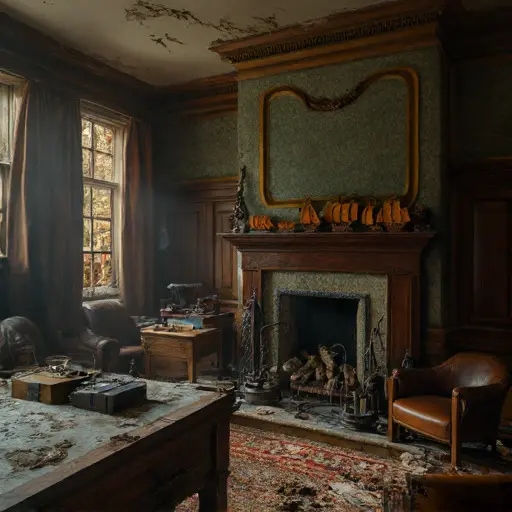
On the billiard table’s edge, a folded note reads only: “Settle when routes reopen.” They never did. Calderwood House remains closed, cues untouched, accounts unresolved, and the quiet weight of vanished equity resting in rooms that no longer expect return.