The Eerie Metronome in Volkov’s Music Room
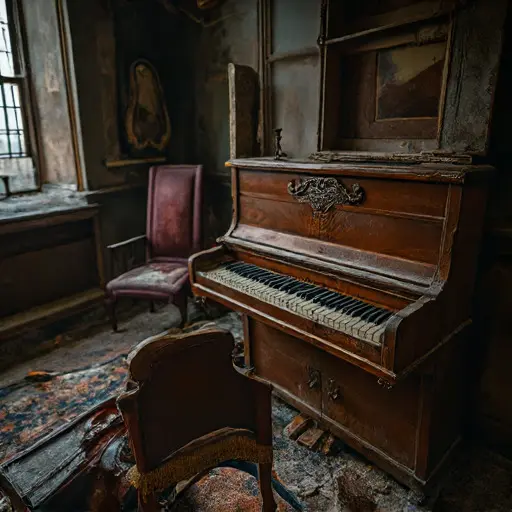
The Music Room holds a silence shaped by discipline rather than leisure. The pianoforte dominates, its fallboard half closed, a score left open to a marked passage. The metronome appears in the opening notes of routine, a tool for keeping time now rendered useless by stillness.
Chairs are aligned with care. Nothing is overturned. The absence feels deliberate, as though someone stepped away believing the pause would be brief.
Tempo Without Witness
This room belonged to Anatoly Volkov, concert accompanist and music instructor (b. 1869, Riga), whose profession demanded restraint and repetition. His life is traced through objects: a leather-bound lesson register with student initials only, a wool practice shawl folded on a chair, rosin dust near the violin case, and correspondence from his sister Elena Volkov, urging him to abandon teaching for steadier work. His education was formal, his temperament exacting. Each day followed the same arc: scales at dawn, lessons by afternoon, solitary rehearsal by candlelight.
The Metronome Marked
Pressure arrived quietly. Students dwindled. Payment became irregular. Corrections appear in the lesson register, names crossed through, weeks left blank. The metronome bears a small crack near its base, as if dropped once and set back upright without comment. One piano pedal is wrapped in cloth to dampen sound. The decline was not dramatic but cumulative—repetition without reward, precision without audience, routine eroding purpose.
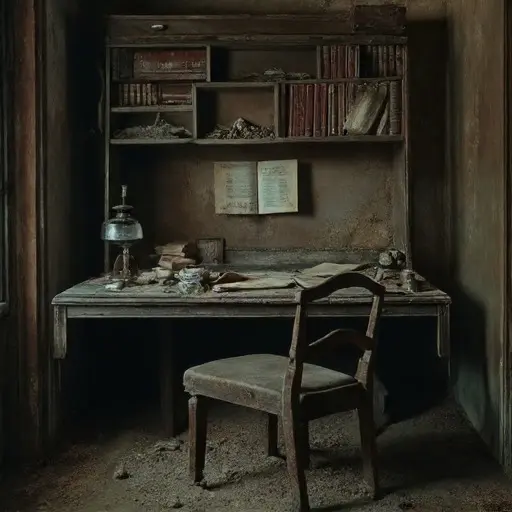
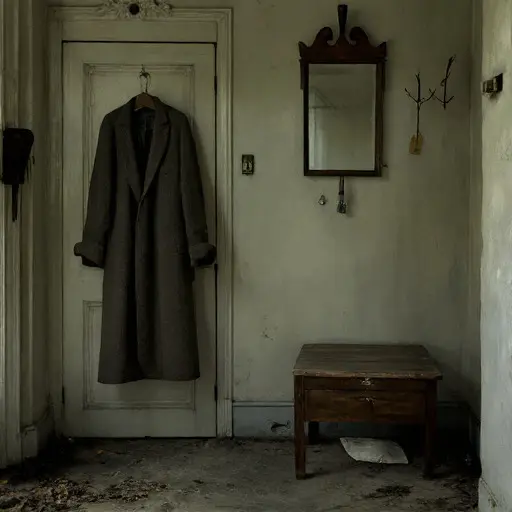
The final rehearsal is implied only by what remains: the open score, the fixed tempo, the coat never retrieved.
No notice records Volkov’s resignation. No letter explains his absence.
The house remains abandoned, its music room held in measured silence, the rhythm of a life stopped mid-count and never taken up again.